
How to Prevent Mosquitoes in Your Pond
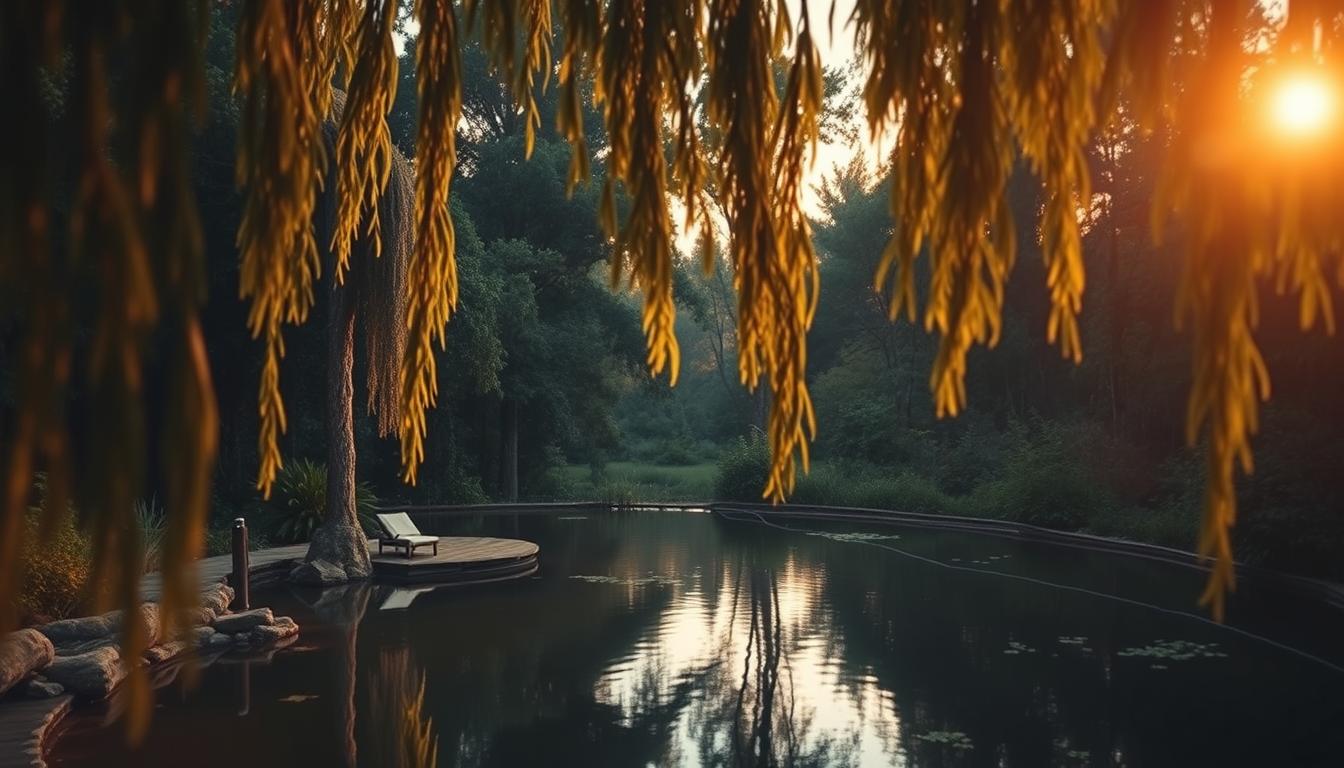
Create calm steps from your door by blending flowing water with smart landscape design. A well-planned space mixes softscaping—plants and trees—with hardscaping like patios and pavers to give both function and beauty.
Choose durable materials such as flagstone or travertine and pair them with drought-resistant, native plantings to cut upkeep and save time. Water features like ponds or a small waterfall add sound and motion, but they also require circulation and routine care.
This article lays out clear steps to shape your home landscape into a cohesive oasis that fits any space, from compact patios to larger yards. You will learn how to zone for flow, pick materials that last, and balance visual impact with practical needs so the area feels like a true retreat you can enjoy season after season.
Key Takeaways
- Mix softscaping and hardscaping for steady function and lasting style.
- Pick drought-resistant and native plants to reduce maintenance.
- Use durable stone surfaces to improve longevity and curb appeal.
- Water features add sensory benefits but need circulation and care.
- Design in zones and phases so you make steady progress over time.
Start Here: What “Backyard Oasis” Means for Your Space and Lifestyle
A successful plan begins with clear priorities. Decide whether you want low-maintenance planting or hands-on gardening. Agree on primary uses: quiet lounging, frequent entertaining, or family play.
Consider existing features—patio, pool, or mature trees—and how they shape what is realistic. Sun patterns, privacy needs, and lot size will influence layout, materials, and plant choices.
- Define the goal: comfort, privacy, and nature to support how you relax and recharge at home.
- Quick audit: low upkeep or seasonal projects; note irrigation and shade needs.
- Use cases: lounging, hosting, or family play—this guides furniture and planting.
Talk with household members to align on style, color, and preferred plants or flowers. Small changes—pots, lighting, or screens—can change the feel of the space instantly.
Plan with Purpose: Understanding Your Space, Use Cases, and Budget
Start with a simple audit: note where you relax, host, and dine to guide every design choice. Map functions first so layout, materials, and circulation match how you spend time outdoors.
Assess how you relax, entertain, and dine outdoors
List the main uses—lounging, dining, play, or gardening—and assign each a clear zone. Choose durable flooring near dining and soft edges where kids play.
Budgeting smart: prioritize must-haves before luxury add-ons
Set a realistic budget up front. Account for materials, labor, and routine upkeep before adding water features or elaborate kitchens.
- Estimate core costs (patio, paths, shade) and save for seasonal maintenance.
- Prioritize durable surfaces and weatherproof furniture over flashy upgrades.
- Consider phased work: start with circulation and seating, then layer lighting and landscape features.
- Keep contingency funds for drainage, irrigation, or electrical surprises.
Backyard Oasis Ideas
Small, targeted upgrades can change how your outdoor space feels in a single weekend. Start with items that add texture and color fast, then layer lighting and storage to make the space useful day and night.
Quick wins: rugs, throw pillows, and potted flowers
Begin with a weatherproof rug to define a seating area. Add outdoor-fabric pillows for comfort and seasonal potted flowers for instant color.
LED string or pendant lights over seating extend evenings without complex wiring. Rotate planters and textiles each season to refresh the palette affordably.
Define zones for lounging, dining, and play
- Zone it: place lounging, dining, and play areas so traffic flows naturally.
- Choose small-scale furniture and modular seating to avoid crowding in a small backyard.
- Consider a compact pit or tabletop unit for a safe fire element that becomes a focal point.
- Use hanging planters and rail boxes to add greenery without losing floor space.
- Select side tables and storage benches to keep the area tidy and support dining or games.
Small Backyard, Big Retreat: Zoning and Vertical Design
Tight sites can feel roomy when you divide the area into clear zones and build up instead of out. Define distinct zones for dining, lounging, and planting so each corner serves a purpose.
Use height to expand perceived room. Vertical planters and trellises free the floor and let you keep more planting without cluttering circulation.
Create a focal point with a pergola or compact fire pit
Anchor the layout with a scaled pergola or a low-profile fire pit. These elements draw the eye and make the space feel intentional.
Use small-scale furniture and hanging planters to save space
Choose foldable or nesting furniture and multiuse pieces like storage benches. Hang planters, add slim raised beds, and repeat a tight plant palette to unify gardens visually.
- Carve the plot into clear zones: bistro for dining, chaise for lounging, and a slim strip for edible gardens.
- Use wall shelves, trellises, and hanging pots to double planting capacity without losing floor area.
- Favor corner solutions and low-profile elements so pathways stay clear and the whole area reads larger.
Softscaping that Thrives: Plants, Trees, and Flowers for a Lush Feel
Choose plant combinations that give year-round structure and seasonal color while matching local climate and maintenance goals.
Low-maintenance picks start with drought-resistant and native plants. They cut watering and support local biodiversity in your backyard garden.
- Grasses for texture: blue fescue, fountain grass, and maiden grass add motion and tolerate poolside sun and chlorine.
- Tropical accents: palms, birds of paradise, and banana plants create lush layering where your climate allows; plant in odd-number clusters for rhythm.
- Sculptural succulents: agave, aloe, and sedum bring modern form and low-care borders to patios and walkways.
- Mix structure and color: combine evergreens with seasonal flowers to maintain interest through the year.
Plan irrigation zones by water needs and group species accordingly. Use mulch or gravel to retain moisture, suppress weeds, and sharpen edges for a clean look.
Consider spacing and height so airflow prevents mildew near seating and paths. Place denser plantings at property edges to enhance privacy while keeping sightlines to doors and patios clear.
Hardscaping Foundations: Natural Stone, Patios, and Pathways
A thoughtful base of stone and pavers anchors planting, seating, and water features into a cohesive plan. Hardscaping forms the structural backbone of any outdoor layout and sets performance expectations for years to come.
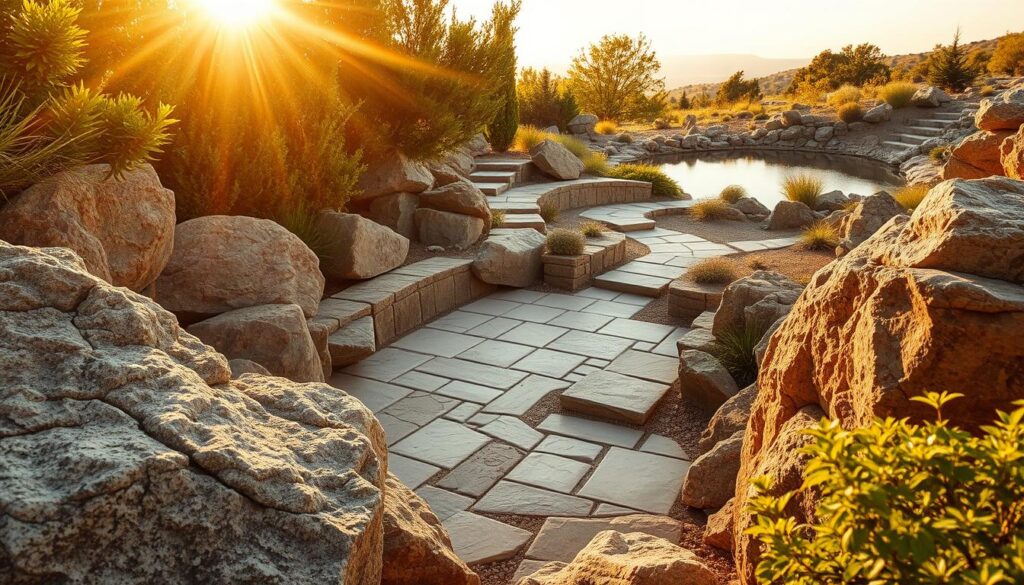
Durable choices for long-term performance
Choose flagstone, travertine, quality pavers, or compacted gravel for patios and paths. Natural stone adds character for steps and focal nodes while stamped concrete offers a budget-friendly alternative near pools.
Design walkways that guide flow
Plan paths to connect doors, seating, dining, and garden nodes so guests move naturally through the space.
- Keep path widths 36–48 inches and plan for lighting.
- Use permeable pavers or gravel to improve drainage and reduce runoff.
- Introduce texture contrasts—smooth pavers with gravel bands or stone inlays.
- Edge gravel and beds for clean lines and low maintenance.
- Confirm base preparation and compaction to prevent settling.
Size the primary patio to fit core furniture and clear walking space. Align pathway axes with a water or fire feature to add visual intent to the landscape and create purposeful circulation in your backyard.
Lighting the Night: Layered Outdoor Lighting for Safety and Ambience
Good lighting extends safe use of your outdoor space into the evening while adding mood and depth. A layered plan blends task fixtures, ambient sources, and accent lights so paths, seating, and water features all read clearly at night.
LED path and step lights for visibility
Use LED path and step fixtures to mark routes and reduce trips in the area. Choose solar or hardwired options based on reliability and budget. Space fixtures to avoid glare and keep sightlines comfortable.
String and pendant lights for a cozy glow
Hang string or pendant lights above dining and seating to create a warm canopy. Keep bulbs on dimmers or timers so illumination matches the mood and energy goals.
Underwater and pool-edge LEDs to highlight water features
Install underwater or edge LEDs to reveal movement and sparkle in pools and ponds. Use warm tones where people gather and cooler tones on plant accents to build depth.
- Plan layers: task on steps, ambient overhead, accents on plants or walls.
- Use wet-rated, shielded fixtures and run key circuits on dimmers and timers.
- Avoid over-lighting; let focal points stand out while keeping paths readable.
Comfort First: Outdoor Furniture and Seating Ideas
Comfort starts with choosing the right pieces: durable frames, weatherproof cushions, and layouts that invite people to linger. Select items that match how you use the patio and the rest of the property so the area feels purposeful.
Lounge chairs, hammocks, and conversation pits
Choose teak or powder-coated steel lounge chairs for low upkeep. Add a small hammock or cushioned sectional modules for flexible rest spots.
Conversation pits or curved sectionals help groups talk comfortably. Keep 3 feet clear around main clusters for easy movement.
Dining sets, swivel chairs, and weatherproof fabrics
Pick aluminum or teak frames with solution-dyed acrylic cushions to resist fading and mildew. Swivel dining chairs make it easy to move from eating to chatting.
- Start with durable frames—aluminum, teak, or powder-coated steel.
- Mix lounge pieces and sectionals to adapt to different group sizes.
- Layer side tables, ottomans, and storage benches to support snacks and blankets.
- Use an outdoor rug to anchor seating and define spaces visually.
Create Shade and Structure: Pergolas, Awnings, and Greenery
Smart shade solutions make your outdoor room usable from morning coffee to late dinner. Blend built elements with plantings to control light, breezes, and privacy while keeping the area welcoming.
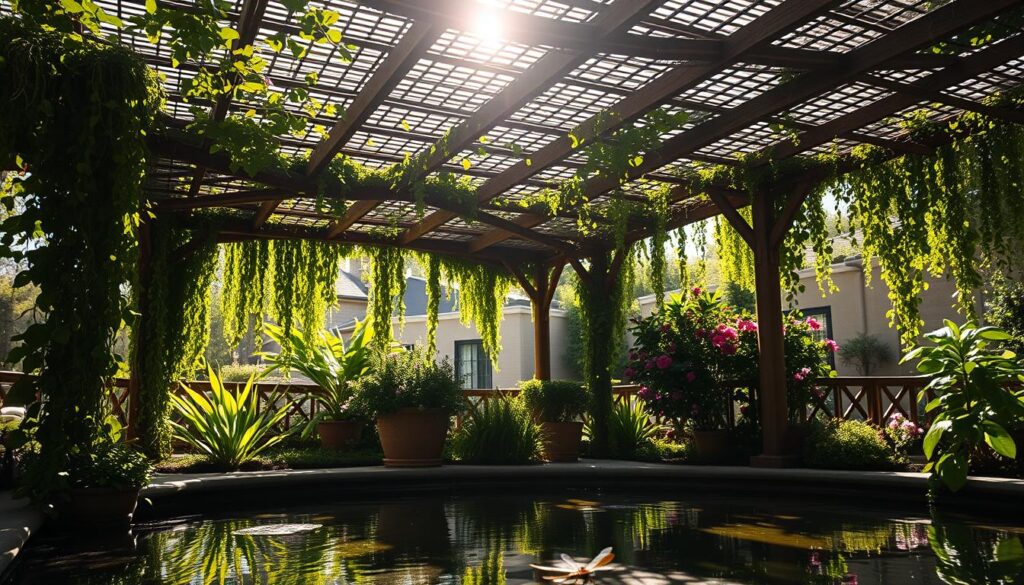
Retractable awnings for flexible sun control
Retractable awnings give instant weather protection and let you choose how much sun reaches the space. Use motorized units or manual arms depending on budget.
Choose fabrics and hardware rated for wind loads and mount into solid structure for safety and longevity.
Living privacy: hedges and bamboo screens
Plant hedges to buffer wind and create quiet zones. Boxwood offers formal structure while bamboo grows fast for a tropical screen.
- Add a pergola to define space, support lighting and climbers, and frame views without closing airflow.
- Combine overhead shade with lattice panels or tall planters to block low-angle sun and breezes.
- Place trees for dappled shade and seasonal interest so the space stays bright year-round.
“Balance shade with usability—place dining and lounge zones where afternoon comfort matters most.”
Cozy Evenings: Fire Pits and Fire Features that Set the Mood
A thoughtfully sited fire element adds heat, light, and conversation to nighttime gatherings. It can transform a small patio into a welcoming spot for friends and family.
Wood-burning vs. smokeless designs
Wood-burning delivers classic crackle and deep heat. It creates ritual and aroma that many love.
Smokeless or gas units start fast and burn clean. They suit tighter lots and lower-maintenance lifestyles.
Styling a safe, welcoming seating area
Site the fire pit on noncombustible surfaces and follow local codes for safe distances from structures and plantings.
- Use stone or paver surrounds to define the area and reduce stray embers.
- Arrange seating in a semi-circle so conversation flows and walk paths stay clear.
- Add side tables and hidden storage for fuel, tools, and spark guards to keep things tidy.
- Consider low-profile or screened units in windy spots, and place units near water for dramatic reflection.
Water Features with Wow: Ponds, Fountains, and Waterfalls
A moving water feature can anchor a landscape and give your outdoor space a calm, tactile center. Water adds motion and a soothing soundtrack that changes how a space feels and invites people to linger.
Serenity ponds that invite reflection
Choose a serenity pond to introduce reflective surfaces and wildlife interest. Position it where you can see it from inside; that strengthens the indoor–outdoor connection and makes the yard feel like a true retreat.
Circulating fountains to keep water fresh
Circulating fountains aerate and reduce stagnation. Size pumps and filtration to the volume and head height to keep water clear and moving.
Natural rock or sleek modern waterfalls
Decide between a rock cascade that blends into planting or a streamlined sheet for a modern look. Add LED accents underwater or at the rim to highlight motion after dusk.
- Placement: keep features visible from key rooms and set sound so it soothes, not overwhelms.
- Maintenance: plan access for skimming, pump checks, and winterization.
- Entertaining: consider a small counter or bar nearby for ease without overpowering the soundscape.
Pond Retreat Essentials: Design, Planting, and Maintenance
Smart pond design balances scale, maintenance, and sightlines to daily living spaces. Put the feature where you will see it often and where it won’t collect heavy leaf fall. Good placement saves time and makes the garden feel integrated with the home.
Choosing the right location, size, and stone edging
Site the pond for partial sun and clear views from frequent-use rooms. Avoid low spots beneath dense trees to cut weekly debris work.
Size the basin so it reads well in scale and allows deeper zones that stabilize temperature for fish and plants.
Stone edging stabilizes banks, protects liners, and gives a natural finish while reducing soil wash-in.
- Visible from living spaces; partial sun; away from heavy leaf fall.
- Deeper shelves for temperature stability and plant zoning.
- Stone edge to protect liners and define form.
- Safe access with flat stepping stones or deck edge for service.
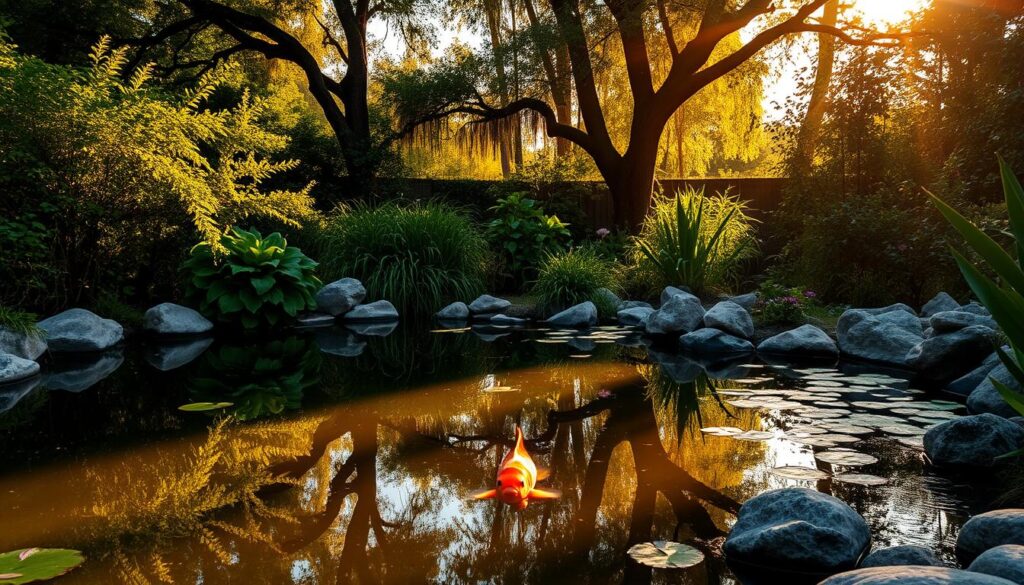
Aquatic plants and surrounding greenery for year-round color
Stock lilies for shade and blooms and oxygenators for clarity. Edge with native plants to add structure and seasonal color around the pond.
Balance fish numbers to match filtration so the water stays healthy and clear.
- Mix marginal, floating, and submerged plants for habitat and clarity.
- Edge with natives to extend interest through seasons.
- Add a skimmer and biological filter to cut surface debris and ease upkeep.
Plan weekly tasks during peak months: skim debris, rinse filters, top off water, and check pumps. Choose durable liners and flexible plumbing so the installation holds up for years.
“Routine care keeps a pond peaceful and the surrounding landscape design working well.”
Outdoor Kitchen and Bar: Elevate Entertaining in Your Yard
Well-placed counters and a durable grill make al fresco dining easy and stress-free. An outdoor kitchen can be a compact grill cart or a full island with refrigeration and a sink. Pick the scope that matches your use and budget so the space gets used often.
From grill station to full cook setup
Define the work triangle: grill, prep, and service zones. Plan landing zones beside the grill for safe plating and short steps to the dining area.
Durable finishes matter—stainless appliances and stone-look counters stand up to weather and heat. Include storage for tools, covers, and tableware to speed setup and cleanup.
Swim-up counters and a serving bar
Consider a swim-up bar or a dry-side counter to keep guests near water without crowding the cooking zone. A dedicated serving bar creates a resort feel and separates traffic from hot surfaces.
- Scope: grill cart, built-in island, or full outdoor kitchen with sink and fridge.
- Safety: route gas and power in conduit, install shutoffs, and follow code.
- Comfort: task lighting over cook zones and softer lighting at the bar for evenings on the patio.
- Layout: compact furniture and shaded counters keep circulation clear in the area.
Choose easy-clean surfaces and drip management so the space stays tidy after busy weekends. Thoughtful planning makes this the best way to actually use your outdoor kitchen and enjoy regular gatherings in your backyard.
Family-Friendly Spaces: Play Areas and Multiuse Zones
Carve out a dedicated spot where games, quiet reading, and social time can share space. Keep sightlines clear so adults can supervise from the house while kids play safely.
Sandbox, treehouse, and kid-safe paths
Dedicate a defined area for play—a sandbox, low treehouse, or modular climber—placed where you can see it from main rooms. Use smooth, even paths with soft edges to link the play spot to seating. These paths reduce trips and make supervision easy.
Flexible lawn or patio spaces that adapt over the years
Choose multiuse surfaces like open turf or a clear patio section. They work for tag and soccer now and convert to dining or lounge space later. Store toys in weatherproof benches or a small shed to keep the area tidy.
- Include kid-sized seating near adult clusters so families spend time together.
- In a small backyard, add vertical play features—chalkboards or climbing panels—at the edge.
- Plan shade for afternoons and low-level path markers for safe movement at dusk.
- Pick durable, easy-clean surfaces and swap play gear over time as needs change.
Design for flexibility so the play area grows with your children and the yard continues to serve everyone over time.
Style It Your Way: Modern, Mediterranean, Tropical, or Zen
Pick a signature style to guide every material and plant choice. This helps the whole scheme feel intentional and makes landscape decisions faster.
Modern minimalism with clean lines and geometric forms
Keep lines crisp. Use concrete, steel accents, and geometric furniture for a sleek look.
Restrained color palettes and subtle LED accents keep the scene polished and calm.
Mediterranean warmth with terracotta and olive or lavender
Introduce terracotta planters, wrought iron, and herbs like olive or lavender to add classic color and scent.
Calibrate trees—cypress or olive—for form and privacy so the space ties to architecture smoothly.
Zen calm with bamboo, natural stone, and a koi element
Pair bamboo, raked gravel, and natural stone for a contemplative garden that reads as restful.
Add a koi feature or low waterfall for soft water sound and a meditative focal point.
- Modern: concrete, steel, geometric furniture, subtle LEDs.
- Mediterranean: terracotta planters, olive or lavender, wrought iron details.
- Tropical: layer palms and broadleaf plants, add a gentle waterfall to feel like a resort.
- Zen: bamboo, natural stone, koi feature, raked gravel.
Tie style to your home’s lines and repeat materials so the landscape design reads cohesive, not staged.
Seasonal Bliss: Make Summer Nights and Year-Round Use Feel Easy
Make the most of warm evenings and shoulder seasons with flexible shade, heat, and light strategies. A few simple moves help your area be comfortable in high sun and still feel welcoming when temperatures drop.
Heat control, shade solutions, and airflow for hot days
Use adjustable shade—awnings, umbrellas, or louvers—to block direct sun and lower surface heat quickly. Motorized awnings open and close so you control exposure in minutes.
Promote airflow with screen openings, clipped hedges, or quiet fans under a pergola to move hot air away from seating spots.
- Install louvers or retractable fabric to adapt to changing sun angles.
- Place fans or misters near dining and lounge zones for extra relief.
- Keep pathways shaded to reduce heat buildup on walking surfaces.
Layered textiles and lighting to extend evenings
Layer rugs, throws, and weatherproof cushions to change the mood without a major update. Add LED pool and path lights on dimmers and timers for safety and ambience at night.
- Use portable heaters or a small fire spot to extend use into cooler months.
- Store cushions in all-weather covers and rotate plant accents each season.
- Keep a seasonal checklist—clean filters, check pumps, refresh mulch—to preserve features across years.
Make time for simple maintenance and your outdoor space will perform reliably, feel inviting, and stay low-effort through changing weather.
Conclusion
A balanced plan ties priorities, budget, and maintenance into a clear roadmap for transforming your outdoor space. Start by mapping use and cost, then layer softscaping, hardscaping, and lighting so each decision supports long‑term comfort.
Small steps matter: quick textiles, planters, and lights give fast payoff while larger upgrades come in phases. Durable surfaces and smart irrigation keep the area tidy and reduce routine work.
Choose right‑sized features for your home and yard so upkeep matches your lifestyle. Balance privacy, shade, and views to make the space welcoming day and night.
Revisit zones as needs change. With thoughtful choices—materials that last, practical lighting, and selective water or fire features—any backyard can become a calm, beautiful retreat.
You Might Also Like...