
How to Prevent Mosquitoes in Your Pond
Start the season with a clear plan. Over the year, leaves, twigs, grass clippings, and fish waste build up and turn into nutrient-rich muck. That sludge fuels algae and makes pond water cloudy, so a full annual reset helps restore clarity and fish health.
This introduction outlines a step-by-step process to prepare, drain, deep-clean hardscape, service filtration and UV, refill with conditioned water, and reintroduce fish safely. Small jobs with little winter debris may only need a vacuum pass and a partial water change.
Safety and fish welfare matter. Set up a temporary holding tank, use aeration, handle fish gently, and treat refill water to remove chlorine and detoxify metals. Proper checks at the start of the year reduce mid-season problems like green water.
Follow the checklist ahead for efficient maintenance. A clear workflow saves time and keeps biological filtration strong so fish thrive all season long.
Key Takeaways
- Annual maintenance removes nutrient-laden muck and restores water clarity.
- Plan: hold fish safely, drain strategically, deep-clean, service equipment, and refill carefully.
- Minor debris can often be handled with a vacuum and a ~20% water change.
- Condition refill water and restart circulation before returning fish.
- Early season reset prevents algae blooms and protects fish health.
Before You Begin: Timing, Tools, and Safety for a Successful Clean
Pick a calm week after ice-out to begin; stable daytime highs above 40°F protect bacteria and fish. Waiting this long helps the biofilter recover and reduces risk to stock.
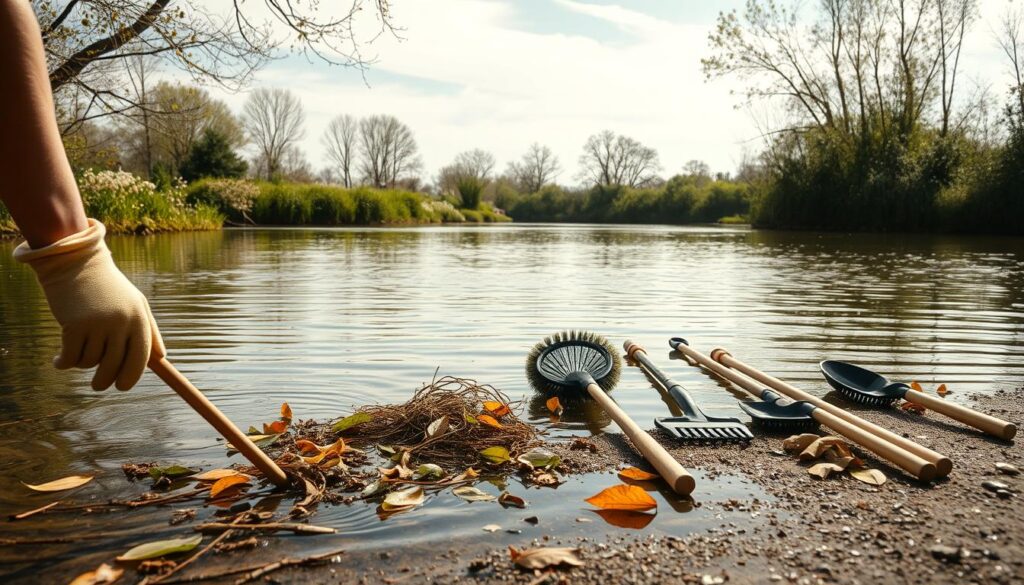
Prepare the area first. Rake and remove leaves from the landscape and take off any fall-installed netting so loose debris won’t be dragged back in during work.
When to start
Begin after snow and ice are gone and daily temps stay above 40°F for at least a week. Check the forecast and pick a steady window to avoid mid-process cold snaps.
Gather essential gear
- Waders, aqua gloves, and a skimmer net for surface trash.
- Fish net, holding tank or kiddie pool, plus an aeration kit for safe short-term housing.
- Submersible pump with drain hose, pond vacuum (ClearVac), power washer, and a home test kit to check ammonia, nitrite, and pH.
Protect yourself and your fish
Set the temporary tank in shade and fill it with surface water, not bottom water, and run aeration to keep oxygen high. Keep a pump sock on hand to prevent curious fish from the intake.
Stage tools and spare pads so reassembly is fast. Plan your time and work methodically to avoid rushing fish handling or equipment checks.
Spring pond cleaning checklist
Begin the checklist by skimming the surface to get debris out before deeper tasks. A clean surface makes vacuuming and water work safer and faster.
Skim, brush, and loosen algae
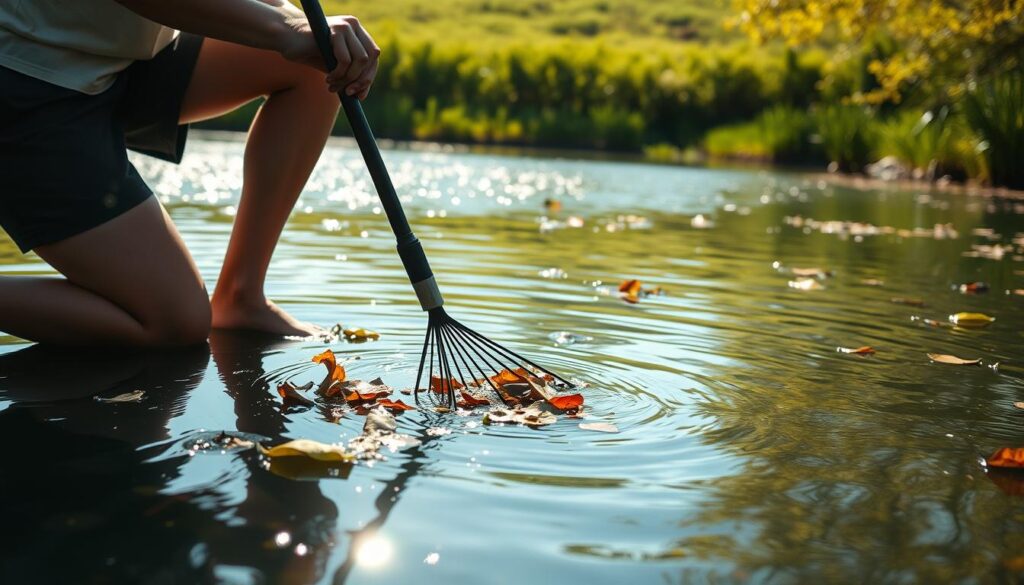
Use a skimmer net to remove leaves, twigs, and floating waste. Then brush rock edges and marginal shelves to loosen string algae without gouging surfaces.
Vacuum muck carefully
Run a pond or wet/dry vacuum to extract settled sludge. Keep the vacuum intake above the very bottom to avoid stirring trapped gases.
Choose the right water change
If sludge is light after vacuuming, do a 20–25% water change. If you still measure an inch or more of muck, plan for a full clean-out and refill.
Treat refill water and handle sludge
Always condition new water to remove chlorine and chloramines and to detoxify heavy metals. When moving fish, fill holding tanks from surface water only and dispose of acclimation water on land, not back into the pond.
Finish with bacteria and a follow-up plan
Seed filters with beneficial bacteria and dose a cold-water blend to speed biofilter recovery. Consider liquid barley extract to limit nutrients that feed algae.
- Work top to bottom to send dirty water toward the pump.
- Keep tools staged and avoid overusing power tools unless needed.
- Schedule regular bacteria doses and vacuum touch-ups to keep pond water clean.
Handle fish humanely and drain the pond the right way
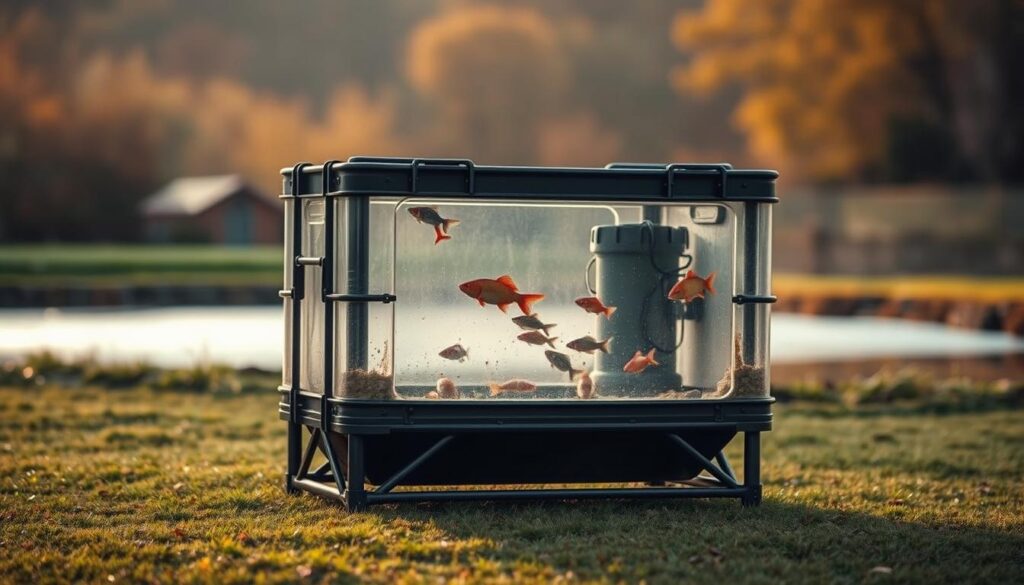
Protect fish health by staging a nearby shaded temporary tank and running continuous aeration. Place the temporary tank close to the pond, fill it with surface water to match chemistry, and install an aeration kit so oxygen stays high while you work.
Lower the pond to about one foot before you net fish. This reduces chase time and limits stress when you capture them.
Use a soft mesh net and move fish gently into the covered holding tank. Secure netting over the temporary tank to stop jump-outs and discourage predators while the back pond is empty.
Keep aeration running and avoid feeding fish during holding to reduce ammonia buildup. When the pond is refilled, acclimate fish by gradually adding small amounts of the new pond water to the holding tank.
- If temperature differs by more than 2°F, float bagged fish for 10–30 minutes before release.
- For shifts of 5°F or more, replace 25% of bag water with pond water every 10 minutes until within 2°F.
- Net fish out of bags—discard bag water on land to avoid returning concentrated waste to the water.
Watch for signs of stress such as rapid gill movement or erratic swimming during and after acclimation. Allow at least a day before resuming feeding so fish settle into the refreshed system.
Deep-clean surfaces and fine-tune your pond layout
When the basin is empty, use the chance to deep-clean features and reset plant zones for the year. Hand-pick large debris first so tools can reach joints, ledges, and gravel pockets where sludge and waste hide.
Work from top to bottom. Power wash waterfalls, streams, and rockwork, directing rinse toward the pump to move loosened algae and debris out efficiently.
Spot-treat stubborn buildup with an oxygen-based product like Oxy-Lift Defense. Let it sit about ten minutes, then rinse well to lift organics without harsh chemicals.
- Divide and repot overgrown plants; return overwintered pots to their shelf depths and start fertilizing by late April or May.
- Check liner edges for low spots and regrade soil or reset stones to hold the intended water line.
- Level the skimmer and waterfall box—tilt waterfall boxes slightly forward for even flow—and secure shifted rocks with black waterfall foam.
These careful layout tweaks and surface cleaning steps help keep hydraulic flow strong and reduce areas where algae and waste accumulate, making maintenance easier later in the season.
Restore filtration, water quality, and beneficial bacteria
Reinstall and inspect pump and plumbing first to prevent leaks or air locks during the system restart. Reconnect check valves, unions, and tubing, and confirm all fittings are snug so priming goes smoothly. Run the pump briefly to check for steady flow and no unusual noises.
Service mechanical filters and pads. Rinse filter pads gently without soap or bleach to protect biofilms. Replace torn or compacted pads and consider Matala media for longer life and easier maintenance.
Handle UV and pressurized units. Replace UV bulbs annually and clean the quartz sleeve so light passes fully. For pressurized canisters, change both the bulb and internal media to refresh mechanical and biological filtration.
Seed biofilters carefully. Apply a gel-based beneficial bacteria product directly to the filter or waterfall matrix, then add a cold-water bacteria blend to boost breakdown of organics. Give the system time to re-establish before heavy use.
Use an at-home test kit to confirm pond water is safe: ammonia and nitrite should read zero, and pH should sit between 6.5 and 8.5. If source water may contain metals, use a conditioner that detoxifies them, and consider light salinity (0.1–0.25%) for fish systems.
- Check the skimmer and filter flow after startup and allow a few days for bacteria to colonize.
- Avoid overfeeding and major stocking changes until tests stay stable.
- Record readings and repeat kit checks over the first week to track recovery.
Refill, restart water flow, upgrade lighting, and protect your pond
Begin the restart by adding conditioned water and priming pumps so filtration and jets run smoothly. Use a conditioner such as Stress Reducer Plus to neutralize chlorine and chloramines and to detoxify heavy metals as you refill.
Refill and start circulation; top off once plumbing and filters are primed
Restart the pump and watch water flow through skimmers and filters. Check unions and fittings for leaks or air locks, then top off to the target line after the system fully primes.
Clean lenses, replace bulbs, and optimize light placement for night viewing
Service lights by wiping lenses and swapping non-working bulbs. Reposition fixtures to highlight waterfalls and paths while avoiding glare into neighbors’ yards.
Deter predators and support fish health with netting, shelters, and bottom-up aeration
Add perimeter fishing line or seasonal netting and place shelters like a Koi Castle for safe hideouts. For oxygen and circulation, install bottom-up aeration—it is far more efficient than surface-only units and helps keep pond water clear.
- Tidy margins and thin aquatic plants to lower nutrient loads.
- Set timers, confirm GFCI protection, and monitor fish behavior closely after restart.
- Plan quick mid-season touchups: skimming, spot vacuuming, and strainer checks to help keep pond systems running well.
Conclusion
Wrap up the work with a quick checklist: test water with your kit, verify filter flow, and sweep margins to remove leaves or stray debris.
Take a few minutes to watch fish behavior and confirm temperature balance before returning stock. Acclimate for 10–30 minutes when adding new pond water to reduce stress.
Record what took extra time this year and note any adjustments to liners, skimmers, or lighting. Regular pond maintenance and small touch-ups will help keep pond water clear and aquatic plants healthy all season.
You Might Also Like...