
How to Prevent Mosquitoes in Your Pond
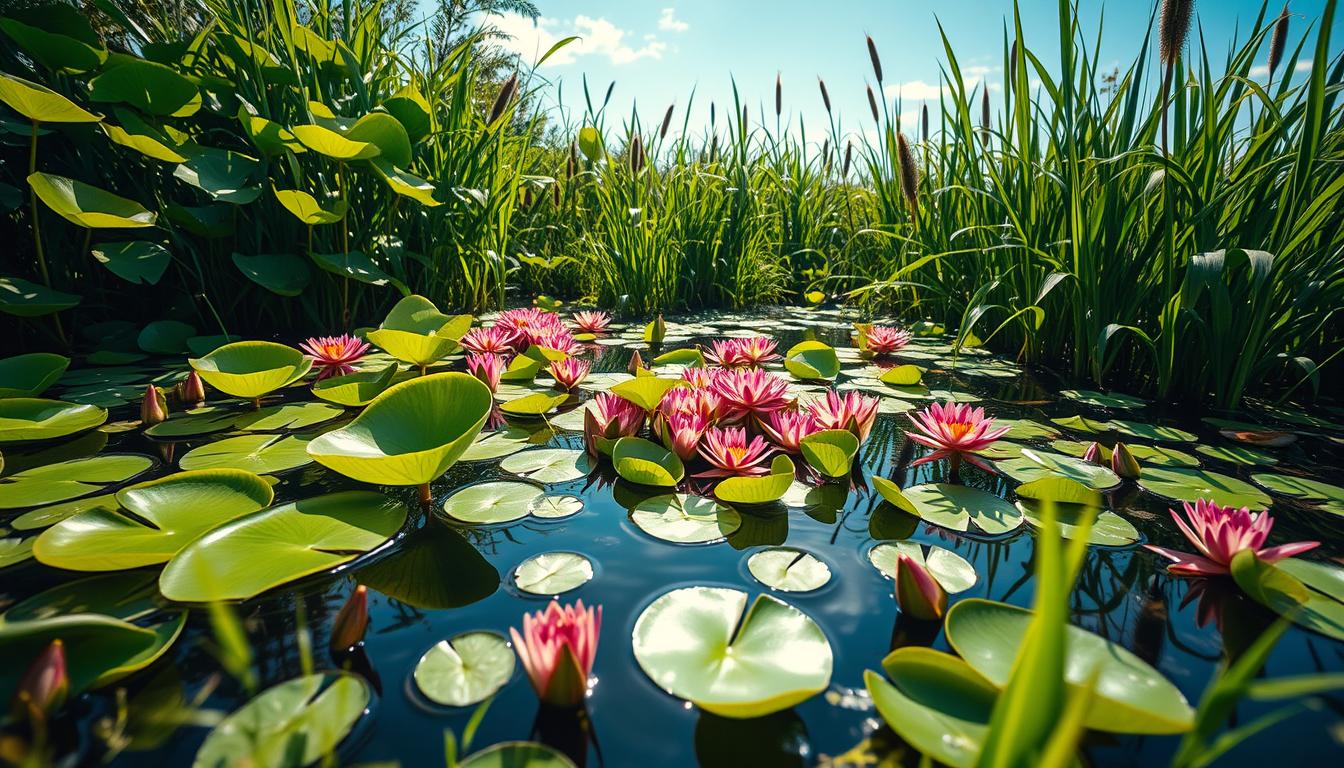
Plan your pond with confidence. This quick guide helps Utah homeowners pick pond plants that match high-altitude sun, fast warmups, and dry air.
We highlight choices that balance beauty and water health so fish and pollinators thrive. Learn which plants suit full sun, partial shade, or windy spots in your yard.
Expect clear notes on planting depth, growth habit, and care time for each pick. You’ll also get practical tips for pairing floating, marginal, and shallow-water plants to avoid crowding.
Follow these recommendations to stagger blooms across the season and cut maintenance time. The result is a cohesive landscape that ties ponds into garden paths, lawn edges, and outdoor living spaces.
Key Takeaways
- Choose plants for Utah’s sun and low humidity to protect plant health.
- Mix floating, marginal, and shallow-water species for layered interest.
- Note depth, light, and growth habit before you buy.
- Stagger bloom times to extend color into early summer.
- Use simple maintenance tips to keep lawn care neat around ponds.
Why Utah Ponds Thrive in Spring: Climate, Water, and Soil Considerations
Utah ponds respond quickly to seasonal shifts, so early checks and smart site choices set you up for success. Cold winters give way to rapid warmups that change pond water temperature and plant activity in days.
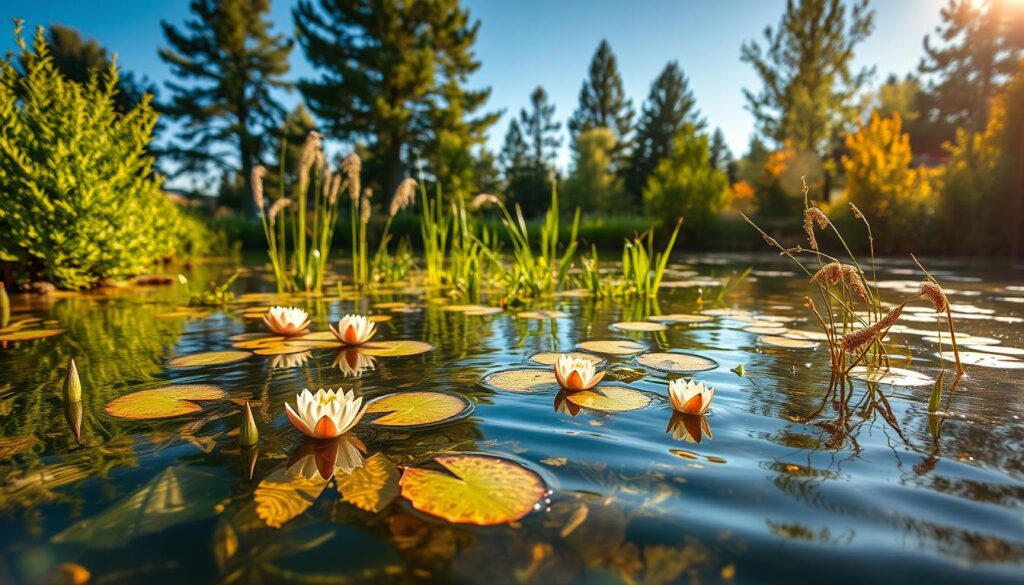
Intermountain West conditions: cold winters, fast warmups, and evaporation
Expect winter dormancy, then a fast rise in temperature that pushes ice out and starts growth. High-elevation sun and low humidity speed evaporation, so place water-loving plants at stable depths.
Hardy choices for high-altitude sun and temperature swings
Inspect irrigation systems early. Check sprinkler heads, test drip lines, and set watering schedules with rain sensors to avoid needless runoff.
- Test soil pH and nutrients before fertilizing pond edges; use slow-release products when needed.
- Refresh mulch 2–3 inches in nearby beds, keep it off trunks of trees and shrubs, and limit weeds with timely pre-emergent applications.
- Protect lawn and grass edges from overspray and seasonal erosion to preserve pond health and the wider landscape.
Top 10 Pond Plants for Utah Gardens
Pick a mix of showy and functional aquatic plants to build depth, texture, and steady flowering.
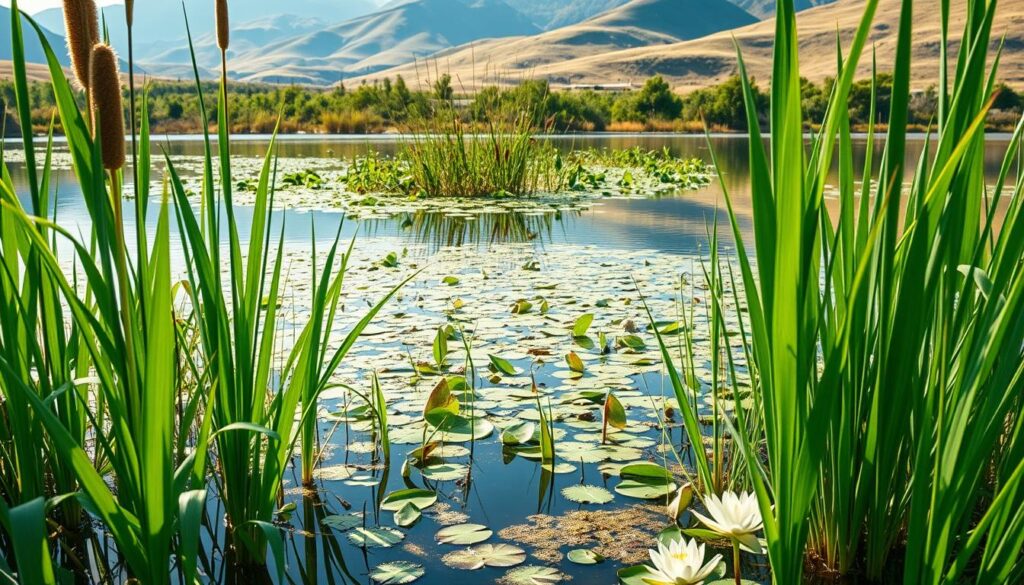
Water Lilies (Nymphaea)
Water lilies give long-season blooms and floating pads that shade fish and curb algae. Plant rhizomes in baskets 12–24 inches deep using heavy loam. Thin pads to balance light and surface coverage.
Lotus (Nelumbo)
Lotus offer bold foliage and summer flowers. Use larger containers set 12–18 inches below the surface and feed with aquatic tabs during active growth.
Pickerel Rush, Cattails, and Marginal Stars
Pickerel Rush draws pollinators in 3–12 inches of water; divide perennials every few years to keep vigor. Hardy cattails add vertical interest but confine them to pots. Hardy water iris brings early color at the waterline; plant on shallow shelves and deadhead spent flowers.
- Arrowhead/Sagittaria: architectural leaves in 2–8 inches of water.
- Water Hawthorn: cool-season fragrance and early blooms.
- Mare’s Tail: oxygenator that improves clarity when paired with lilies.
Soft rush softens edges, while creeping jenny trails bright foliage over rocks. Use baskets with loam, top-dress with pea gravel, and stage perennials by height for layered garden effect.
Prepare Your Pond and Landscape Systems for Spring
Start the season with an irrigation system audit and simple yard tasks to protect water quality and plant health. Small checks now save time later and keep your pond margins tidy.
Inspect and tune irrigation lines
Run each zone, then adjust or replace broken or misaligned sprinkler heads. Check drip lines for clogs or leaks and confirm rain sensors work. Program conservative cycles and use cycle-and-soak on slopes to reduce runoff.
Test soil and apply fertilizer only when needed
Send soil samples for pH and nutrient analysis before fertilizing pond beds. Use slow-release products if tests call for it and follow label rates and local rules.
Prune, clear leaves, and refresh mulch
Cut winter-damaged branches and trim ornamental grass close to the ground. Remove leaves and debris so they don’t wash into the water.
Refresh mulch with a 2–3 inch layer in beds and around trees, keeping mulch away from trunks. Spot-treat or pull weeds early and bag clippings to prevent removal issues near the pond.
“Document your system settings and notes now — it makes summer care easier and reduces emergency fixes.”
- Give lawn edges a crisp line to prevent clippings from drifting into the pond.
- Record irrigation settings and maintenance dates for the season.
Spring landscaping timing in Utah: Planting windows, last frost, and water management
Match planting and system checks to frosts and soil warmth to give pond plants a strong start.
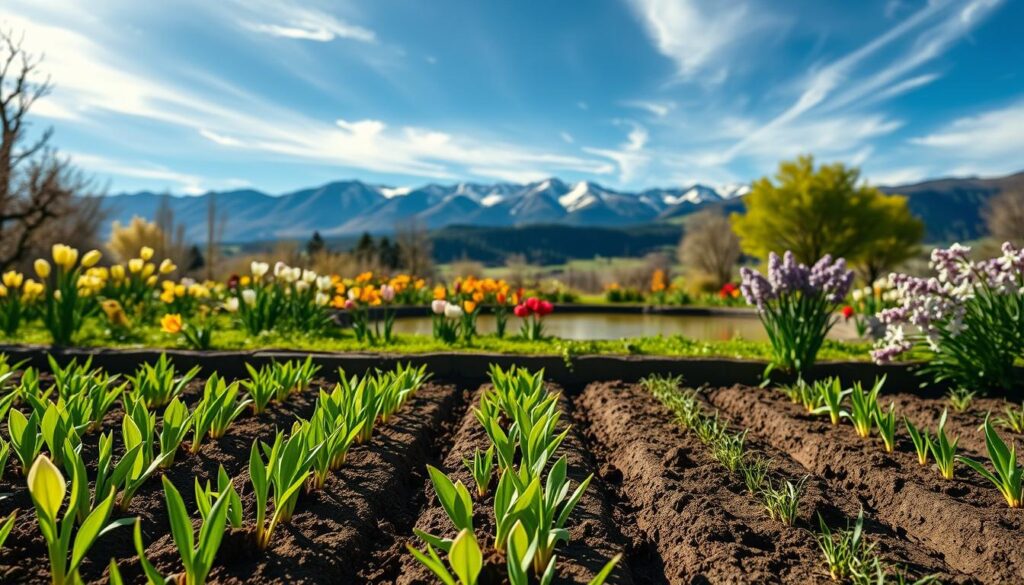
Wait for last frost for tender plants; start hardy pond perennials earlier
Track your local last frost date and base planting on soil readiness, not the calendar.
Hardy perennials can go in once the ground is workable. Tender annuals and warm-season accents should wait until frost risk ends.
- Tip: Avoid working overly wet soil to prevent compaction near pond edges.
- Space installations: add structural perennials first, then warm-season plants after frost.
- Time pruning of trees and shrubs to protect spring blooms and remove winter-damaged wood.
Set smart watering schedules and verify rain sensors
Tune your irrigation system before heavy use. Check sprinkler heads, drip lines, and program controllers now.
Use short, repeated cycles on slopes to reduce runoff and keep roots moist without oversaturation.
- Verify rain sensors so the system pauses during storms.
- Adjust schedules from cool-season to summer timing as growth increases.
- Feed the spring lawn based on soil tests and keep fertilizer away from shorelines.
“A simple care calendar keeps planting, irrigation checks, and fertilizer dates on track for the season.”
Planting and Care Guide for Utah Pond Plants
Use practical steps to set pond plants on a steady course for growth. Match depth, container type, and media to each species so roots take hold quickly.
Right depth, baskets, and soil mix for healthy roots
Use aquatic baskets filled with dense loam or clay-heavy soil. Avoid fluffy mixes that float and cloud the water.
Set lilies 12–24 inches deep and marginals at 2–8 inches. Raise baskets on bricks to fine-tune depth as levels change.
Firm soil around rhizomes and crowns to squeeze out air and encourage strong roots.
Weed control around beds with pre-emergent timing
Apply pre-emergent in non-pond zones and water it in to form a barrier. Hand-pull weeds at the shoreline to protect water quality.
Keep mulch 2–3 inches thick, raked to reduce compaction, and set back from crowns and trunks.
Balanced fertilizer use for blooms without runoff
Choose slow-release aquatic fertilizer tabs for baskets and push them into media during active growth. Follow the label and local rules.
“Feed plants responsibly — it boosts blooms and keeps the pond clear.”
- Hand-water marginal beds or tie them into the irrigation system only where needed.
- Thin dense clumps and divide perennials in late spring to sustain steady growth.
- Keep turf edges neat and blow clippings away from the water to protect the garden and lawn.
Conclusion
A few focused actions now yield a resilient pond and a tidy, thriving landscape. Test soil, use slow-release fertilizer, and set baskets and containers to proper depths for steady roots and clear water.
Finish beds with a 2–3 inch mulch layer, keeping material away from trunks and stems. Confirm irrigation settings and rain sensors so the system runs efficiently and the lawn stays even.
Keep grass high near the shore, remove clippings, and prune dead branches from trees and shrubs. Thin fast growers and deadhead flowers into summer to sustain blooms.
Use these practical tips yearly to protect your garden, lawn, and pond. Small seasonal checks save time and help the whole yard perform better each season.
You Might Also Like...