
How to Prevent Mosquitoes in Your Pond
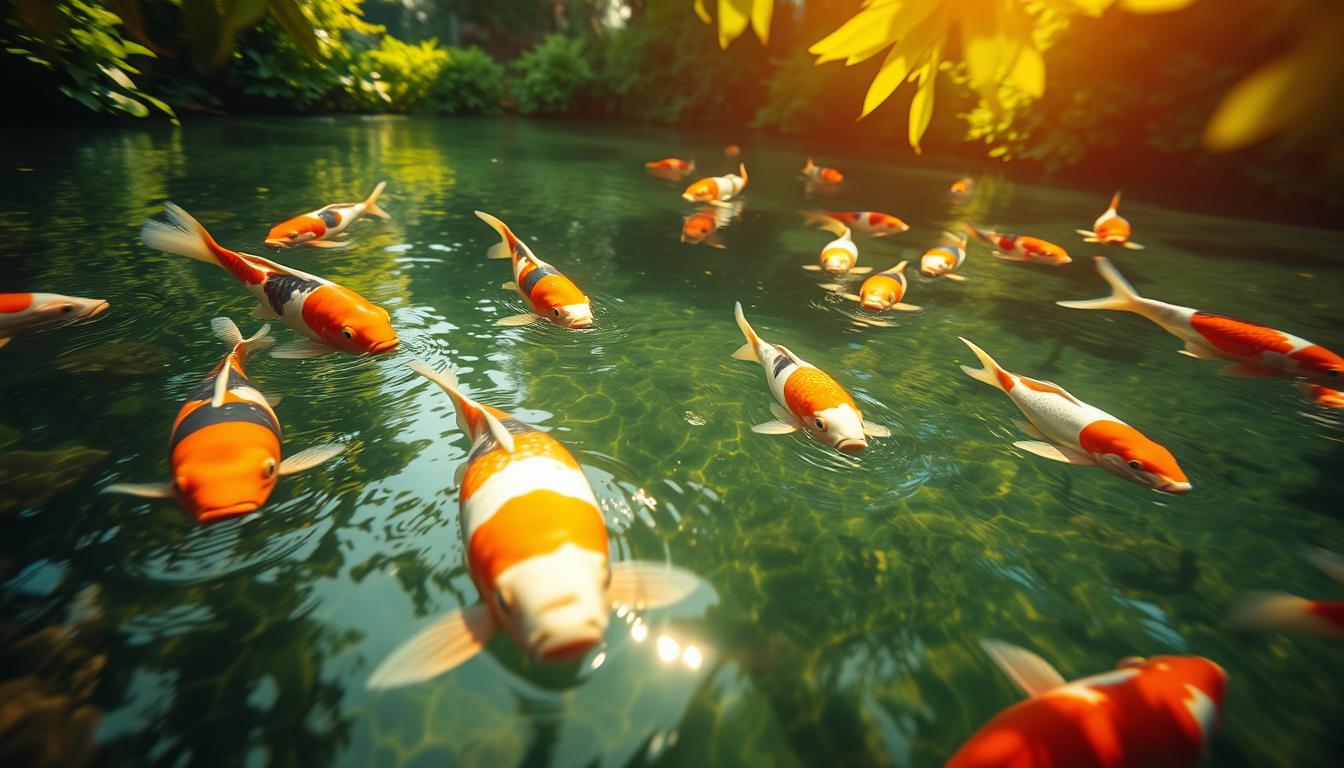
Good backyard water systems depend on steady monitoring and smart setup. Long-lived ornamental carp can reach three feet and need roomy, deep habitats with proper filtration. Plan for at least 10 gallons per inch of adult length and aim for a water temperature near 64–75°F to keep the environment stable.
Early attention prevents most outbreaks. Test water weekly after changes, then monthly when stable. Keep ammonia and nitrite low, run filtration so all water cycles at least every two hours, and quarantine new additions for 4–6 weeks.
Routine maintenance, correct stocking density, matched replacement water, and good feeding cut stress and lower common issues. Call an aquatic vet for odd symptoms like lethargy, fin damage, buoyancy problems, or discoloration. Small investments in system right-sizing and regular checks save time and money over the years.
Key Takeaways
- Monitor water quality and test regularly to catch problems early.
- Size deep systems and filtration to match fish growth and waste.
- Quarantine new fish for 4–6 weeks before adding them.
- Perform 10–25% water changes every 2–4 weeks and condition new water.
- Watch for behavior and appearance changes and consult a vet if needed.
Early warning signs: how to spot a sick koi before issues escalate
Early signs of distress are often subtle but catchable if you watch the surface regularly. A short daily check at feeding time makes inspection simple because fish come up and reveal behavior and body condition without netting.
Behavior and appetite changes to watch on the pond surface
Normal activity includes grouped feeding, steady cruising, and responsive movement. Red flags include isolating, hovering near returns, gasping at the surface, sudden hiding, or ignoring food.
Appetite changes — spitting pellets, eating then stopping, or refusing food — should trigger immediate testing of temperature and key levels.
Physical indicators: fins, scales, growths, and buoyancy problems
Scan fins and body for fraying, clamped fins, white spots, ulcers, lifted scales, mucus growths, bloating, or pinched abdomens. Watch for listing, rolling, or sinking; these are serious buoyancy signs.
When to call an aquatic veterinarian in the United States
Contact a vet if signs persist beyond 24–48 hours, if open sores or rapid breathing appear, or if several fish are affected. Annual or biannual aquatic vet visits and house calls help catch systemic issues.
- Quick action plan: Observe, test water (temperature, pH, ammonia, nitrite, nitrate), remove floating debris, perform a partial change if needed, reduce feeding, then call a vet if symptoms persist.
- Document problems with photos or video to aid diagnosis and care decisions.
Mastering pond water quality to prevent disease
Consistent testing and steady parameters protect fish and the system that supports them.
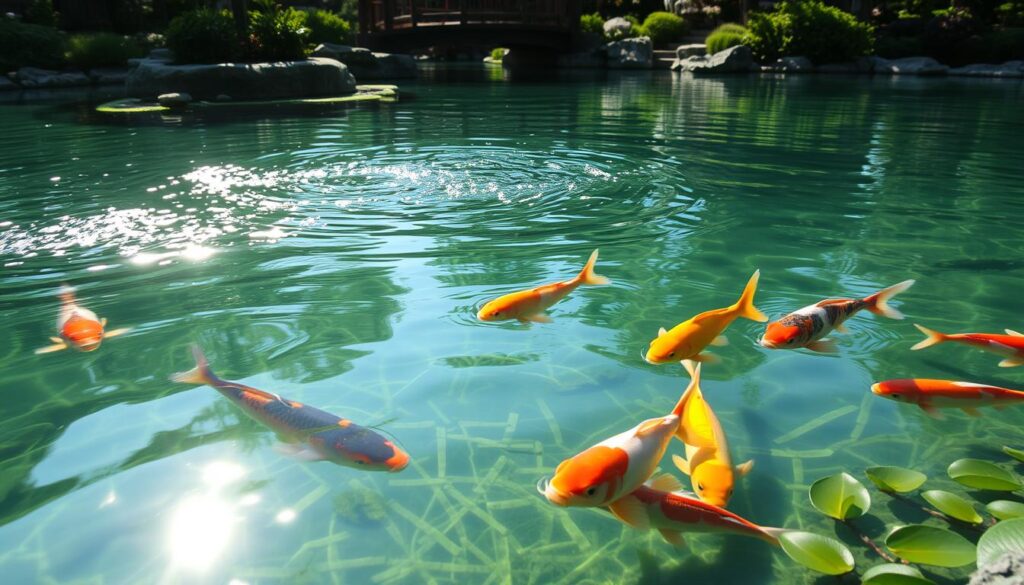
Target ranges and why stability matters
Aim for pH 7.0–8.6, with a sweet spot near 7.0–7.5 to reduce infection risk from swings. Keep ammonia and nitrite at zero. Hold nitrate as low as practical through partial water changes.
Testing cadence and long-term maintenance
After adding new fish or equipment, test weekly for two months. If readings remain steady, move to monthly checks.
Test again after heavy rain, heat waves, or increased feeding. Log results to spot trends like creeping pH or rising nitrate before fish show signs of stress.
Conditioning new water and protecting beneficial bacteria
Always use a conditioner to remove chlorine, chloramine, and heavy metals when you change water. Match replacement water temperature and salinity closely to avoid osmotic shock.
Seed or boost beneficial bacteria when starting filters or after major cleanings. A mature biofilter converts waste: ammonia → nitrite → nitrate, keeping levels safe for fish.
- Quick checklist: stable pH, zero ammonia/nitrite, low nitrate, regular log checks.
- Assess system capacity, stocking, and maintenance rhythm to maintain quality and immune resilience.
Filtration fundamentals: mechanical, biological, and UV support
An effective filter strategy combines solids capture, biological conversion, and UV treatment. These three stages work together to keep water clear and lower pathogen pressure for koi and other fish.
Right-sizing your filter and pump by gallons and flow rate
Target at least one full turnover every two hours. For example, a 3,000-gallon system needs roughly 1,500 GPH delivered after accounting for head and plumbing losses.
Choose the larger size when in doubt; upsizing stabilizes quality as biomass grows.
UV filtration to reduce algae and pathogen load
Place the UV after mechanical media so light can reach clear water. Clean quartz sleeves regularly and replace bulbs annually per manufacturer guidance.
“Treat your filtration as a living component: preserve media and beneficial bacteria during maintenance.”
- Maintenance tips: Rinse mechanical media in pond water only and never replace all media at once.
- Pair filters with matched pumps, pre-filters, and skimmers to cut solids and extend service intervals.
- Watch flow decline or differential pressure as an early sign to service mechanical elements.
Pond cleaning routines that keep disease-causing bacteria in check
A simple, steady cleaning routine stops organic buildup before it fuels outbreaks.
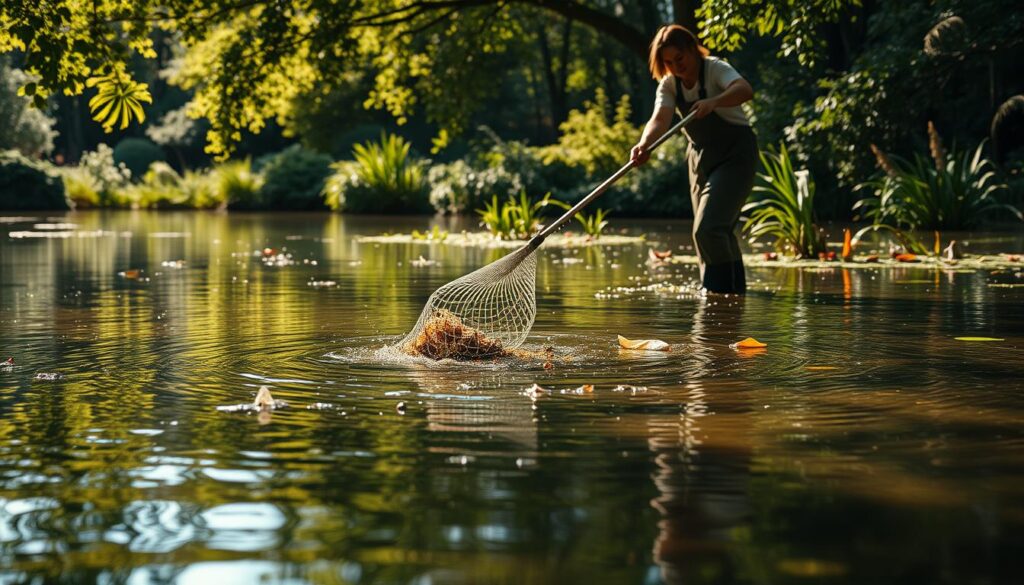
Daily attention keeps the surface free of leaves and uneaten food. Use a net or skimmer each morning and clean skimmer baskets weekly to prevent solids from sinking to the bottom.
Removing muck and debris from the bottom and pond surface
Run a pond vacuum when sludge accumulates; muck can harbor parasites, fungi, and bacteria. Inspect after storms and during heavy leaf fall and remove debris promptly.
Partial water changes and preserving beneficial bacteria
Perform 10–25% water changes every 2–4 weeks to dilute nitrates and dissolved organics. Always dechlorinate and match temperature and salinity to avoid stressing koi and fish.
- Protect biofilters: rinse media gently in removed pond water and stagger media replacement to preserve beneficial bacteria.
- Support stability: add a bacteria supplement weekly, especially after filter work or large cleanings.
- Document results: track cleaning frequency and water quality; adjust cadence if clarity or odor do not improve.
“Mechanical cleaning removes solids without stripping biological stability; balance is key.”
Aeration and oxygen levels: keeping koi and microbes in balance
Well-placed diffusers change still layers into active circulation, helping fish breathe easier and filtration work better.
Diffused aeration benefits for fish respiration and biofiltration
Diffused aeration increases oxygen transfer throughout the water column. That improves respiration and stamina for koi and other fish.
Better oxygen also helps beneficial bacteria in the biofilter. Nitrifying microbes convert ammonia and nitrite more reliably when oxygen levels are steady.
- Place diffusers in deeper zones to lift low-oxygen water and even out temperature and oxygen.
- Steady circulation reduces dead zones where debris collects and degrades water quality.
- Boost output in hot weather and at night when oxygen solubility drops and fish metabolism rises.
Pair aeration with proper mechanical filtration. Removing suspended solids and adding oxygen together improves clarity and system stability.
“Visible gasping at the surface or crowding near waterfalls often signals low oxygen and a need to increase aeration.”
Check pumps, airlines, and stones regularly and keep a backup power option for outages. Modest aeration upgrades often yield outsized improvements in resilience and reduce disease risk.
Temperature control and seasonal feeding for healthy koi
A reliable thermometer and simple equipment choices make seasonal care much easier.
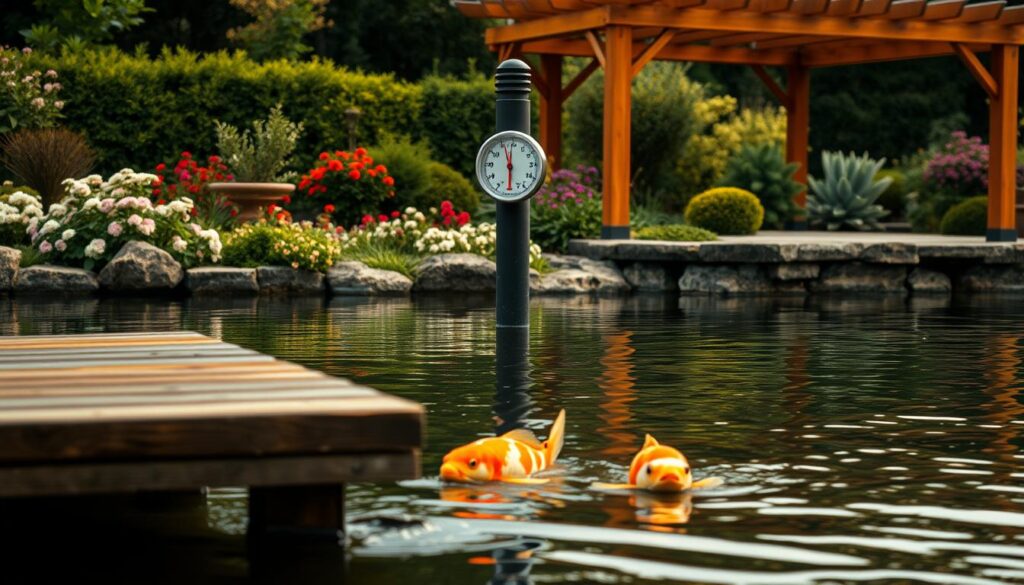
Target range and preventing daily swings
Set an ideal target of 64–75°F. Limiting daily swings to about ±2°F supports steady metabolism and stronger immune response in fish.
Place thermometers in both shallow and deep areas to detect stratification. That helps you tune aeration or circulation to even out water levels.
Seasonal gear and feeding adjustments
Use de-icers or small heaters in winter and add shade or extra aeration in summer to keep temperatures in range. Rapid spring warm-ups can outpace biofilter recovery; increase testing and feed gradually.
- Below 55°F: feed sparingly every few days — digestion slows.
- 55–70°F: feed once daily.
- Above 70°F: feed up to twice daily, adjusting pellet size to fish size.
Use temperature-specific diets (wheat-germ formulas in cool water) and only offer what is eaten within a few minutes to avoid wasted food and poor water quality.
Store food airtight in a cool place and replace bags every six months. Consistent temperature management and proper feeding improve growth, coloration, and overall fish well-being in your koi pond.
Stocking density, pond size, and quarantine to protect koi pond health
Proper stocking and quarantine decisions start with clear math and a separate holding tank.
How many fish per gallons and the risks of overcrowding
Use adult size when you plan: budget about 10 gallons per inch of final length. A 24–25-inch adult needs roughly 250 gallons. For a conservative rule, consider one fish per 100 gallons to avoid crowding.
Overcrowding raises waste, strains filters, lowers oxygen, and speeds disease spread. Keep capacity for growth, breeding, and extra biofilter performance.
Quarantine timelines and steps for new introductions
Quarantine new additions in a separate system for 4–6 weeks. Use independent filtration, test water regularly, and observe behavior and appearance.
- Drip-acclimate and match chemistry before transfer.
- Monitor pond water after each addition for ammonia, pH, and nitrate shifts.
- Review maintenance and capacity when biomass rises and map shaded areas and circulation so fish can choose microhabitats.
“Lower densities simplify care and make behavior changes easier to spot early.”
Document sizes, stocking dates, and test logs. This record helps future decisions and preserves stability in your area system.
Nutrition and immune support: feeding strategies that prevent disease
Small, regular meals of varied, high-quality food reduce waste and boost natural defenses.
Select pellets formulated for koi fish with balanced protein, carbohydrates, vitamins, and minerals. A staple pellet keeps growth and coloration steady.
Choosing quality food and maintaining freshness
Offer a varied menu: pellets as the base, with occasional flakes, fully thawed frozen items, and freeze-dried treats. Thaw frozen food completely before serving.
Feed koi small portions they eat in 1–2 minutes. You can offer more up to 3–5 minutes total, then remove leftovers daily to protect water quality.
- Store food in a cool, dry place and replace bags every six months.
- Adjust rations to temperature and activity; reduce portions when water cools and increase when metabolism rises.
- Include safe plant-based treats sparingly so plants are not overgrazed and the pond stays clean.
“Nutrition strengthens the slime coat and speeds recovery from minor injuries.”
Watch fish at feeding time for slow responses or swallowing trouble. Good diet plus steady care and clean water prevents many avoidable problems and supports healthy koi long term.
From diagnosis to action: treating common koi diseases safely
A clear plan that starts with testing water saves time and prevents guesswork when fish falter.
First steps: Test ammonia, nitrite, nitrate, pH, and temperature immediately at the first sign of stress. These readings often reveal environmental causes rather than primary pathogens.
Next, perform a measured partial water change to dilute toxins. Condition replacement water to remove chlorine or chloramine and match temperature so you keep water chemistry stable for koi fish.
When to use salt baths and targeted medications
Salt baths can soothe gills and support the slime coat, but dose precisely and avoid harming plants or biological filters. Isolate the fish for a short dip if practical and follow product guidance.
Use antifungal or antiparasitic treatments for visible fungus or protozoal infestations like ich. Choose antibacterial products for ulcers, fin rot, or systemic bacterial infections. Read labels and calculate pond volume to dose accurately.
Protect filtration and follow safety steps
Remove chemical media such as carbon before dosing and restore it after treatment per manufacturer instructions. Quarantine affected fish when possible to limit spread and allow targeted care.
Reevaluate maintenance after an outbreak
After recovery, review pond maintenance: feeding rates, stocking density, filtration sizing, cleaning cadence, and aeration. Fix root causes to prevent recurrence.
- Document tests and treatments with dates and photos.
- Follow-up with repeat testing until parameters stabilize.
- Consult an aquatic veterinarian for scrapes, gill biopsies, or culture if issues persist — you’ll also gain lab-backed guidance.
“Begin with water diagnostics and a partial change; targeted treatment and system fixes follow.”
Conclusion
Small, consistent actions—like debris removal and weekly testing—build resilient water systems over time.
Keep water temperature steady near 64–75°F, hold pH around 7.0–7.5, and aim for zero ammonia and nitrite with low nitrate levels. Monitor oxygen and flow so beneficial bacteria and filters can do their job.
Right-size filtration, add UV where useful, and stick to a regular cleaning and maintenance schedule. Remove surface debris daily, vacuum bottoms as needed, and feed measured portions of fresh food.
Document tests by date and area, review trends monthly, and quarantine new additions for 4–6 weeks. When unsure, collaborate with an aquatic veterinarian to protect koi pond health for years to come.
You Might Also Like...