
How to Prevent Mosquitoes in Your Pond
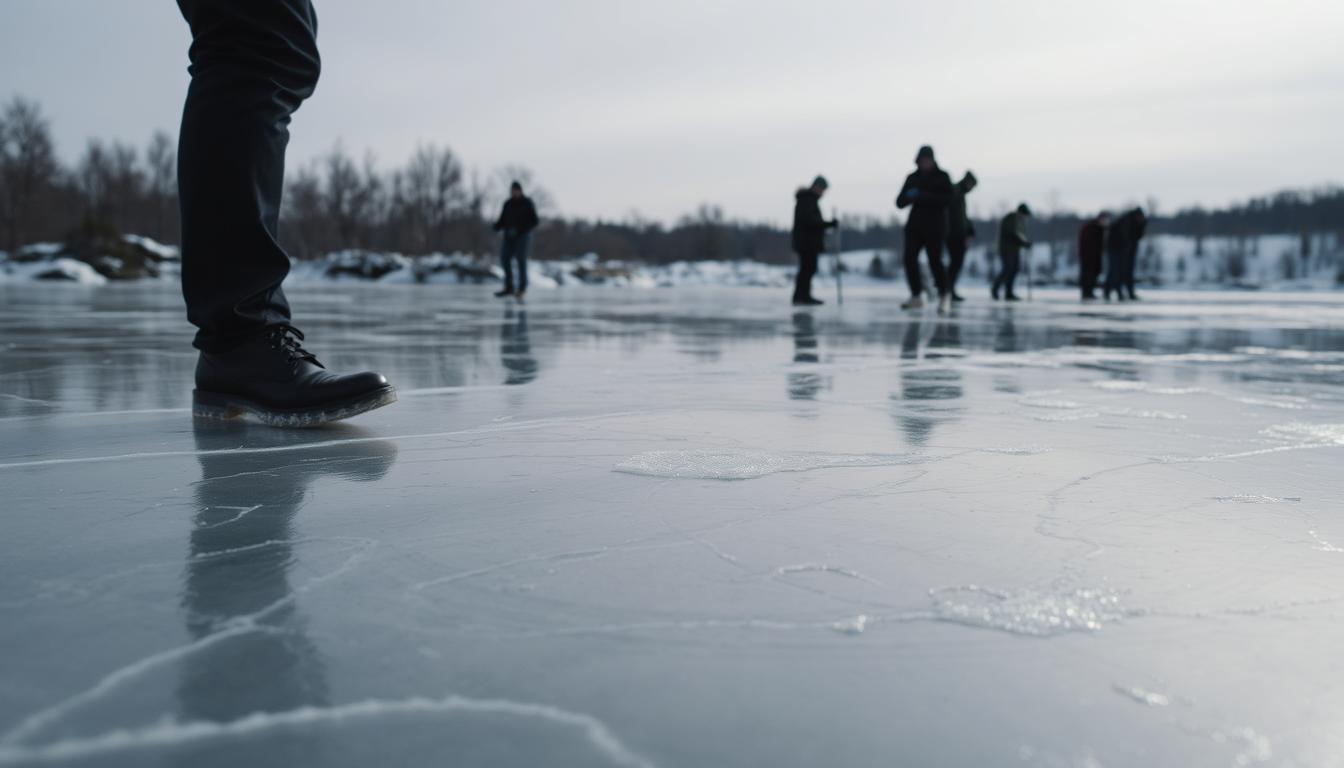
Short answer: natural sheets of ice can look inviting, but they are not uniformly reliable.
In winter, lakes and small ponds may form a solid surface that invites skating, fishing, or a walk. Yet natural ice often varies in thickness and quality. Currents, springs, sunlight, and snow all create weak spots that are hard to see from shore.
This guide explains how to evaluate conditions before you step out. You will learn simple checks: watch freezing trends, judge surface color and defects, and measure thickness in multiple places. Follow conservative rules: less than 3 inches is too thin for walking; clear, solid ice near 4 inches may hold one person, while 6–8 inches suits groups or small vehicles.
Keep risk tolerance low: supervise children, leash pets, carry basic rescue gear, and call 9-1-1 in an emergency. Remember “reach, not rescue”—avoid a direct rescue if the ice is uncertain.
Key Takeaways
- Natural ice is unpredictable; only maintained rinks are reliably safe.
- Check thickness in several spots and watch weather trends over time.
- Less than 3 inches is too thin for most people; 6–8 inches for groups.
- Bring life jackets, a throw rope, phone, and use the buddy system.
- If someone falls in, call 9-1-1 and use reach‑not‑rescue methods.
Why frozen water is unpredictable in winter
What looks like a smooth surface can hide weak layers beneath from daily temperature swings. Freeze‑thaw cycles create alternating layers that expand, contract, and crack. Those layers can make ice several inches thick in one spot and thin an arm’s length away.
Sunlight, especially on south-facing shores or under bridges, melts the top while moving water erodes the bottom. Wind and early waves also form uneven sheets and pressure ridges that fracture later, even after colder weather returns.
Not all ice is equal. Clear, blue ice forms more uniformly and bears weight better. White, milky ice contains trapped air and snow crystals and is much weaker.
Snow masks hazards. A few inches of snow hide cracks, pressure ridges, or open leads and can insulate the surface, slowing ice growth below. Aeration systems and fountains inject air and keep water moving, leaving thin, unsafe areas long after nearby sections seem solid.
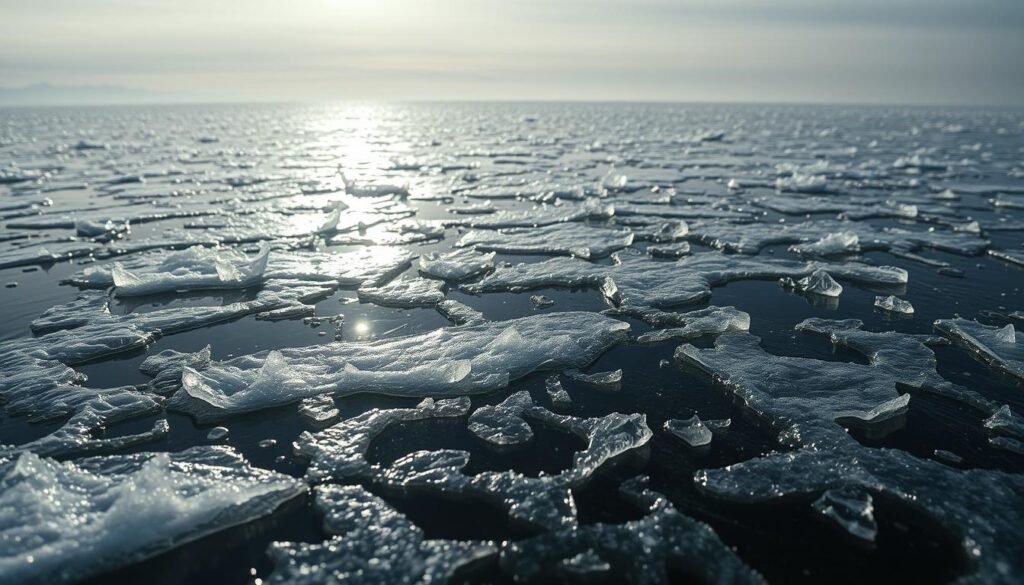
- Thickness can vary over a few feet due to springs, inlets, and currents.
- River ice changes rapidly with flow—avoid river crossings in winter.
- Teach kids and keep pets close: appearances are deceptive.
How to assess a pond’s ice step by step
Start from shore. Scan the surface and shoreline for color changes, open water, or visible flow paths before you move any closer. Check local weather records for a sustained period of below-freezing temperatures over 2–3 weeks to allow more uniform formation.
Judge surface quality
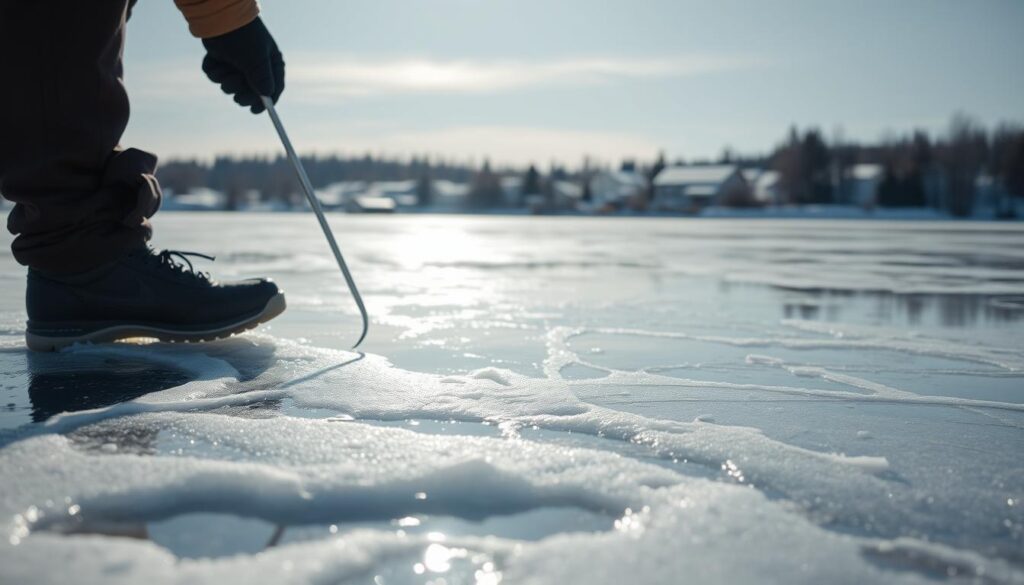
From shore, look for clear, blue areas versus white or layered patches. Bubbles, cracks, honeycombing, and trapped snow weaken the sheet. If aeration systems ran, treat nearby areas with visible boils or slush as unsafe because air and circulating water reduce strength.
Measure thickness safely
Start over shallow water and work outward. Drill a small test hole, measure thickness with a tape or hook, and recheck every few yards. Use conservative thresholds: stay off if any reading is under 3 inches; about 4 inches of clear ice is a common minimum for one person, while 6–8 inches suits groups or small machines.
Know common weak spots
Avoid inlets, outlets, springs, culverts, narrow channels, and sun-warmed shorelines. Vegetation, docks, and river-connected areas often hide thin spots where currents or warm water undercut the sheet. Keep a margin for changing weather and carry basic rescue gear and a buddy when testing.
- Tip: Map sample points and never rely on a single measurement.
- Tip: If recent temperatures rose or new snow fell, re-measure before going onto ice.
- Tip: Wear a life jacket while testing and keep a throw rope on shore.
Frozen pond safety: gear, behavior, and on-ice decisions
Good preparation and clear rules make on-ice decisions far safer for everyone.
Prep checklist: Pack a U.S. Coast Guard–approved life jacket, a throw rope or rescue line, and a fully charged cell phone in a waterproof case. Go with a buddy who stays on shore to monitor. Measure thickness in shallow water first and confirm about 4 inches of clear ice in several spots before you go onto ice.
- Family and pets: Supervise kids, put life jackets on young children near water, and keep dogs leashed. Read and follow posted signs at local ponds.
- When to stay off: Avoid white or milky ice, snow-covered surfaces that hide cracks, slushy areas, and early or late winter layers with variable thickness.
- If someone falls through: Call 9-1-1, keep your weight off weak ice, and use “reach, not rescue” — extend a ladder, rope, jumper cables, or a long branch to pull them in.
- If you fall in: Control breathing, face the direction you came from, kick to get your chest onto the surface, then roll or crawl away to spread weight and get to dry clothing. Seek medical care for cold exposure.
Quick tips: Treat river-connected areas as no-go zones. Recreational skating or heavy loads require much thicker ice than a single person. When conditions change, recheck before every visit.
Conclusion
Treat any sheet of winter ice as unpredictable until tests prove otherwise.
Default to staying off natural surfaces unless you can verify thickness at multiple spots. Wait for about 4 inches of clear, solid ice for one person and walk away if any reading is under 3 inches.
Remember that currents, sunlight, wind, snow, and aeration change strength in a short time and over short distances. Even familiar ponds can vary by feet and by the hour.
Keep children supervised, leash pets near water, wear a life jacket, and carry rescue gear. If someone goes through, call 9-1-1, keep your weight back, and use a long object for reach, not rescue. After extraction, treat for cold exposure promptly.
Share these precautions with neighbors and community groups and recheck conditions each time you approach a pond this winter. Small checks save lives.
You Might Also Like...