
How to Prevent Mosquitoes in Your Pond
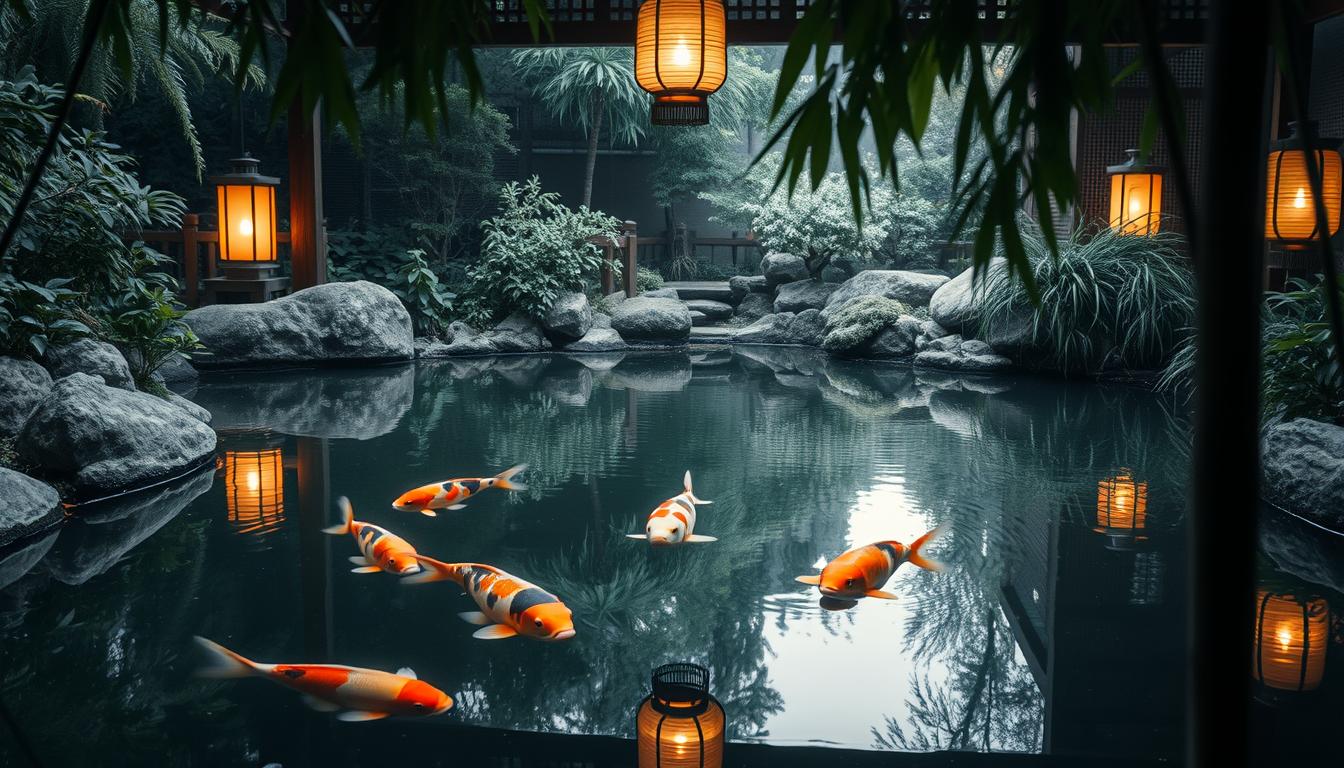
Keeping a healthy pond through cold weather starts with simple, proven steps. A pond three to five feet deep gives fish room to rest near the bottom where water stays warmer. Proper depth, oxygen, and venting reduce risk when surface ice forms.
Use an aerator to move water and keep oxygen levels steady. Add a thermostatic de-icer to hold a small opening in the ice. Many owners run two de-icers on separate circuits for backup.
Stop feeding when water dips below 50°F because digestion largely stops and uneaten food can harm fish. Do fall cleanup, check systems mid-season, and plan a spring reactivation to avoid surprises.
If severe conditions threaten your stock, consider temporary indoor holding as a backup plan. Regular weekly checks at a U.S. home pond help ensure fish survive the months of cold without stress.
Key Takeaways
- Deep ponds (3–5 ft) let fish rest safely near warmer bottom layers.
- Aerators and thermostatic de-icers maintain oxygen and an ice opening.
- Stop feeding below 50°F to protect fish health.
- Follow a three-step workflow: fall prep, mid-winter checks, spring restart.
- Have redundancy and a backup indoor plan for extreme freezing events.
Understanding winter risks and how koi survive in cold water
When cold sets in, fish move deeper and the top layer can seal, changing how the whole pond breathes.
What changes in the pond environment: Surface ice can form a seal that cuts off air exchange. Oxygen drops and toxic gases build beneath the ice. This puts pond fish at risk unless a vent hole or de-icer keeps a small opening.
- As water cools toward 45 degrees, koi slow activity and use fat stores while staying near the bottom pond layer.
- Stable water temperature prevents stress; rapid swings weaken immunity and digestion.
- A pond depth of 3–5 feet preserves a warmer bottom zone so fish winter safely without freezing solid.
“Watch the surface and the thermometer. Small steps—air movement and modest oxygenation—are often enough to protect the fish.”
Tip: Use a pond thermometer to track water temperature and know when to stop feeding. Keep waste low and the top calm so oxygen and chemistry stay balanced during the cold months.
Prep your koi pond before the freeze for better winter survival
Tackling pond tasks before freeze-up prevents low-oxygen zones and toxic buildup under ice. Start in late fall when access is easy and water still responds to treatment.
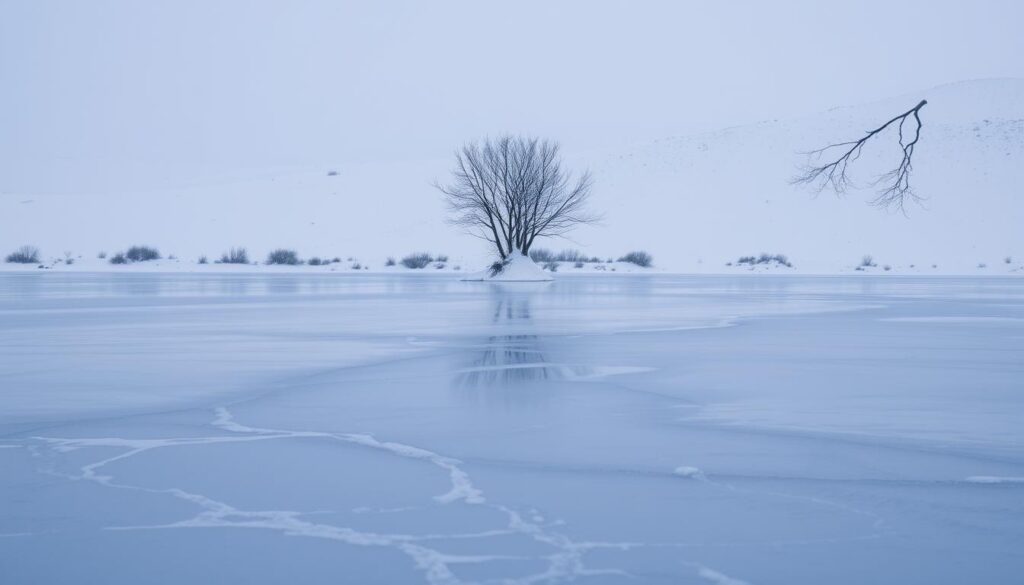
Confirm depth and refuge spots
Make sure the pond measures 3–5 feet at several points so fish can hold at the bottom where temperatures stay steadier. Mark shallow edges and deeper pockets to verify feet deep refuge zones.
Clean leaves, sludge, and debris
Remove fall netting after trees finish shedding, then skim and vacuum sediments. Decaying material on the bottom releases gases that can build up under ice and threaten fish health.
Transition systems and feeding
Switch to wheat-germ feed as water cools, then stop feeding near 50°F. Treat parasites and add cold-weather beneficial bacteria before temperatures plunge.
- Shut down waterfalls before sustained freezes to avoid chilling the pond.
- Winterize non-essential pumps, check plumbing, and inspect liners and rockwork.
- Do a final partial water change only if parameters need correction.
Document settings and tasks now— it makes spring restart faster and reduces surprises.
Ice and oxygen management: keeping a safe hole and healthy airflow
Maintaining one small, steady opening in the ice keeps oxygen moving and prevents toxic gas buildup beneath the surface.
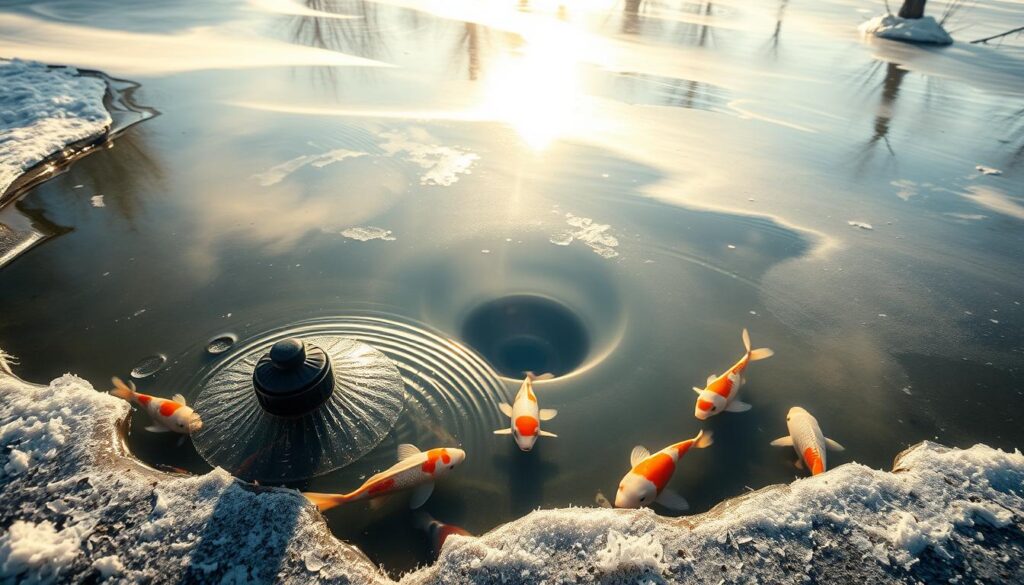
Place and run an aerator correctly
Position your aerator mid-depth in 4–5 foot ponds so it does not disturb the warmest bottom layer. In shallower zones, set the unit low but away from the very bottom pond sediment.
Aim for a gentle air stream. Small bubbles add oxygen without forcing warm water up into colder layers and stressing fish.
Use a thermostatic de-icer to hold an opening
Install a de-icer that keeps a tiny vent near 40°F. One steady hole is far better than repeatedly smashing a wide gap.
For harsh spells, consider two units on separate circuits to avoid a single point of failure.
Don’t break the ice — melt or drill vent holes safely
Never smash ice; shock waves can hurt fish and damage liners. Melt a vent with controlled heat or drill holes with an auger.
- Listen for the aerator hum and verify bubbles reach the hole.
- Clear snow or slush so the opening stays effective.
- Keep eye on the top opening during sudden temperature drops.
Ice insulates — the goal is a reliable vent, not a large exposed patch.
Good air management is the simplest, most cost-effective way to protect pond fish while preserving the calm refuge at the bottom.
Feeding and water quality during the winter months
As temperatures drop, changing feeding habits and careful water checks keep your pond stable through the cold months. Small, steady steps prevent large swings in chemistry and oxygen.
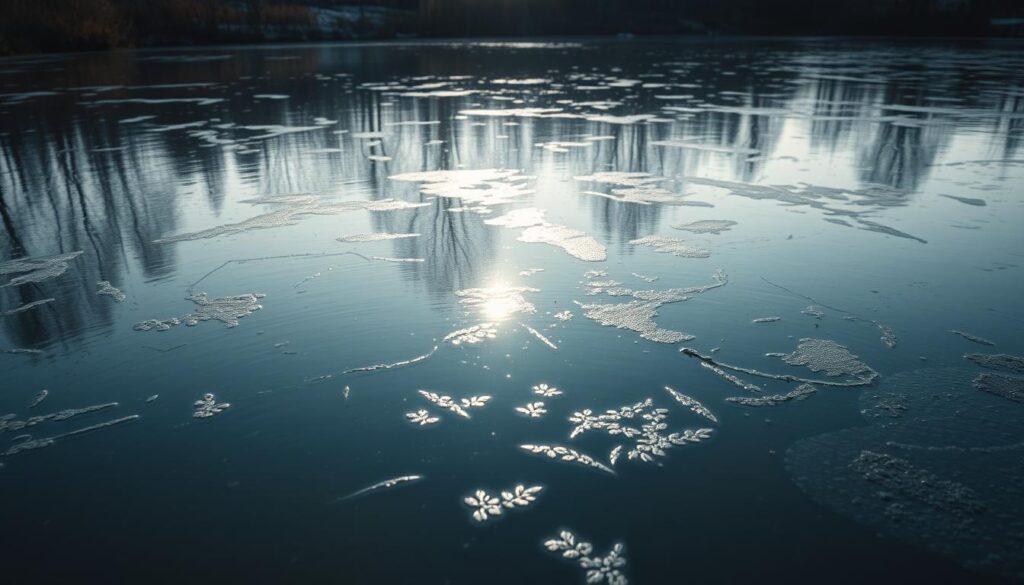
Stop feeding below 50°F and monitor degrees
Do not feed once the water temperature reaches 50°F. Digestion mostly halts in cold conditions and uneaten food raises waste that harms fish. Use a reliable thermometer and log readings at the same time each day to track the water temperature and plan feeding.
Support beneficial bacteria and finish treatments before deep cold
Switch to wheat-germ diets in the fall, taper portions, then stop feeding before deep cold arrives. Dose cold-weather beneficial bacteria ahead of freezing months to keep biological filters active.
- Complete parasite treatments in fall—meds work poorly at low degrees.
- Watch fish behavior: erratic swimming or gasping at the surface signals oxygen stress.
- Avoid big cleanings or filter overhauls in cold months to prevent shocks.
“Patience and restraint are the best winter tips—less disturbance helps fish and the pond stay balanced.”
Resuming feeding: wait for a steady rise well above 50°F in spring, then start with small, easily digested portions.
Equipment choices that help koi through freezing temperatures
Selecting gear that matches your pond size and local climate keeps water stable and reduces risk to fish. The right setup depends on budget, desired effort, and how warm you want the water to stay.
Heaters vs. thermostatic de-icers
A de-icer holds a small vent near 40°F and uses less power. It protects the pond by keeping gas exchange open without heating the whole pond.
A full heater system (boiler + heat exchanger + probe) keeps temperatures near summer levels. This requires year-round feeding, filtration, and extra maintenance.
Placement, redundancy, and electrical safety
Position a de-icer on the prevailing wind side so the opening resists slush. One reliable unit may be enough, but two on separate circuits give real backup.
Electrical tips: use GFCI outlets, weatherproof cords, and separate breakers when running multiple units to avoid a single failure sealing the pond.
Covers, hoop houses, and DIY greenhouse ideas
Pond covers and small hoop houses cut wind chill and heat loss. They boost equipment efficiency but do not replace proper aeration or a vent hole.
Even with a cover, monitor temperature and verify the opening stays clear—covers reduce ice, but rarely eliminate it in severe cold.
“Balance energy costs, reliability, and fish safety when choosing gear for your fish pond.”
- Match equipment size to pond volume and local lows; undersized devices fail when needed most.
- Simple checklist: test de-icer, check aerator flow, inspect cover integrity, and confirm filter bypass before strong fronts.
- Remember: heated ponds change feeding and maintenance needs for the year.
Koi winter survival in severe cold: backup plans and regional tips
A straightforward contingency plan helps protect your fish pond during prolonged freezes and equipment failures. Decide early when outdoor conditions exceed your gear or pond depth.
When to move fish indoors
Move fish indoors for prolonged subzero spells, very shallow basins, repeated equipment outages, or dangerous ice buildup.
Basic home holding setup
Use a large tank (hundreds to ~1,000 gallons) with biological filtration, steady aeration to supply air, and a heater to maintain stable water temperatures.
Plan volume generously—koi fish grow fast—and fit secure covers to prevent jumping.
Safe transfer and care
Quarantine and acclimate gradually to reduce stress and disease risk. Monitor tests weekly and schedule routine water changes during the months indoors.
- Prepare transport containers, oxygenation, and lids ahead of time.
- Have power backup for pumps and heaters and leave clear access for maintenance.
- If some remain outside, keep a de-icer opening, inspect after storms, and remove gear that can crack under ice.
“Document thresholds and trigger points so you know exactly when to act.”
Regional note: In very cold areas, use both outdoor covers and an indoor contingency plan. Reverse moves slowly in spring to avoid shocks and protect fish long term.
Conclusion
Diligent prep and steady checks help most ponds pass the cold season with little drama. Depth (3–5 ft), gentle aeration, a reliable vent opening, and stopping feedings below 50°F form the core formula for healthy pond fish.
Keep an eye on the aerator, the top opening, and water clarity under covers. Fall tasks and routine pond maintenance set up a calm, low-stress spring restart.
Choose equipment that fits your climate and budget—de-icer, heater, or cover—and add redundancy where power or weather pose risks. Patience and observation protect the environment in deep cold; avoid breaking ice and prioritize oxygen exchange.
With these tips and a short seasonal checklist, most koi pond owners can guide fish through the months of cold and into an active spring.
You Might Also Like...