
How to Prevent Mosquitoes in Your Pond
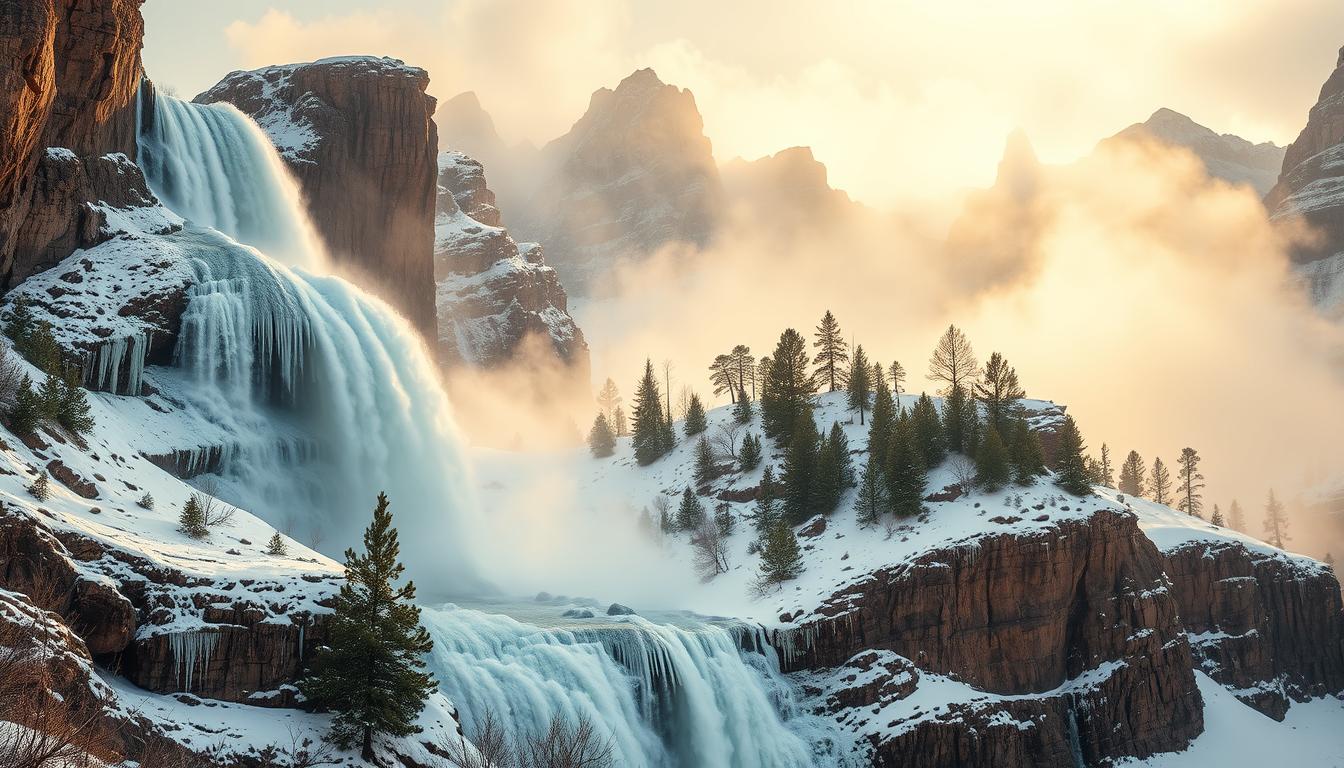
Many Utah homeowners ask each year whether a backyard waterfall or connected water feature can run safely during the cold months.
The right approach depends on your setup, local cold snaps, and how you monitor ice and water levels. Consecutive sub-zero days can cause excess ice and ice dams that divert flow or drop levels suddenly.
Simple routines help protect pumps and plumbing. Top off basins occasionally when outdoor spigots are off, unplug and drain fountains, and remove pumps for storage if you plan a full shutdown.
For pond systems with fish, keep a hole for gas exchange and use aeration to maintain oxygen. Never smash surface ice; that risks equipment or fish.
This guide gives clear, practical information and a how-to roadmap: evaluate your feature, choose to run or winterize, and follow maintenance steps through the year. If complex issues arise, contact a qualified water feature professional for tailored help.
Key Takeaways
- Monitor ice formation and water level during cold snaps.
- Top off basins periodically to prevent pumps from running dry.
- Unplug, drain, and store fountain pumps in freezing climates.
- Keep a hole or aerator for ponds with fish to ensure oxygen exchange.
- Watch for ice dams; they can divert flow and cause leaks.
- When in doubt, contact a pro to avoid costly issues.
Understanding Utah Winters: Can Your Water Feature Safely Run All Season?
Utah’s high elevation and wide temperature swings mean outdoor water features face unique winter risks. Moving water often keeps a small open patch near a waterfall or fountain, but consecutive sub-zero days increase the chance of rapid ice buildup.
How cold snaps affect flow:
- Shaded or windy exposures let ice bridge across a stream channel and harm the circulation system.
- Splash that freezes into ridges can form ice dams that divert flow out of liners and cause sudden water loss.
- An undersized pump may struggle as viscous water and higher head height reduce winter flow; prolonged stress can justify a temporary shutdown.
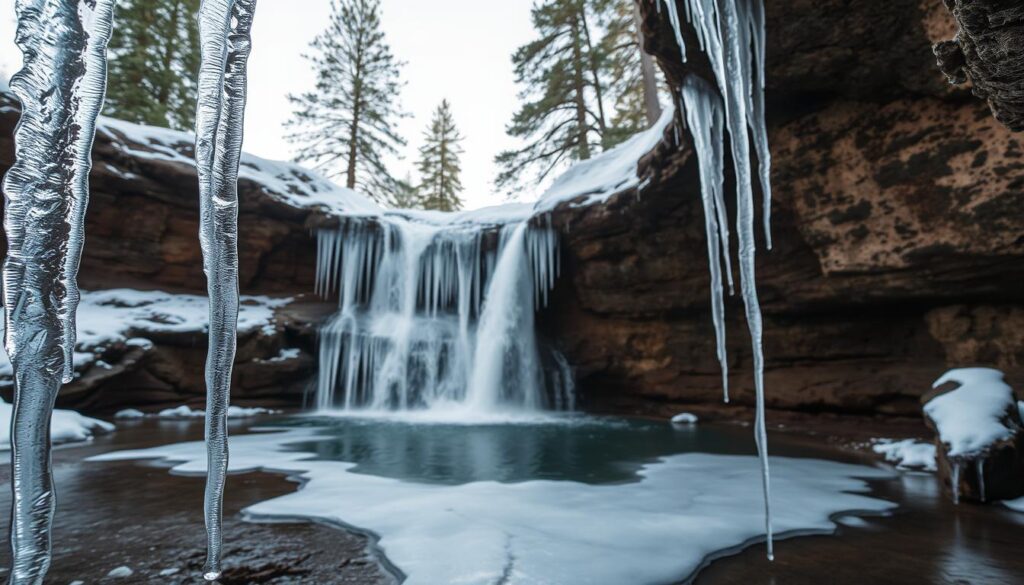
Vigilant checks matter during long cold stretches: look for reduced flow, odd sounds, and exposed rock shelves where water may slip under ice. Clear debris before the deep freeze so ice forms evenly. Document conditions after each cold event to plan maintenance for the next time similar weather occurs.
Run It or Winterize It: Choosing the Right Plan for Your Waterfall, Pond, or Fountain
A short checklist of flow reliability, pump capacity, and exposure will help you pick the right winter plan for your water feature.
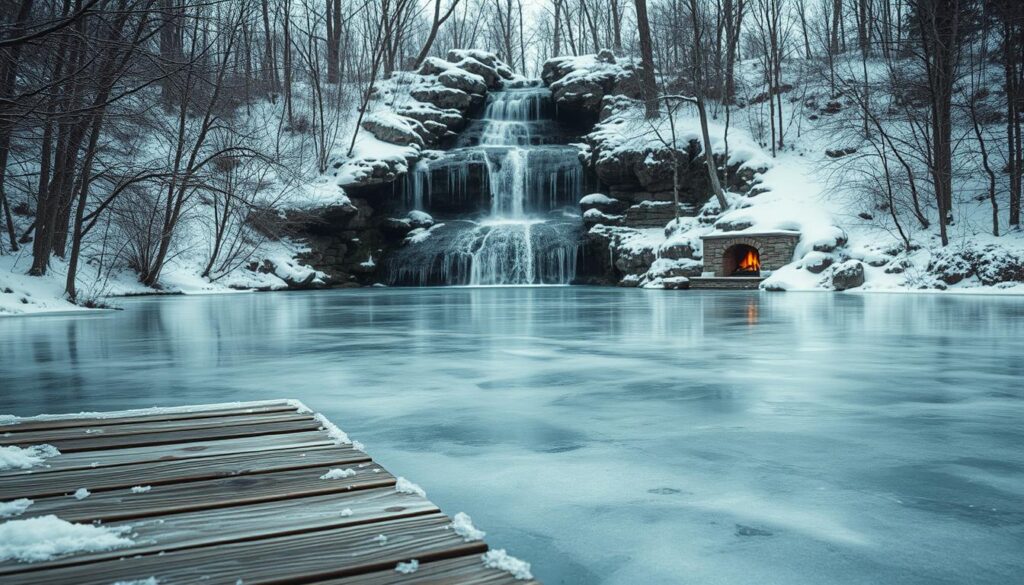
When to keep streams and falls running
Keep moving water if your stream has steady flow, clear return paths, and a pump rated for higher head in cold conditions.
Monitor for ridge ice or pinch points where splash builds up. If flow narrows or diverts, plan a controlled shutdown to avoid liner damage.
Ponds and ecosystem guidelines
Stop fertilizing before the deep chill. Trim marginals to just below the waterline and cut hardy lilies to just above the rootstock.
Bring tropical plants indoors and group hardy baskets low in the pond for stability. Stop feeding fish when water falls to about 12°C.
Maintain gas exchange with an aerator or de-icer if surface ice forms, and remove leaves to reduce nutrient load.
Fountains: shut down to prevent cracking
Because basins and vertical elements trap splash that freezes, the safest route is to unplug, drain, remove the pump, and cover tightly.
- Decision steps: check plumbing access, pump strength, shade, and wind exposure.
- Pump storage: if you shut down, keep the pump in clean water in a non-freezing spot to protect seals.
- If unsure, contact a local pro for site-specific information about leaving a pump running during cold stretches.
How to Keep a Waterfall Running in Winter Without Damage
Start with a clear winter routine. Test the circulation system and confirm the pump delivers steady flow at the winter head height. A pump near 2,000 gallons water per hour is a common benchmark; systems below that may need a conservative plan.
Test pump and system performance
Run the pump and watch for steady flow under colder conditions. Listen for pitch changes and check that the circulation keeps the stream open.
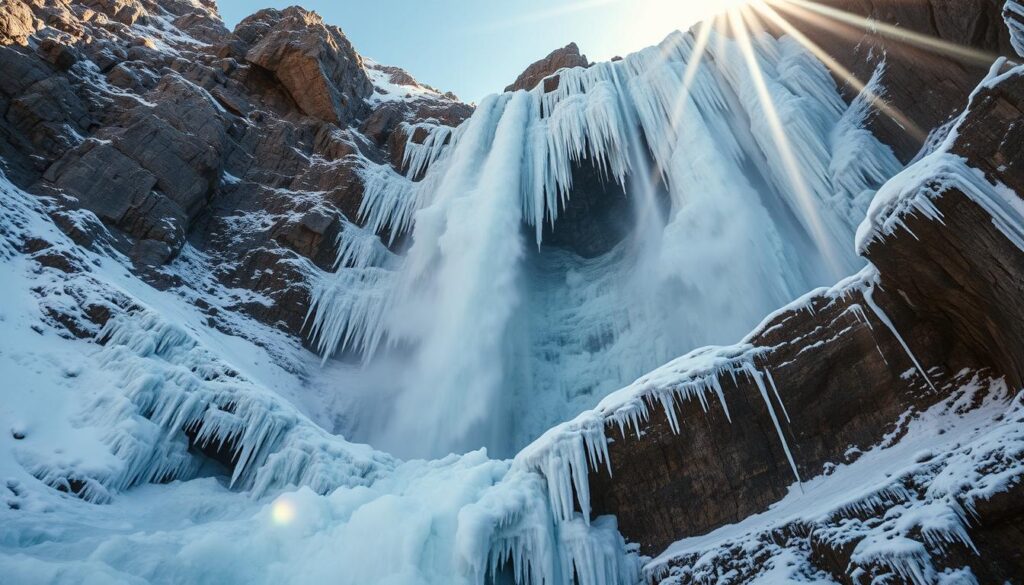
Watch for ice dams and diverted flow
Keep an eye on splash zones and rock edges. Small ridges of ice can form dams that push water out of the liner and drop the water level quickly.
Add water when spigots are off
If outdoor spigots are winterized, add water by running a hose from indoors or carrying buckets. Expect to top off a few times per month; increase frequency during windy cold snaps.
Pause and protect the pump when ice builds
If ice persists for days, shut power off, remove the pump, and store it dry in a frost-free spot. Drain exposed low points so plumbing won’t crack, then resume after a thaw and re-prime before running.
- Quick steps: test circulation, monitor ice, add water, and store the pump when needed.
- Record where ice forms so you can adjust splash and rock placement next season.
Cold-Weather Safety: What to Do—and Not Do—When Ice Forms
When surface ice forms, act with restraint—what looks like solid cover often helps protect the water beneath.
Don’t break the ice. The sheet functions like a lid that insulates the stream and pond below. Shattering that lid exposes the water to freezing air and can cause thicker, more disruptive refreezing.
Don’t break the surface
Breaking ice can push flow up and over the sheet. That forces water into places outside the liner and leads to sudden drops in level and leaks.
Respect the ice as insulation unless you have a controlled method to reopen a small area.
Keep a hole for gas exchange and protect the pump
Use a floating de-icer, a large aerator, or a small jet to maintain an opening for oxygen exchange in ponds with fish. For pondless features, a de-icer in the pump vault helps keep water moving.
Make sure the pump stays submerged. A dry-running pump can damage seals and impellers during cold spells.
- Monitor water levels and top off frequently during the coldest part of the year.
- Watch for odd pump noises, slowed flow, or water showing up in new spots—these are early signs of issues.
- If you must open ice, use warm (not boiling) water on a very small patch; never hammer or pry the sheet.
These steps reduce stress on aquatic life and lower the chance of costly equipment damage to your water features during winter.
Frozen Waterfall Care: Step-by-Step Winter Maintenance for Utah Homeowners
Routine winter checks help prevent small problems from turning into costly repairs on outdoor water features. A simple weekly plan keeps pumps safe and the pond ecosystem stable during cold snaps.
Daily and weekly checks
Scan edges for glossy ridges and small ice sculpture “dams” that can divert flow. Listen for a shift in pump tone and watch for gurgling or air bubbles at the intake.
Keep a close eye on the water level and top off when needed. If outdoor spigots are winterized, run an indoor hose through a door or use buckets to add water safely.
Support systems to keep things moving
Use targeted tools: floating de-icers, aerators, and a well-sized pump help maintain gas exchange and open water. If you leave a pump running, ensure the intake stays submerged and clear.
If you choose to winterize water by shutting equipment down, remove and store the pump in a frost-free spot to protect seals and electronics.
Troubleshooting common issues
- Low gallons water signs: abrupt stream thinning, new air bubbles, or gurgling—add water and inspect for hidden overflows or ice dams.
- Frozen features: gently clear splash zones and deploy localized aeration rather than smashing ice.
- Plant tasks: trim hardy marginals just below the surface, cut lilies above the crown, and move tropical plants indoors before hard freezes.
Log your maintenance steps and timing. If you see recurring issues, fast water loss, or persistent blockages, contact a local water features professional for on-site help.
Conclusion
A steady routine and quick checks make the difference between a healthy water feature and winter damage.
Decide early whether to run or winterize water features based on exposure and how long deep cold lasts. Keep circulation clear, protect the pump, and keep a hole for gas exchange with an aerator or de-icer.
Top off basins a few times each month using an indoor hose or buckets when outdoor spigots freeze. Trim hardy plants, bring tender plants inside, and stop feeding fish near 12°C.
Check stream paths for splash and constriction points so ice does not cause hidden leaks after long cold days. Drain and store pumps for formal fountains and cover basins before the deepest cold.
With small, consistent actions your feature will last the winter and look great through the year. For site-specific information, contact a local expert and document what worked this season.
You Might Also Like...