
How to Prevent Mosquitoes in Your Pond
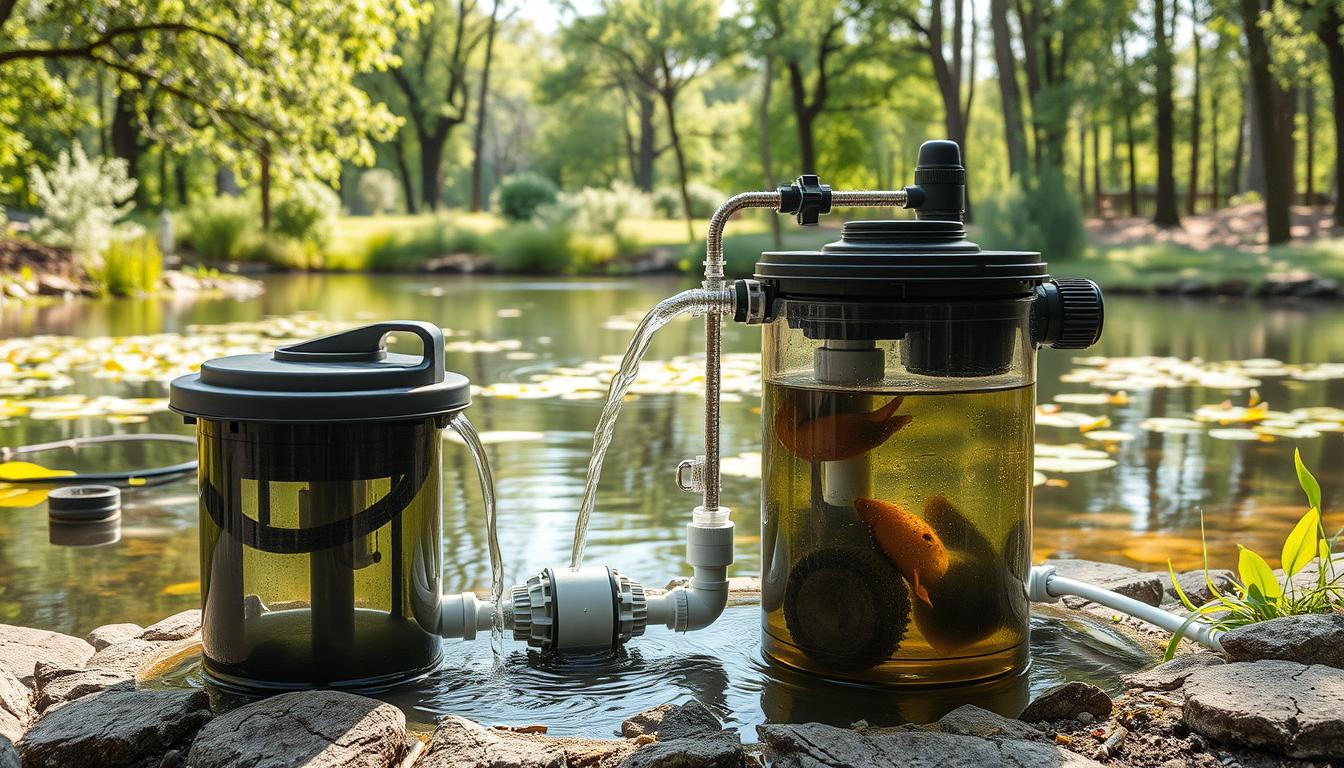
This buyer’s guide helps U.S. homeowners choose a solution that keeps water clear and fish healthy while matching budget, pond size, and upkeep style.
A practical setup often pairs a UV clarifier for green-water control with biological media for long-term water quality. Many modern units combine both in one convenient package, so you can buy a single unit and install it with fewer parts.
Clear water can be deceptive. Invisible threats like ammonia and nitrite can hurt fish even when clarity looks perfect. Also, municipal disinfectants such as chlorine and chloramines can dry skin and disrupt beneficial microbes if used during maintenance.
Key selection factors include pond volume, stocking density, sunlight exposure, and whether you keep koi or a lightly stocked garden. Look for systems with easy priming, backflush options, and clear gallon-capacity ratings. Seasonal issues—spring algae or fall leaf loads—affect what you need and how often to service equipment.
Key Takeaways
- Choose a unit that combines UV and biological treatment for broad protection.
- Match capacity ratings to your pond’s gallons and anticipated fish load.
- Avoid using tap water with disinfectants on bio-media; rinse with pond water.
- Consider easy-priming pumps and backflush features for first-time owners.
- Plan for seasonal maintenance: algae in spring, heavy debris in fall.
What to Consider Before You Buy: Pond Size, Fish Stock, Sunlight, and Water Quality
Start by measuring capacity. For rectangular layouts use length × width × average depth × 7.48. For irregular shapes, multiply surface area × average depth × 7.48. Accurate volume underpins correct pump and filter pairing and prevents undersized equipment.
Stocking matters. Lightly kept ornamental fish need far less biological capacity than koi-heavy collections. More fish equals more waste, higher oxygen demand, and a need for greater bacterial media and turnover.
Sun exposure drives algae. Water in direct sun often needs higher UV wattage and faster turnover to prevent green water during summer peaks.
Landscape affects turbidity and nutrients. Runoff, leaf litter, and nearby soil erosion raise suspended solids and feeding loads. In tree-heavy yards, add prefiltration and more frequent maintenance.
- Test ammonia, nitrite, nitrate, and pH after setup and after major servicing.
- Condition tap water to remove chlorine/chloramines before topping up or cleaning media to protect beneficial bacteria.
- Plan for growth and factor in head height and long plumbing runs when matching pump flow to real layouts.
How Pond Filter Systems Work: UV Clarification vs. Biological Filtration
Two complementary technologies handle visual algae and invisible toxins in most backyard water setups. One uses intense ultraviolet light to clarify water. The other relies on living media that break down waste and protect fish health.
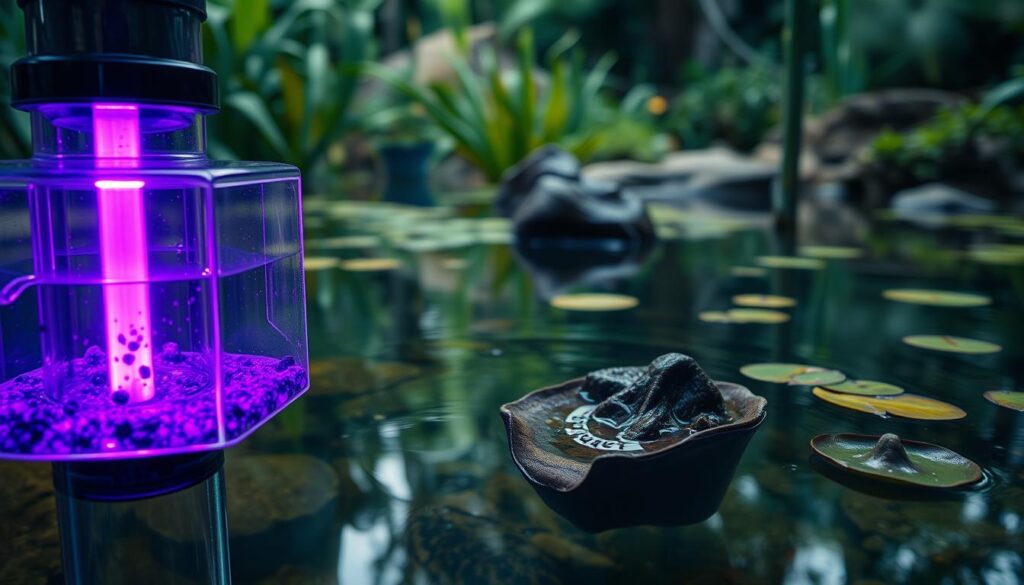
Ultra Violet Clarifiers: Tackling Green Water and Harmful Bacteria
UV units send pond water through a chamber that exposes single-cell algae and some bacteria to high-energy light. Cells clump together and become easier to trap. UV improves visual clarity but does not remove dissolved ammonia or nitrite.
Biological Filters: Beneficial Bacteria, Media Surface Area, and Water Quality
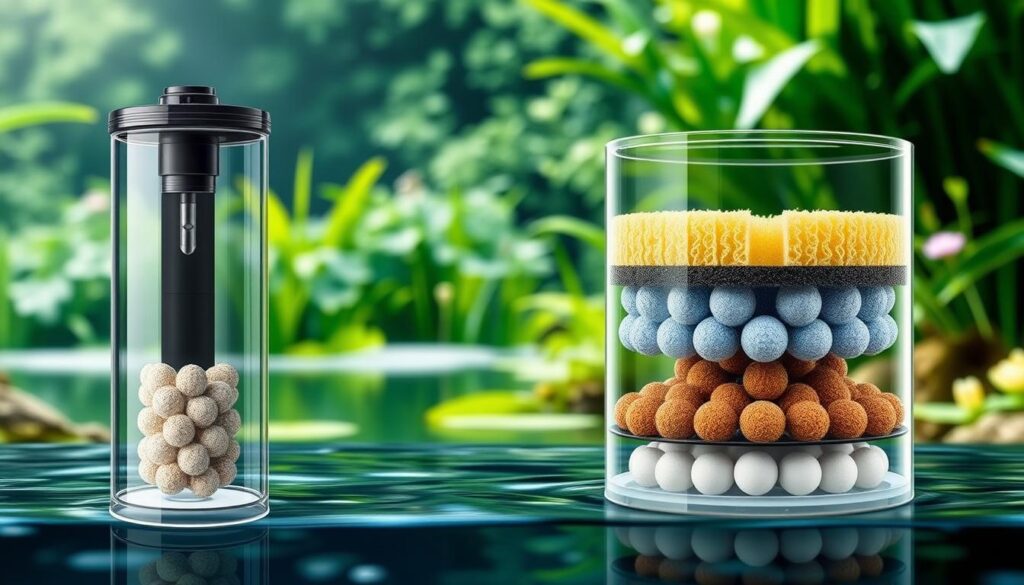
Biological media offer large surface area for colonies of helpful bacteria. Continuous 24/7 flow keeps those microbes oxygenated so they convert toxic compounds into safer forms for fish.
The Nitrogen Cycle Timeline: From Ammonia to Nitrate and Why Maturation Takes Weeks
Fish and decaying organics produce ammonia. Nitrifying bacteria break ammonia into nitrite, then other microbes turn nitrite into nitrate. Plants can use nitrate at normal levels, but spikes harm fish.
- Expect up to six weeks for a new biological filter to mature; reduce feeding during startup.
- Mechanical stages that trap solids help; otherwise solids still break down and add load.
- For persistent green water, increase UV wattage or dwell time. For high nutrients, add media or raise turnover through the bio chamber.
Main Types of Pond Filters and When to Use Each
Different types of setups suit garden water features, compact backyard pools, or large koi collections. Below are the main types homeowners encounter and how to match them to water volume, feature needs, and maintenance tolerance.
Gravity return boxes for flexible features
How they work: A pump feeds a box on the bank. Water moves through mechanical and biological stages, then exits by gravity to the return point.
Keep the gravity outlet higher than the chosen return height. This setup lets you run small waterfalls or streams with simple plumbing.
Sealed pressure canisters for compact yards
How they work: These are pump‑fed, sealed units that return water under pressure. Many include mechanical pads, bio media, and a UV clarifier in one housing.
They hide easily behind landscaping and suit small to medium water gardens where flexible placement matters.
Gravity feed systems for large koi installations
How they work: Bottom drains send water by gravity to a multi‑chamber bay. A pump then returns polished water. These excel for high biomass and heavy solids handling.
Installation is complex. Consult an experienced installer for levels, dedicated filter bays, and pump sizing.
- Space & install: Box units can be buried for looks; pressure canisters conceal plumbing; gravity feed needs precise bays.
- Maintenance: Backwashable pressure models cut hands‑on time; box filters need manual mat rinsing.
- Selection tips: Check rated capacities, UV wattage, and match pump flow and head to the chosen type.
Sizing Your Filter: Flow Rates, Volume, and Stocking Levels
Sizing correctly begins with a simple gallons calculation and a clear target turnover rate. Convert your water volume to gallons, then pick a goal: once per hour for typical water gardens, and 1–2 times per hour for koi or high-sun exposure.
Calculate volume and turnover: multiply surface area by average depth and by 7.48 for gallons. Use that number to set a target GPH (gallons per hour) so water passes through the treatment every 30–60 minutes.
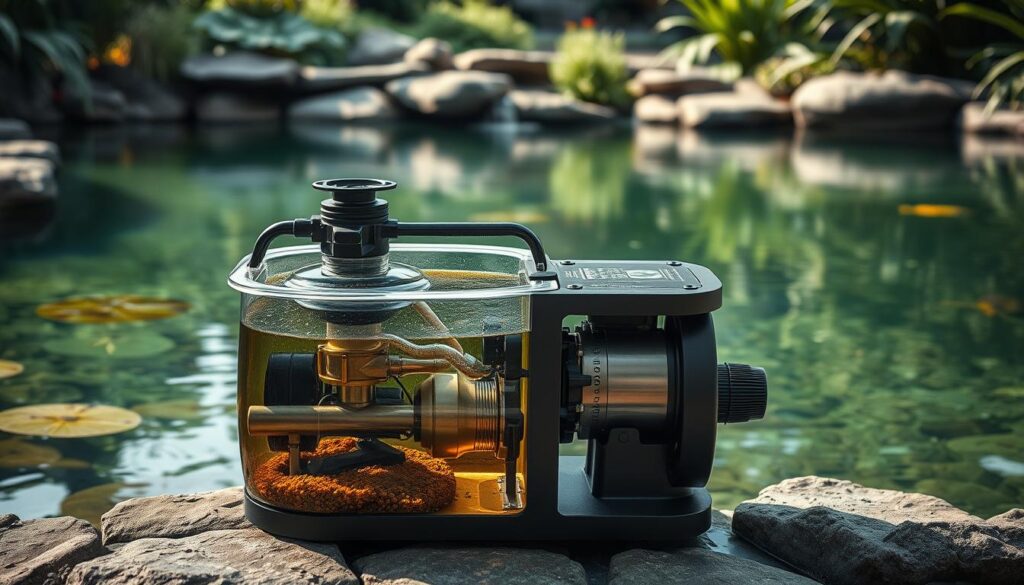
Account for real-world losses. Head height and long plumbing reduce pump output. Check manufacturer pump curves to confirm the pump delivers the target flow at the return height.
- Choose capacity above need: oversize your unit one model if sunlight or stock is high. This handles fish growth, algae surges, and heavier feeding.
- Low vs. high stock: plant-focused displays can run lower bio-volume; koi and heavy feeding need larger bio-chambers and higher flow through media.
- Run 24/7: continuous circulation keeps beneficial bacteria oxygenated; intermittent operation reduces treatment efficiency.
Practical workflow: calculate gallons → select a pump rated for the target GPH at actual head → pick a unit rated above that flow and volume → verify UV wattage if sun or fish load is high.
Tip: add prefiltration like skimmers or pump strainers to keep debris out. Periodically verify delivered flow with a bucket test at the return and adjust valves or pump speed to maintain your turnover target.
Features and Accessories That Improve Performance
Smart accessories and media upgrades deliver clearer water and stronger biological performance. Choose components that match your goals: crystal clarity, lower upkeep, or maximum bio‑capacity.
All‑in‑one units bundle a pump, UV clarifier, and multi‑stage treatment in a single housing. These compact water filter solutions simplify installation and hide plumbing for tidy landscaping.
UV Integration and Upgrade Paths
Integrated UV units save space and ensure correct dwell time inside the housing. Standalone UV add‑ons give flexibility to size wattage independently.
Tip: choose accessible quartz sleeves so bulbs are easy to replace. Bulbs typically need swapping about every six months to keep output steady.
Media Upgrades and Useful Accessories
Boost biological surface area with coarse, medium, and fine pads, bio‑balls, ceramic rings, or porous blocks. These increase nitrification without larger footprints.
- Prefiltration: skimmers or sieve screens cut solids load and make maintenance faster.
- Service fittings: union joints, check valves, and quick‑disconnects speed seasonal work.
- Monitoring: flow meters or app controllers verify turnover and spot reductions early.
Brands and capacities: Atlantic, Aquascape, and TetraPond offer options from small water gardens up to 60,000‑gallon setups. Match media choices to volume and fish load.
Care note: rinse media with pond water only to preserve beneficial colonies. Choose removable cartridges or baskets for easy cleaning and to protect the microbial film that keeps water clean.
Installation and Maintenance Best Practices for Clear, Healthy Water
Correct placement and steady maintenance make the biggest difference in water quality. Follow a few practical rules at installation and keep a simple service rhythm to protect beneficial bacteria and maintain steady water flow.
Positioning and Plumbing: Maximizing Flow and Return Height
Position gravity return boxes so the outlet sits above the return point. Keep plumbing short, full‑diameter, and gently sloped to preserve target flow and reduce head losses.
Size inlet hoses generously and minimize elbows. This maintains steady circulation through the biological stage and keeps the pump working efficiently.
Maintenance Checklist
Run filters 24 hours a day so pond water passes through at least every 1–2 hours. Monitor visible throughput and listen for reduced output.
- Clean sponges and bio‑media in a bucket of pond water only to protect beneficial bacteria.
- Replace UV bulbs after roughly six months; inspect O‑rings and seals while you service the unit.
- Use bacterial supplements after new installs, heavy cleanings, or medicating fish to jump‑start colonies.
- Vacuum or net sludge from the bottom periodically to reduce organic waste and keep oxygen levels high.
Safety and Seasonality
Always isolate power before working on UV units and never look at an illuminated bulb. Use GFCI outlets and drip loops for home outdoor installations.
Handle the quartz sleeve carefully; remove residue gently and check seals. If a unit won’t run through winter, drain and store it in a frost‑free spot.
Shop Pond Filter Systems
Shop choices range from compact, all‑in‑one units to large, high‑capacity models rated up to 60,000 gallons.
Top brands such as Atlantic, Aquascape, and TetraPond offer ready-made options with integrated UV and a pump for tidy installs. You can also pick standalone components if you want to combine a new unit with existing equipment.
Filter and media options include pads, bio-balls, ceramic rings, and porous blocks that boost biological surface area without growing the footprint. These choices help maintain clear water and steady biological balance.
- Browse by pond size, UV wattage, and intended fish load to narrow choices quickly.
- Confirm rated capacities and match real-world head height so delivered flow meets turnover targets.
- Look for service-friendly features like backwash valves, quick unions, and accessible UV bulbs.
Need help choosing? Call 866-766-3435 for guidance on models, volume calculations, and sunlight or stocking considerations.
Conclusion
Successful upkeep balances visible clarity and invisible toxin control for a stable habitat. UV units cut green algae while a biological filter handles ammonia, so most owners choose combined approaches to protect fish and plants.
Size matters. Calculate volume, confirm delivered flow at your return, and upsize for heavy stocking or intense sun. Run your equipment so water passes through every 1–2 hours for steady pond filtration.
Clean media gently with pond water and swap UV bulbs about every six months. Test water regularly and feed sensibly—clear surface water can still hide harmful impurities in water.
Next step: compare types (gravity return, pressure, or gravity feed), shortlist brands that match capacity and service needs, and plan plumbing and pump placement. Browse products or consult an expert to fine‑tune your choice and keep pond water healthy long term.
You Might Also Like...