
How to Prevent Mosquitoes in Your Pond
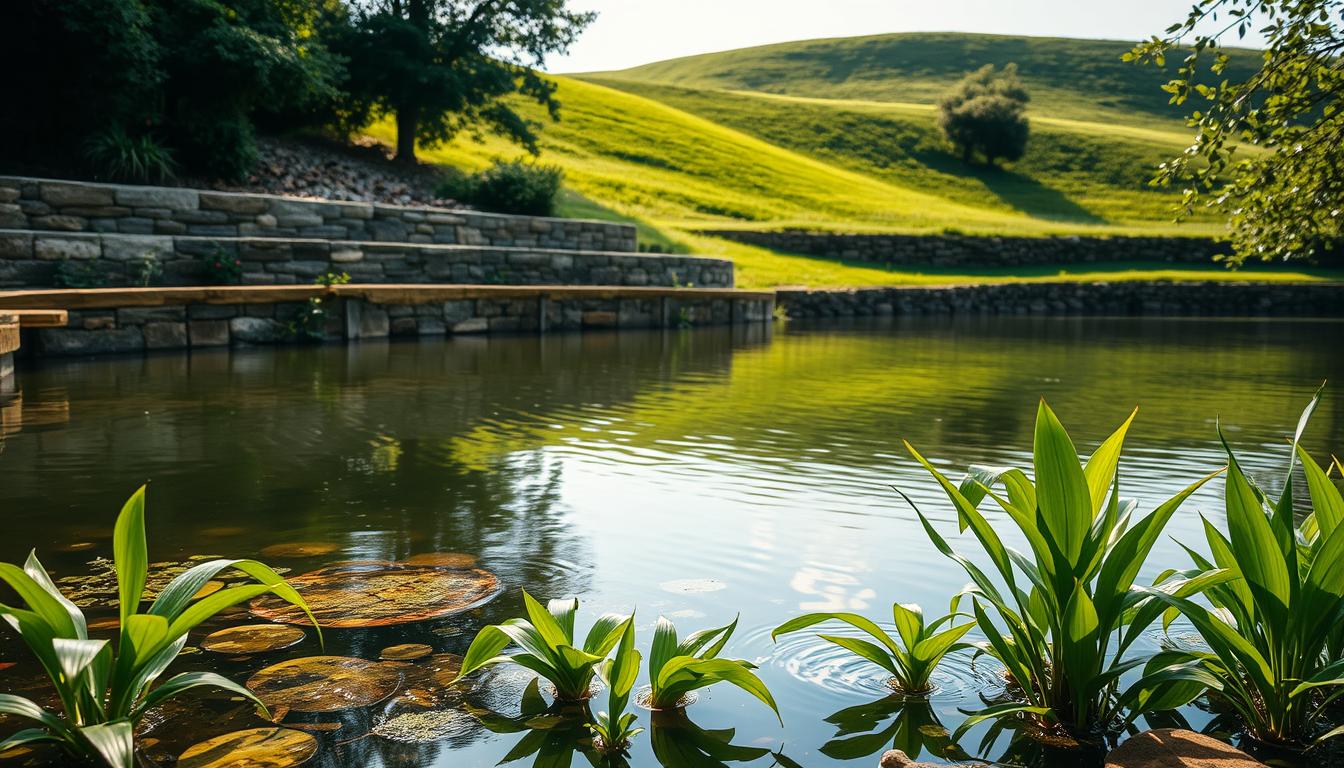
Planning a pond edge on a slope starts with a clear sequence: permits, site check, base prep, block placement, liner set, and final cap detailing. This short guide shows the practical steps to build a stable, attractive transition where water meets grade.
Begin by grading the base and bury the first course half to three-quarters deep to stop settling. For modest heights—about two feet—chip the lip off the upper courses (not the bottom row) and use construction adhesive on higher courses to lock caps in place.
Maintain a slight batter, stagger joints, and add small weep gaps every other block in the first one or two rows to relieve trapped moisture. If slope allows, consider a perforated pipe from the low point to a lower outlet to reduce pressure behind the structure.
Seat the liner by filling with water to smooth wrinkles and confirm fit. Glue the cap to the liner and trim excess for a clean top edge. Use quality stone or concrete blocks and compact the base to keep the design level and long-lasting.
Key Takeaways
- Follow a step-by-step flow from planning to final edge detailing for a durable result.
- Bury the first course and keep a slight lean-in to improve stability.
- Seat the liner with water to remove wrinkles and confirm fit against the ground and blocks.
- Include weep gaps or a perforated pipe to manage subsurface water pressure.
- Glue cap stones over the liner and trim excess for a neat, waterproof finish.
Understanding the Goal: A Stable, Beautiful Retaining Wall Pond on a Slope
A successful project balances structural support and visual finesse so the slope holds while the water surface reads neat and calm.
Structure and beauty must work together. The batter, even course alignment, and a consistent level at the top shape both how safe the build is and how elegant the feature looks from every angle.
The intended water elevation sets the cap height. Set that reference early so the coping and caps read as one cohesive design across sides that may change in depth — one side might be a foot deep and the opposite side shallower.
Choose blocks and stone faces that match nearby dirt paths and plantings. Proper cap profiles and careful corner layout prevent awkward joints, reduce maintenance, and protect the liner where the wall meets the edge.
- Keep course alignment level for a calm waterline.
- Match texture and cap style to the landscape.
- Plan checkpoints: base, courses, cap, liner tie-in.
Plan First: Codes, Permits, and Project Timing in the United States
Start every slope project by checking local codes and permit rules—this step prevents big headaches later. For many homeowners, a quick call to the building department clarifies whether a retaining wall near a pond triggers permits, inspections, or engineered plans.
Check utility locates and setbacks early. Approvals may involve stormwater or environmental review depending on the area, so make sure you document responses and keep contact names.
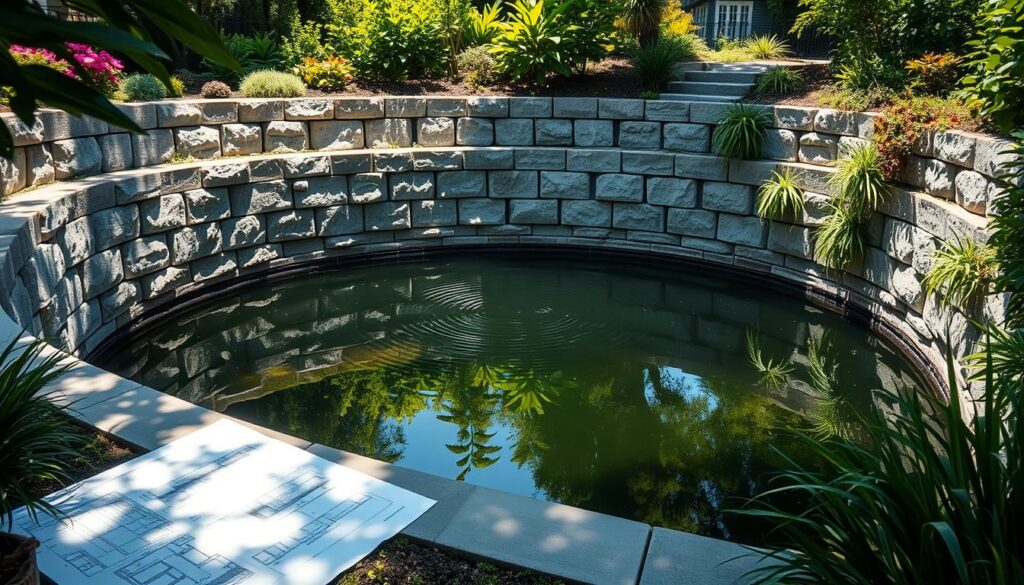
Best time to build
Schedule excavation and base work during dry weather and when water levels are low. Working on firm ground reduces delays and keeps the base compacted.
Use low-noise windows and a marked staging area to respect neighbors while you complete the work.
Budgeting and DIY scope
Most people build low to mid-height walls themselves. Budget for quality base material, compaction rental, blocks and caps, gravel, concrete adhesive, underlayment felt, and liner.
Note: some jurisdictions require engineered plans for taller walls or where the wall supports structures above. In colder areas (hardiness zone7), freeze-thaw cycles can affect method and approvals.
Record keeping and compliance
- Document base compaction, course layout, and drainage with photos.
- Keep permits and test reports organized from the bottom course to the final cap.
- If planting systems are planned later, purchasers remain responsible for local approvals.
Site Assessment on Slopes: Soil, Layout, and Water Level Strategy
Walk the slope before you dig. Note high points, low spots, and where rainwater flows. Mark soil types—granular soils drain well; clay can hold water and push on the base.
Map the pond footprint and the wall line together so the top cap matches your intended water level. Keep the top uniform even if one side ends a foot deep and the opposite side is shallower.
Check ground bearing capacity and soft dirt. If the bottom is wet or spongy, plan deeper excavation or import compactable fill to reach a firm subgrade.
“A quick cross‑section sketch saves hours in the field and helps place blocks, liner, and stone correctly.”
Trace inflow and outflow on the back side of the wall to set weep paths or pipe runs. Flag roots, utilities, and staging zones so construction stays safe and tidy.
- Sketch cross-sections showing top cap, liner, and water line.
- Test compaction with a probe or plate to keep levels stable.
- Plan heavy stone placement to avoid point loads on the liner.
Materials and Tools: Blocks, Stone, Liner, and Drainage Components
Choose durable materials up front. Good choices reduce repairs and speed installation. Pick concrete units and matching caps with textured stone faces for a cohesive edge around the pond.
Choosing blocks and caps
Select block systems designed for gravity or segmental use. Prefit caps dry to confirm overhang and drip edge. Use construction adhesive rated for wet exteriors when you glue caps or modified upper courses.
Drainage essentials
Make sure you stock clean, angular gravel to backfill behind the wall and around any perforated pipe. Leave small weep gaps in the first one or two courses to relieve trapped water.
If the slope allows, route a perforated ag pipe to a daylighted outlet; otherwise rely on gravel and weep paths.
Adhesives, felt, liner, and tools
Use geotextile underlayment beneath the liner and felt on vulnerable vertical surfaces. Choose liner thickness for foot traffic and stone contact, then seat the liner by filling with water to smooth wrinkles.
- Plate compactor or hand tamper
- Long level, string line, masonry chisel
- Saw for cap fitting and quality concrete adhesive
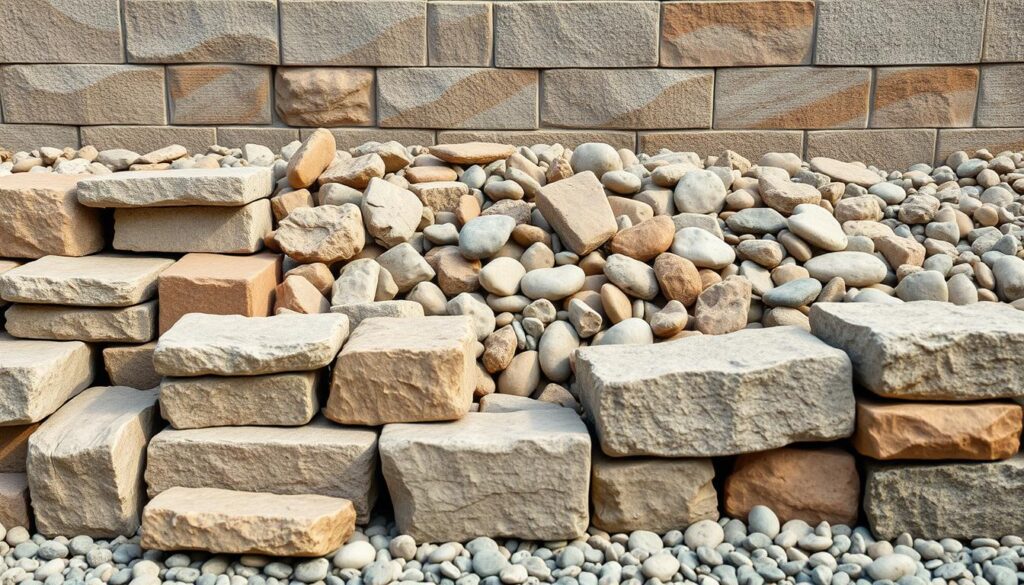
Keep materials staged on pallets near the base to cut handling time and keep the site clean.
Building the Retaining Wall: Base Prep, Stacking, and Lean-In
Start with a precise trench and compacted base. Excavate deep enough to bury the first course half to three-quarters into the ground. Compact base material in thin lifts and check level often.
Set the first course dead level. Tap each block into place; this row controls the height and alignment of the entire structure. For frost protection and stability, keep the bottom units buried as specified.
Stack additional courses with staggered joints and a slight lean-in toward the back side to help hold back soil. Clean dust from each block before applying concrete adhesive so caps and brick stay secure.
- Chip the lip only on upper courses for a neat face—never on the first row.
- Use a string line and long level at every lift to prevent cumulative errors.
- Leave small weep gaps every other block in the first one to two courses.
Dry-fit caps to confirm overhang and drip edge. Then glue caps over the liner and trim excess for a clean, finished top. If a cap must be removed later, follow adhesive-softening guidance rather than hammering units.
Liner Integration and Water Management Behind the Wall
Correct liner seating is the single best step to avoid leaks and reduce stress behind a slope. A careful approach eases trimming and helps caps land true to the final water level.
Seat the liner: place, fill, and smooth
Unfold the liner with generous overlap toward the wall and center the sheet over the excavation. Slowly fill with water while smoothing folds by hand so the liner settles into contours without air pockets.
Trim only after the liner is fully seated. Hold excess up behind the cap until adhesive sets, then cut a neat reveal.
Protective felt and vertical support
Lay geotextile felt under the liner across the base and at contact points to reduce abrasion. Consider extending felt partway up the wall where block edges or stone could rub the membrane.
Provide relief: weep gaps and optional pipe
- Keep small weep gaps in the first one to two courses so trapped water can escape.
- Use a perforated ag pipe only if it can daylight to a lower outlet; otherwise it may trap water.
- Support vertical transitions with smooth backfill and protective layers to cushion the sides from point loads.
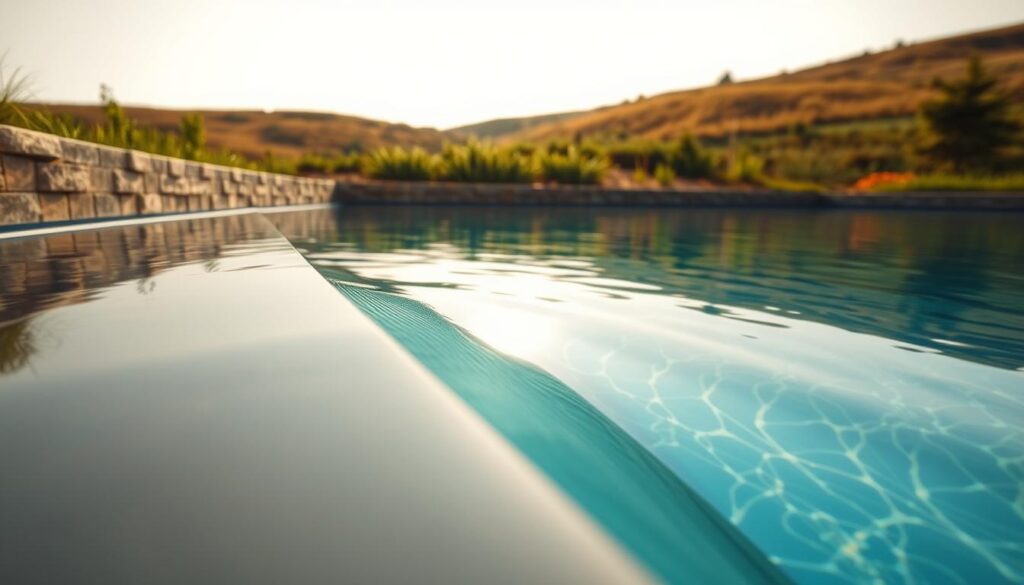
Inspect backfill for sharp aggregates, verify adhesive compatibility, and mark the water line after the initial fill to check drainage and final cap alignment.
Connecting Wall and Pond Edge: Elevations, Coping, and Transitions
Define the top elevation first so the coping and liner meet cleanly across changing grades. Establishing that datum makes the top read level from every angle and prevents awkward overlaps where slope varies.
Set the coping elevation to match the intended water surface. Dry-fit caps to confirm overhang, then glue caps over the liner for a neat, waterproof top. Make sure joints are tight and aligned so the finish looks continuous along the pond wall.
Trim liner carefully after the adhesive cures, leaving enough membrane for a secure seal while hiding raw edges under the cap.
- Blend the top with stone facing and a gravel band to hide the liner and soften the transition from vertical block to water.
- At corners or side returns, use cut caps with matching profiles so the top stays consistent and visually clean.
- Consider a narrow shelf or stepping stones at the waterline to reduce splash and protect the back side of the cap.
“Check level after adhesive sets; bonded caps resist seasonal movement when supported evenly.”
Final check: confirm smooth bearing surfaces so the liner does not pinch between rigid elements, and add subtle drip edges beneath coping to shed water and limit staining over time.
Planted Retaining Options: Geobag Systems for Naturalized Walls
Planted geobag systems offer a living, flexible edge that blends engineered support with soft, rooted vegetation.
What they are: Geobags are filled fabric units stacked like a wall but designed to accept planting in pockets or between courses. They create a naturalized shoreline without heavy stone faces.
Key installation notes
Do not cut the bags. Plant only in manufacturer pockets or between courses. Cutting fabric voids the system and weakens support.
If the planned height exceeds three feet, make sure stabilizer strips are added between courses to improve interlock and long‑term support.
Timing, plant choice, and permits
Install during low water or no‑wake windows so the site stays stable while you position units and establish plants.
Select native species suited to hardiness zone7 that tolerate occasional inundation and form dense roots.
“A planted geobag face can reduce visible hardscape while roots knit the system into the slope.”
- Coordinate batter, toe protection, and backfill for smooth transitions with block or stone segments.
- Monitor irrigation, weeds, and plant take rates during the first season.
- Permitting and approvals remain the purchaser’s responsibility in many jurisdictions.
Structural Safety on Slopes: Height Limits, Lean, and Freeze-Thaw
On slopes, safety depends on conservative design choices and clear limits for height and support. Before you begin, confirm local codes for non‑engineered heights. Taller sections often require geogrid or engineered design to safely hold back dirt and live loads.
Respect setbacks and a consistent batter. Keep a slight lean‑in so the face resists lateral pressure. Maintain setbacks from the slope crest and nearby structures to reduce surcharge on the base.
Prepare the ground to resist frost heave. Excavate to stable soil, compact in thin lifts, and use free‑draining base and backfill so frozen water cannot push the structure outward.
- Durability: choose concrete caps and adhesives rated for freeze‑thaw; good joints limit spalling.
- Protect the liner near the pond wall with a smooth buffer and proper cap overhang to reduce ice contact.
- Avoid piling wet snow against the face; saturated backfill can freeze into damaging lenses.
- If the toe reaches a foot deep or more, confirm toe support and embedment to stop sliding or rotation.
“When in doubt about soil, height, or surcharge, consult a licensed engineer to verify safety margins.”
Water Features, Ecology, and Maintenance
Design water features so they sit on firm shelves that protect liner seams and add visual motion. A stable shelf behind or within the wall alignment keeps flows from hitting the liner directly and lets stone form attractive cascades that aerate the water.
Integrating a waterfall and managing filtration
Size pumps and filters to match total volume and fish load. Many people build a simple biofilter to help clear water while plants and bacteria do the rest.
Wildlife-friendly planting and drainage checks
Choose native marginal species, submerged oxygenators, and shoreline grasses to support pollinators and amphibians. If a shallow side is a foot deep, add gradual shelves or ramps so animals can exit safely.
- Inspect weep gaps and outlet areas after storms to keep backfill free-draining.
- Use stone to armor splash zones and waterfall basins to stop dirt from clouding the water.
- In hardiness zone7, remove heavy leaf loads in fall to prevent nutrient spikes over winter.
“Adjust flow rate, spillway width, and plant density over time to fine-tune clarity and habitat value.”
Annual checks: clean algae from coping, recheck adhesive bonds, and watch for low spots where water may collect. Keep walking paths on the slope dry and stable for safe access and to protect plantings.
Conclusion
,Wrap up by confirming cap elevations, adhesive cures, and clear outlet paths so the build holds back soil and looks finished.
Stage a quick checklist: check level at the top, verify the bottom bedding, and confirm liner seating with water. Glue caps over the liner and trim neatly once the adhesive sets.
Plan time for permits, final inspections, and seasonal checks. Use quality concrete, matching block and stone, and source compatible retaining wall blocks to reduce future repairs.
Small, regular maintenance—clear weep paths, test bonds, and watch for settling—saves time and keeps the pond wall safe and attractive for years.
You Might Also Like...