
How to Prevent Mosquitoes in Your Pond
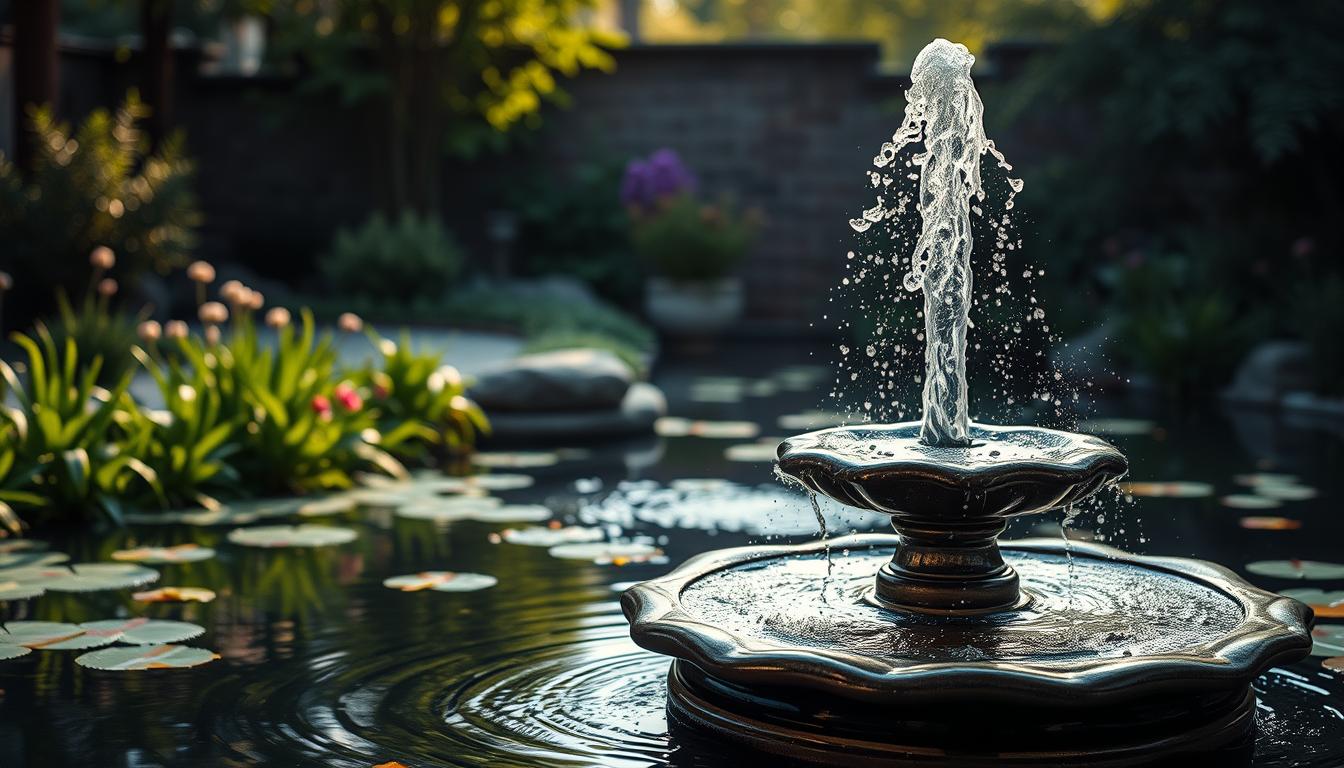
Adding a water feature can change how you use your backyard. Since the pandemic, interest in outdoor water elements has jumped. Stores like Gertens Garden Center saw sales double as shoppers chased the sound and sight of flowing water.
The right water fountain brings birds, soothes stress, and fits many garden styles. This short guide previews site prep, basic installation steps, power access, and ongoing care. You’ll learn when a unit suits a pond versus a patio or planted area and how sightlines shape enjoyment.
Make sure the scale matches the space so the feature complements planting beds and seating. Energy-efficient options now use less water than comparable turf. We draw on garden center practice and pro tips to help you choose and maintain a lasting focal point.
Key Takeaways
- A water fountain can reduce stress and draw wildlife.
- Plan site prep, level base, and power access before you start.
- Choose size and style to fit your pond or garden sightlines.
- Modern designs save water and suit small or large spaces.
- This guide covers steps and seasonal care to keep the feature lasting.
Deciding If a Fountain Fits Your Pond and Garden Goals
Adding motion to a pond or yard brings life, sound, and a simple way to relax outside. Before you buy, weigh what you want from the space: calm background sound, more birds, or a visual focal point near seating.
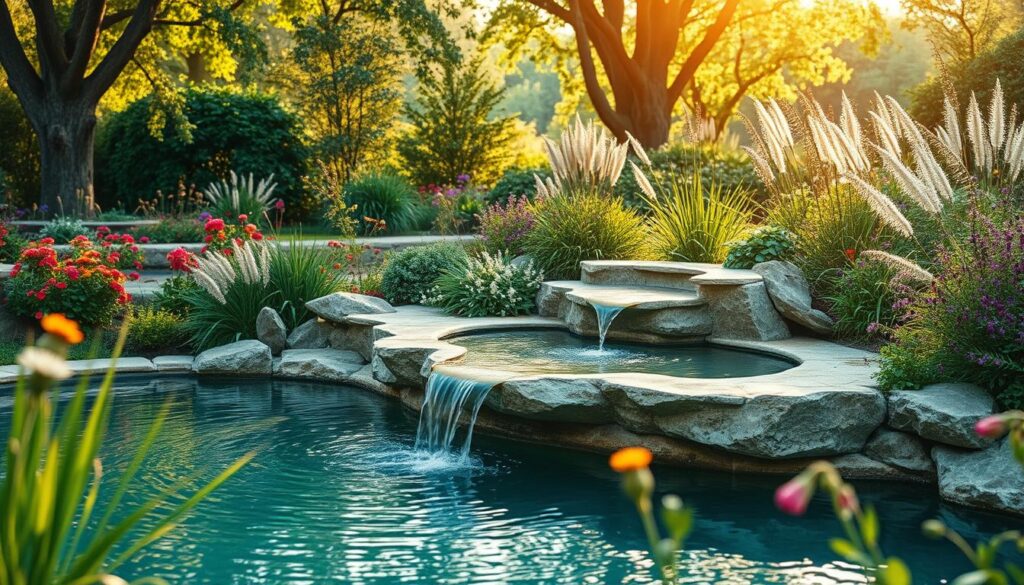
Benefits of flowing water
Flowing water soothes and masks noise, and it often attracts wildlife like birds and dragonflies. A small pump produces movement that livens views without much effort.
Pond versus garden placement
Floating designs suit open ponds and help oxygenate deeper water. A cistern or flowerbed model fits planted borders and paths, complementing beds and hardscape.
Potential drawbacks to consider
Expect splash zones and some water loss with higher spray. Direct afternoon sunlight can speed algae growth and increase cleaning needs.
- Location factors: partial shade reduces algae; shelter limits debris that can clog filters.
- Material and size: resin is light and moveable; concrete and stone last longer but weigh more.
- Access and upkeep: plan for pump access, winter care, and a clear path for maintenance—make sure you can reach the unit without trampling plants.
Plan the Location Before You Buy or Dig
Where you place a water element shapes its look, function, and upkeep. Take time to map sun, wind, and nearby trees before you commit. Good planning reduces maintenance and protects nearby surfaces from water damage.
Sunlight, shade, and solar options
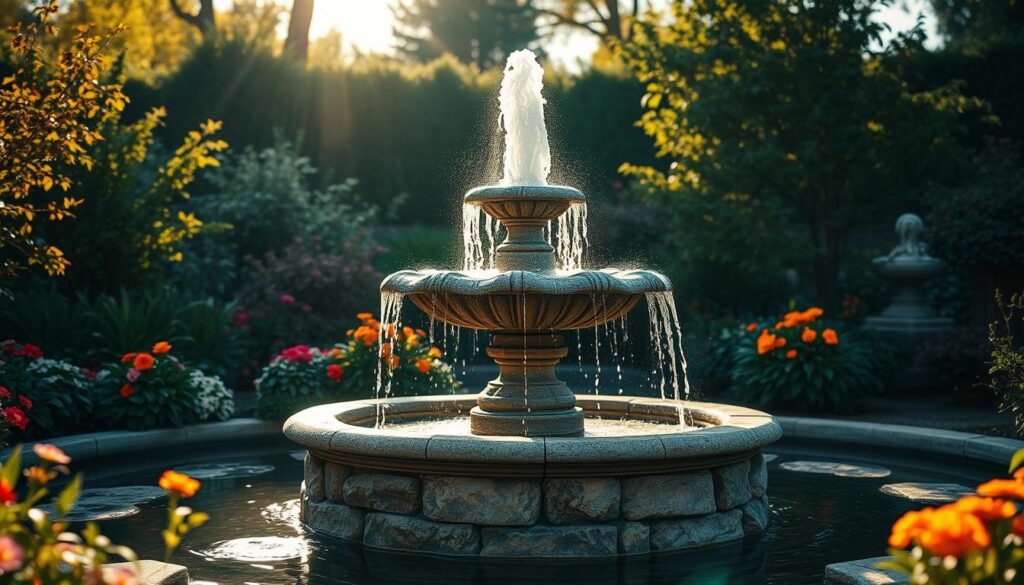
Map daily sunlight to balance panel needs and shade that curbs algae. Direct sun is key for solar panels, but avoiding hot afternoon sun helps limit algae growth and evaporation.
Shelter from debris
Pick a sheltered spot to cut leaves and seeds that clog the pump and basin. Consider overhead nests and tree roots that raise cleaning frequency and may damage tubing.
Power access and safety
Plan for an outlet with GFCI protection and a neat cord run to avoid trips and moisture issues. If you use solar, confirm panel siting is unshaded for most of the day.
Ground and base conditions
Assess drainage and soil stability; weak soils may settle and tilt the base. Build a compacted, level foundation to protect the basin and ensure the pump works efficiently.
- Document factors: sunlight, wind, debris sources, power access, and soil conditions.
- Protect structures: keep sensitive siding and paving out of the splash area to avoid damage.
- Plan routes: allow discreet hose and cord runs that preserve sightlines.
Choose a Fountain Type, Materials, and Design You’ll Love for Years
Match style, weight, and sound so the water element suits your space and daily use. Pick a design that fits sightlines and the time you’ll spend on upkeep.
Popular types and sound
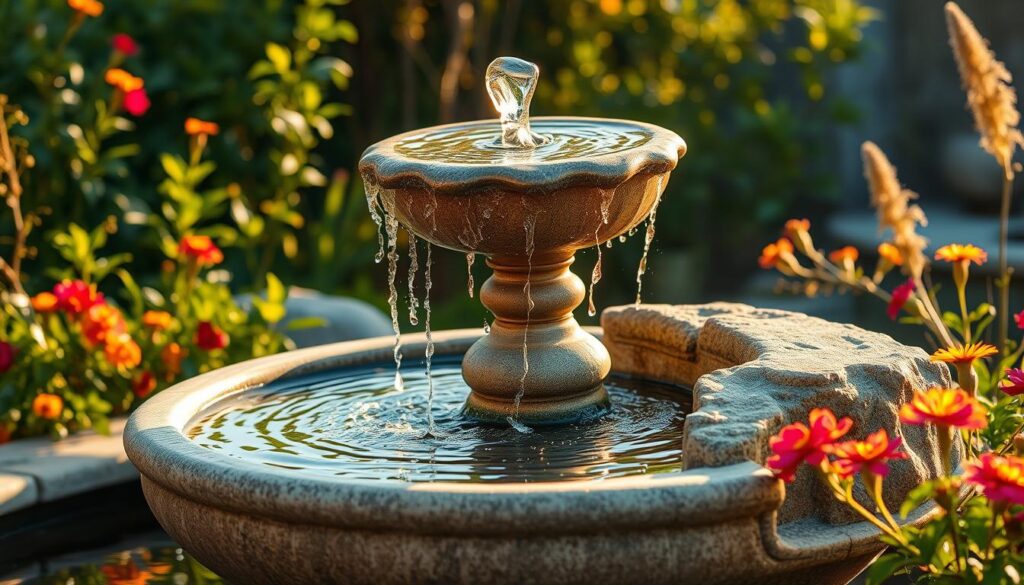
Types: bird bath, cistern, floating units, wall mounts, tiered bowls, spitter sculptures, solar-powered models, and diy pieces all offer different looks and effects.
Sound ranges from a soft spray that soothes to a bold cascade that commands attention. Listen before you buy to match the mood near seating or a bedroom window.
Materials and durability
Choose materials based on weight and upkeep. Concrete and stone last decades but need a solid base and level support. Resin, fiberglass, and aluminum are lighter for seasonal moves.
- Match use: stainless or fiberglass for modern looks, bamboo or slate for natural textures.
- Check components: ensure the basin volume and pump size suit the effect you want.
- Plan base: heavy pieces require compacted support; lighter options ease storage over the years.
Fountain installation: a step-by-step guide from base to first splash
Good groundwork saves time: compacted crushed stone and stone dust form a stable, level platform that protects the pump and keeps the water line even.
Prepare the area and level the foundation
Strip topsoil from the place you plan to set the unit. Spread 3/4-inch crushed stone, then add a layer of stone dust.
Compact the mix with a hand tamper. Use a straightedge and level; add stone dust where low and tap components with a rubber mallet until flat.
Set the base, basin, and components
Place the cast stone base, re-check level, and set the basin squarely on top. A well-leveled base reduces water loss and prevents pump strain.
Position the submersible pump in the reservoir and route tubing so it won’t kink under stacked pieces.
Power, seals, and finishing touches
Run an outdoor-rated cord to a GFCI outlet or stake the solar panel facing south and keep it unshaded. Seal any pass-throughs with the supplied rubber plug to keep the basin watertight.
Assemble upper components, center the top, then fill the basin with water before powering the pump. Test and tune flow to avoid splash and potential water damage.
- Hide cords in a shallow trench and add edging for a neat transition.
- This DIY guide rates 1/5 skill but needs heavy lifting; expect 4–6 hours and $300–$1,000 in materials.
Pumps, Power, and Performance Tuning
A well-tuned pump is the heartbeat of any small water feature, shaping flow and sound. Choose capacity and head height that match the rise and effect you want so the unit delivers steady flow at elevation.
Selecting the right pump
Match pump output to your chosen height and desired spray. Check head height ratings and expected gallons per hour at that head to avoid underperformance.
For multi-basin setups, consider single versus dual pumps to control upper bowls independently and reduce strain on the main basin.
Filter boxes and debris control
Protect moving parts by placing pumps in filter boxes or prefilter housings. These intercept leaves and grit, extending life and keeping flow steady between cleanings.
Electrical considerations
Use outdoor-rated cords, a GFCI outlet, and drip loops. For wall units, have an electrician add a switched outlet tucked behind the wall so cords stay hidden and tidy.
- Tip: Never run a pump dry; fill the basin before powering on.
- Quick check: If performance issues appear, inspect pump position, hose kinks, and intake screens before replacing parts.
Maintenance and Troubleshooting to Avoid Algae and Damage
A steady maintenance routine protects your basin and pump and keeps algae and leaks at bay. Regular care takes little time and prevents common issues that lead to bigger damage.
Routine care: water levels, debris removal, and pump filter cleaning
Check water levels often so the pump stays submerged. Low water can burn a motor and shorten life.
Remove leaves and debris from the basin weekly. Clean pump filters and intake screens to keep flow steady.
Algae growth: shade placement and safe, nontoxic cleaners
Curb algae by siting the unit in partial shade and trimming nearby plants that drop heavy litter.
When algae appear, scrub surfaces and use a safe, nontoxic cleaner made for water features. This controls algae growth without harming wildlife.
Leaks and seals: inspection, waterproof sealant, and part replacement
Inspect seals, passthroughs, and tubing for damp spots and cracks. Small leaks often need a bead of waterproof sealant.
Replace worn parts promptly to avoid ongoing water loss and structural damage over years.
Low water flow: clogged filters, obstructions, and pump positioning
Diagnose low flow by checking for clogged filters, kinks in tubing, or objects blocking the nozzle. Reposition the pump in the basin if needed.
Seasonal protection: draining, covering, and indoor pump storage
Before freezing weather, drain the basin, cover the water feature, and bring the pump indoors to prevent freeze damage.
Tip: Keep a simple log of service dates and any issues. When problems persist, consider a larger filter box or an upgraded pump to stabilize performance.
- Quick checklist: top up water, clear debris, clean filters, inspect seals, store the pump in winter.
- Safety note: make sure cords and connectors are dry after storms and reset the GFCI if tripped.
- Long-term: small, regular maintenance keeps the water fountain working smoothly for years.
Costs, Tools, Time, and DIY Difficulty
Budget, tools, and time shape whether this project fits your backyard plans.
Budgeting is straightforward: expect roughly $300–$1,000 depending on size, materials, and look. Lighter resin options sit at the low end; cast stone or concrete pieces raise costs and require help.
Essential tools and materials
- Pointed spade, garden rake, and hand tamper to prep a stable base.
- Crushed stone, stone dust, rubber mallet, and shims to level the basin.
- Wheeled platform truck for heavy parts and a GFCI outlet or solar kit for power.
Timeframe and DIY skill
Plan 4–6 hours for base prep, setting parts, routing power, and testing the pump. The work rates easy (1/5) but needs safe handling of heavy components.
Practical tips: bury cords for safety, enlist one helper for lifts, and verify a level base before final set. These small steps cut rework and keep the water feature working for years.
Conclusion
A small water feature can transform a yard into a calm, wildlife-friendly retreat. Choose a water fountain that matches scale, placement, and the look you want for your garden.
Plan sunlight, shelter, and power first so the unit works reliably and stays low-maintenance. Set a level, compacted base and pick durable materials and components for long life.
Keep a simple routine: clean filters, remove debris, top up water, and winterize before freezes. These steps protect the pump and preserve your design over time.
Final thought: with thoughtful choices and basic care, the right fountain adds sound, motion, and habitat to your home area for seasons to come.
You Might Also Like...