
How to Prevent Mosquitoes in Your Pond
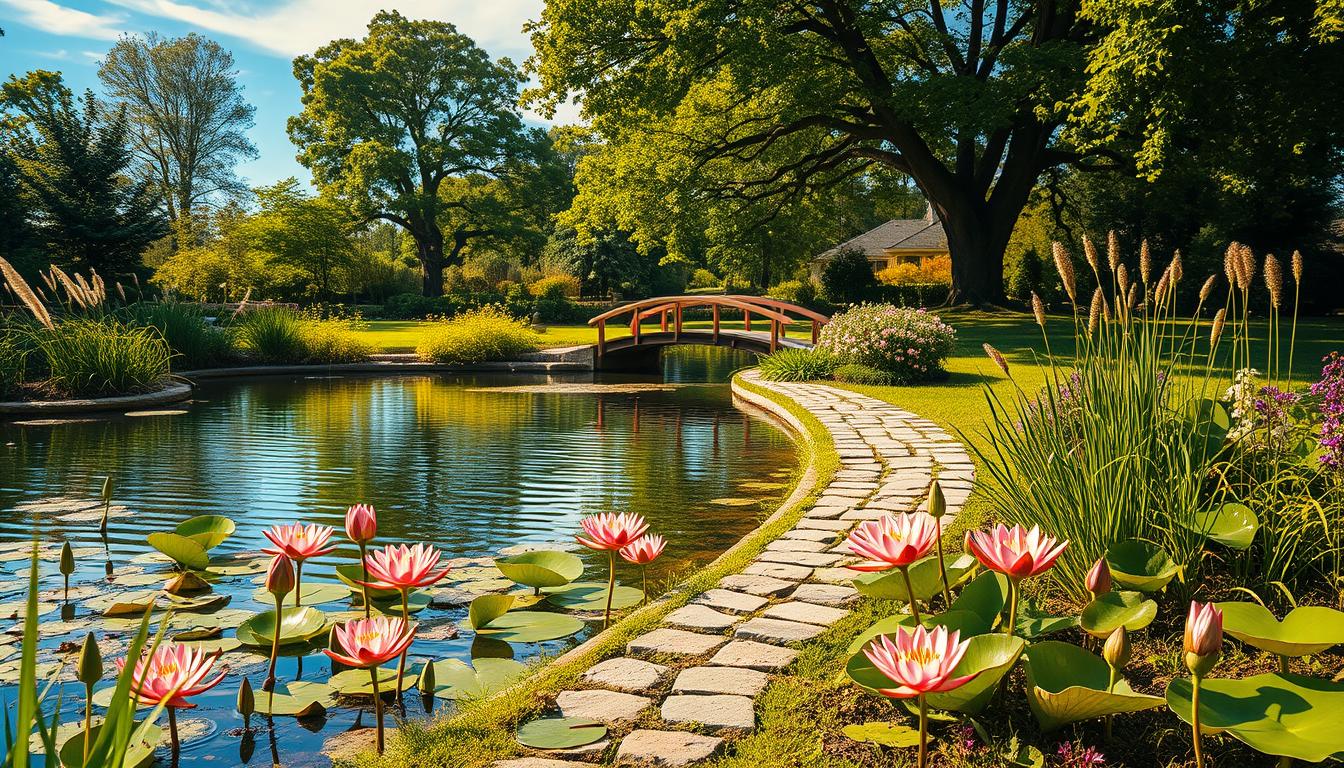
Creating a tranquil backyard pond can turn a small outdoor space into a calming retreat. Start by clarifying why you want a water feature: is it for aesthetic appeal, wildlife, or quiet moments?
A basic project often uses an underlay, a durable rubber liner, stones for edging, and an optional pump. Natural stone can raise costs, and swimming-pond builds may exceed $65,000, but most small installations stay within modest budgets.
Plan how different shapes and features — from reflective or Zen layouts to waterfall elements — will act as focal points in your garden. Early choices about materials and circulation affect the long-term ecosystem and maintenance.
Let the water settle several days before adding aquatic plants or fish. With smart site selection and clear goals, even compact ponds add life and beauty to a yard.
Key Takeaways
- Set clear goals: Decide if the main aim is beauty, wildlife, or relaxation.
- Know costs: Small ponds are affordable; swimming-ponds cost much more.
- Choose materials wisely: Liners, underlay, and stone affect budget and care.
- Plan features: Shape and water features set the space’s focal point and mood.
- Protect the ecosystem: Circulation and settling time help a healthy environment.
- Start simple: Compact backyard pond ideas can still deliver big impact.
Start With a Vision: Define the Purpose and Focal Point of Your Water Feature
Start by picturing how a water element will fit into your daily routines and garden views. Clarify whether you’re after a quiet relaxation retreat, a wildlife habitat, or a showstopper for koi and fish life.
Relaxation retreat, wildlife habitat, or showcase for koi
Each purpose changes size, depth, and the amount of movement you need. A koi-focused setup needs volume, depth, and solid filtration for healthy fish.
A wildlife-friendly garden feature benefits from shallow planting shelves and native plants for balance and habitat.
Choosing a focal point: waterfall, reflective surface, or patio-edge pond
Pick a point that aligns with daily sightlines. A reflective surface mirrors sky and trees. A small patio-edge basin brings gentle water sounds to seating areas.
Decide how the focal element affects pumps, lighting, and plant choices so the whole backyard space feels cohesive.
- Right-size the feature so it anchors rather than overwhelms.
- Blend plants to create rhythm between hardscape and water.
- Future-proof with access for upgrades or added features.
Site Selection and Layout: Pick the Best Spot in Your Backyard
Picking the right location sets the stage for a healthy water feature and easier construction. Evaluate sun and shade across the day so algae are discouraged while aquatic plants get enough light to thrive. Aim for a mix of sun and shade rather than full sun or full shade.
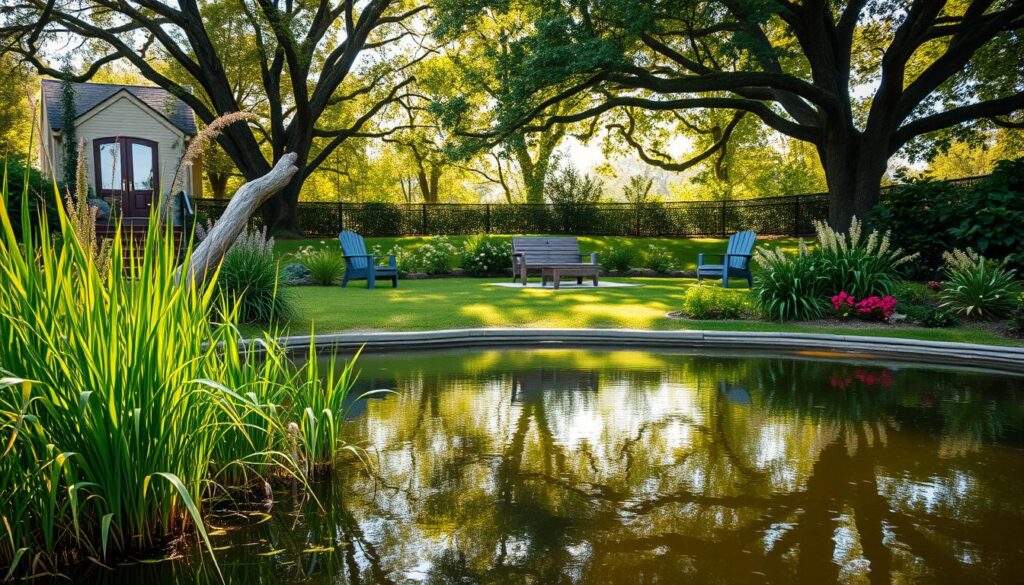
Check views from the house and patio so the feature stays visible and enjoyable year-round. Also confirm access to power and water, and mark utilities before digging to avoid costly conflicts during construction.
Test the layout by outlining shapes with a garden hose or marking paint. Step back to judge scale and how organic curves or geometric edges fit the outdoor space.
- Plan practical depth—typically 18–24 inches for small ponds—and add gentle slopes for wildlife access and stable water quality.
- Avoid low areas that receive runoff; sediment and nutrients fuel algae and lower water quality.
- Consider tree proximity: roots complicate excavation and falling leaves raise maintenance needs.
Document measurements and final placement before excavation to streamline liner placement, edging, and overall construction. Thoughtful site work improves the long-term quality of your garden feature.
Backyard Pond Ideas to Inspire Your Design
Inspire your backyard with simple water ideas that fit any scale or style.
Shape and mood: Explore rectangular layouts for a modern, orderly look, round bowls for classic symmetry, reflective surfaces for mirror-like calm, and Zen arrangements for minimalist composure with smooth stones.
Life and function: Koi setups showcase fish with contrasting plants and rocks, while patio versions lift the water near seating for everyday enjoyment in small spaces.
Texture, movement, and planting
Pebble bases add sparkle beneath clear water and flower-bed integrations weave color and habitat into one cohesive space. Add a gentle waterfall or multi-level water features to bring sound, movement, and oxygen—helpful for reducing stagnation and limiting algae.
“Mix a reflective pool with a small spillway to get both stillness and motion in one garden feature.”
- Use rocks along edges to hide liner and anchor plant groupings.
- Choose aquatic plants for seasonal color and nutrient uptake.
- Match size and filtration to any fish you plan to add, and light key focal points for evening beauty.
Custom Pond Design for Different Climates and Environments
Plan for climate first: how your local heat, sun, and wind shape a successful water feature.
In arid areas like Arizona, shade and flow matter. Aim your feature toward a spot that gets morning sun and afternoon shade. That lowers evaporation and keeps water temperatures stable.
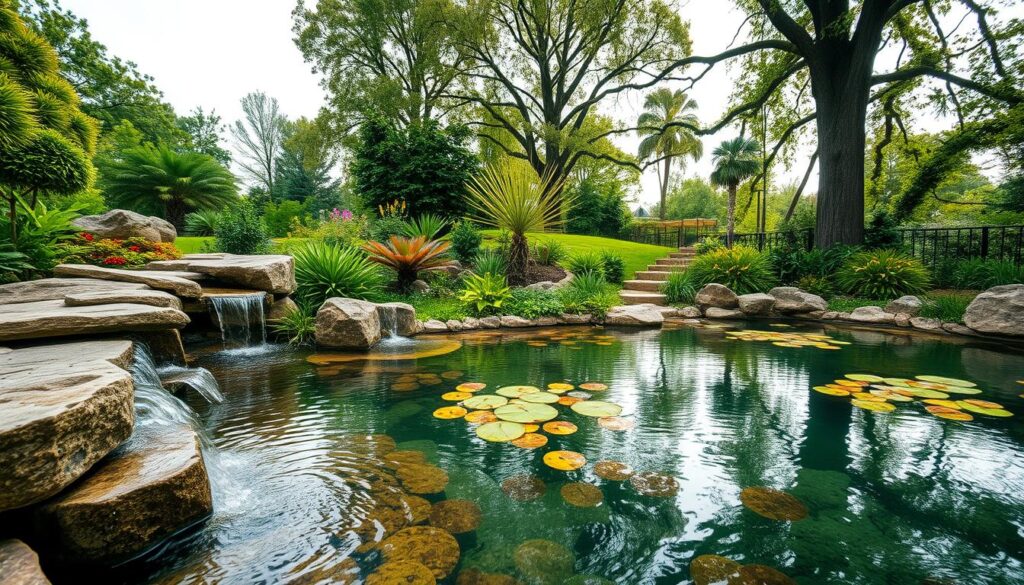
Adapting to arid regions: shading, evaporation control, native plants
Use pergolas, shade sails, or small canopy trees to cool the surface. Install recirculating pumps and efficient flow patterns to save water while keeping movement and oxygen in the system.
- Choose drought-tolerant plants such as cattails, lotus, and water lilies for natural filtration and wildlife support.
- Select heat-resistant materials and liners to resist UV and expansion from temperature swings.
- Keep the feature compact to simplify temperature control and reduce resource use.
Desert-themed aesthetics with rocks, gravel, and succulents around pond
Echo the surrounding area with sandstone slabs, decomposed granite, and succulents. Use rocks and gravel at the edge to cut maintenance and boost aesthetic appeal.
“Lean into local color and texture to blend water features with the broader outdoor space.”
Tip: Include shallow shelves and marginal planting to support insects and birds and to strengthen ecological balance. A thoughtful plan helps the ecosystem thrive and keeps the water feature resilient in tough climates.
Document climate-specific needs so your custom pond design suits the environment, conserves water, and enhances life in your outdoor space.
Materials That Matter: Liners, Stones, and Eco-Friendly Choices
Selecting the right materials early makes construction smoother and helps protect water quality long term. Use durable underlay and liners to limit leaks and speed future maintenance.
Rubber liners and underlay for durability and leak protection
Many professionals prefer 50 mil rubber underlayment/liners for a cost-effective, leak-resistant option. Underlay cushions roots and sharp debris, extending liner life.
Natural stones and edging for aesthetic appeal and stability
Place rocks and natural stone along shelves and edges to hide liners and stabilize soil. Choose coping widths that give safe footing and consider thermal feel in sun.
Sustainable materials and non-toxic sealants
Favor recycled aggregates, reclaimed concrete, and non-toxic sealants to protect the environment and water quality. Rely on plant- and bacteria-based filtration rather than harsh chemicals.
- Document material specs and local sample pricing for natural stone.
- Match pump, tubing, and spillways to the feature scale to get the right flow and sound.
- Plan planting pockets and shelves around pond so plants anchor without blocking circulation.
“Durable liners and eco-conscious finishes keep maintenance low and the water clear.”
Build Pathways: In-Ground vs. Raised Garden Pond
Choosing the right build method— in-ground or raised—sets the tone for your construction steps.
In-ground steps: Pick a sunny/shaded spot, outline shapes with a garden hose, and excavate to about 18–24 inches with gentle slopes. Add underlay, then a quality liner. Fill slowly so the liner seats without wrinkles and edge with flat stones to secure materials.
Raised steps: Build a rigid frame from wood, brick, or block and ensure walls are plumb. Line the interior with underlay and a good liner, fold and secure edges, then fill gradually. Cap the top with coping timbers or stones and add planters for integration.
Install a compact pump if you want circulation or sound. Stage equipment access and a discreet power route during the build to ease future maintenance. Plan marginal shelves and plant pockets during excavation so vegetation fits the final feature without crowding.
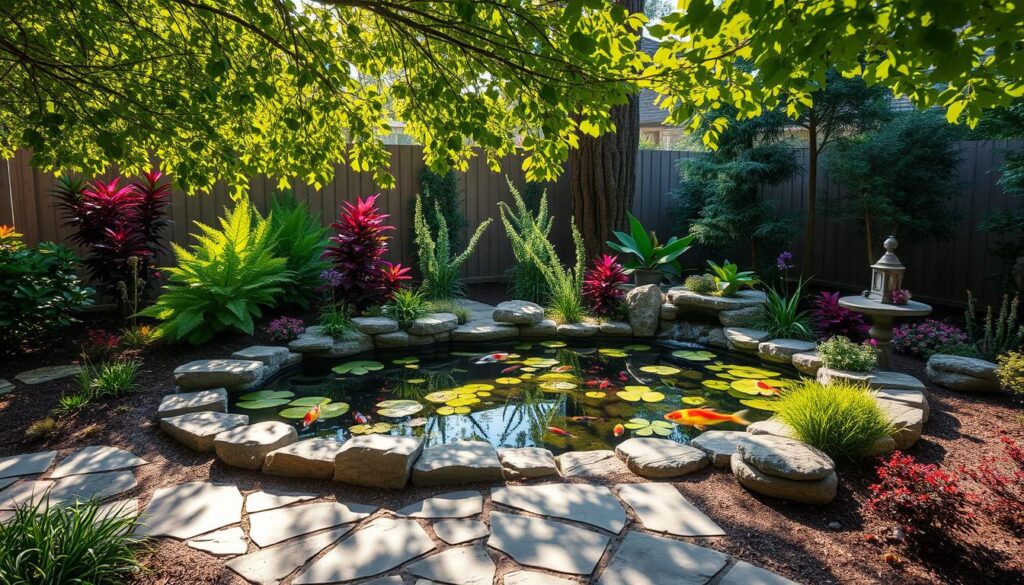
“Fill slowly, let the water settle for days, then add plants or fish to protect long-term health.”
- Verify liner size, underlay, and stone quantities before you start.
- Keep safety in mind: stable footing and non-slip edges reduce risk.
- Record measurements to streamline future changes to the project.
Filtration, Water Movement, and How to Maintain Water Quality
Healthy circulation and smart filtration keep backyard water clear and lively. Use plant- and bacteria-based systems to polish water naturally and reduce chemical use. Size equipment to match volume and bioload so the ecosystem stays balanced.
Biological filtration, circulation pumps, and oxygenation
Favor biological media and planted zones to process nutrients and support bacterial action. Install steady recirculating pumps and plumbing that limit dead zones and add oxygen.
Lighting for safety and ambiance without stressing fish
Place warm, low-glare fixtures to mark edges and highlight features. Avoid bright lights near shallow areas so fish and plants rest at night.
Testing pond water and controlling algae growth
Test basic parameters on a schedule to catch issues early and protect fish health and plant growth. Manage algae by balancing nutrients, skimming debris, and adding algae-eating snails or fish cautiously.
- Routine maintenance: clean intakes, rinse media in pond water, and check pump flow.
- Seasonal tweaks: adjust run times as temperatures change to save energy and protect life.
- Be prepared: keep spare impellers, fittings, and test kits for quick fixes.
“Natural filtration and steady flow are the simplest ways to maintain water quality and long-term clarity.”
Aquatic Plants, Fish, and Building a Healthy Pond Ecosystem
Healthy aquatic life starts with the right mix of plants, fish, and gentle circulation.
Choose plants for balance. Use floating lilies for surface shade, submerged oxygenators to boost water quality, and marginal plant clusters for shelter. Native or well-suited species limit invasive risks and cut maintenance needs.
Stock fish responsibly
Match fish numbers to your filtration and volume. Koi and goldfish need adequate depth and robust filtration to thrive. Avoid overstocking to prevent nutrient spikes that cause algae growth.
- Quarantine new fish before adding them.
- Feed moderately and seasonally to reduce excess nutrients.
- Provide depth transitions and hiding spots with rockwork and pots.
Support ecological balance
Introduce beneficial bacteria to help break down waste naturally. Prune plants seasonally and remove decaying material to keep water clear. Create shallow shelves for pollinators and birds while ensuring safe egress points for wildlife.
“A mix of plants, steady flow, and careful stocking keeps life vibrant and maintenance low.”
Budgeting Your Project: Costs, Sizes, and Feature Trade-Offs
Estimate costs early so your backyard water project stays on track and avoids surprises.
Small backyard ponds are usually affordable to build and maintain. Larger, feature-rich ponds — especially swimming versions — can climb toward $65,000 or more.
Small builds vs. larger, feature-rich options
Size drives liner, underlay, and pump expenses. Larger volumes need stronger pumps and more robust filtration to support fish and reduce algae.
When to invest in stone, waterfalls, or advanced filtration
Allocate budget first to materials that ensure long-term quality: liners, underlay, and reliable pumps. Then decide if natural rocks and premium coping are worth the extra cost for aesthetic appeal.
- Tip: Natural stone raises costs; price varies by type and local availability.
- Tip: Advanced filtration pays off when you plan heavy stocking, warm-area water, or high clarity goals.
- Tip: Include electrical runs, GFCI protection, permits, and maintenance supplies in estimates.
“Balance signature features like a waterfall with unseen essentials that keep water clear and systems running.”
Plan for upgrades by leaving spare capacity in plumbing and power. Use a simple spreadsheet to compare small vs. large scenarios and operating costs like pump efficiency and evaporation top-ups.
When to Hire Pros: Finding Professional Pond Builders Near You for Custom Pond Design
When a project includes waterfalls, heavy fish stocking, or tight timelines, professional help often pays for itself. A qualified team improves construction quality and protects long-term water quality.
What to ask before you hire
Vet experience by reviewing portfolios and speaking with past clients about workmanship and timelines. Confirm licensing, insurance, and safety practices.
Rebuilds, upgrades, and ongoing service
Ask about materials, such as 50 mil rubber underlayment, which Arizona firms often use for leak protection. Discuss filtration, fish health, planting plans, and eco-friendly choices.
- Request an itemized scope, schedule, and realistic cost estimate.
- Confirm maintenance options: seasonal cleanouts, equipment service, and response times.
- Check if they handle conversions—like pond also to pondless waterfalls—or reconstructing older builds.
“Good contractors plan for water quality, ecosystem stability, and clear communication to avoid surprises.”
Conclusion
A thoughtful plan and steady care turn a simple yard element into a stunning water feature that lifts your outdoor space and adds daily calm.
Define goals, pick the right site and shape, and choose durable materials and proper filtration to protect pond water and the broader ecosystem.
Keep maintenance simple: routine cleaning, seasonal plant care, and checks to maintain water quality, clarity, and balance. Use native plants, non-toxic sealants, and recirculating pumps to support the environment and lower costs.
Rocks, shelves, and smart planting create habitat and stabilize edges for a healthy pond ecosystem. If you want added features or to rework older builds, professionals can adapt the plan so the pond also fits evolving needs.
With the right approach and, if needed, expert help, your pond will reward you with lasting beauty, life, and reliable performance.
You Might Also Like...