
How to Prevent Mosquitoes in Your Pond
This guide explains what to expect when planning a major water feature on your property. You will learn the sequence of work, from planning and design to excavation, lining, system setup, and long-term care. The goal is to help you see how choices up front save time and protect the ecosystem for years.
Big projects differ from backyard efforts. Heavy equipment, utility locating, access routes, and spoil handling all matter. Proper liner strategy matters too—options include welded rubber sheets (PVC, EPDM, HDPE) or bentonite treatment depending on soil and seepage risk.
Water movement and filtration need right-sizing so fish and plants thrive. Professional oversight during liner placement and system commissioning reduces leaks and costly rework. Think of this as a long-lived asset: good design lowers maintenance and guards surrounding areas from erosion or flooding.
Key Takeaways
- Follow a clear sequence: plan, excavate, line, install systems, fill, and maintain.
- Choose liners—welded rubber or bentonite—based on soil and seepage risk.
- Design water systems for use and ecosystem health to ensure clear water for years.
- Coordinate utility locating, machine access, and spoil management before work begins.
- Professional oversight at critical stages saves time and prevents chronic leaks.
What to Expect Before You Build: Scope, Timeline, and Outcomes
Start by mapping the site, timeline, and desired outcomes to avoid costly delays during construction. Mark outlines with paint or a hose and plan shelves, access routes, and staging areas so crews know where to work.
Typical sequence follows a clear flow: layout, excavation, underlayment and liner, rock and gravel edging, pump and filtration hookup, then slow filling and commissioning. Allow extra time for specialty liners and pump lead times.
“Permit checks, utility locates, and erosion controls are early steps that prevent surprises during excavation.”
Budget drivers matter. Liners range roughly $0.30–$7.40 per square foot, pumps from about $50–$2,000, and edging rock $12–$33 per linear foot. These choices affect long-term water quality and maintenance costs over the years.
- Set realistic time windows for weather-sensitive work and compaction.
- Size excavation in feet to estimate volume, liner needs, and system capacity.
- Decide goals—showpiece clarity, habitat, or low-touch care—to guide materials and design.
Bring a specialist to key decision points such as liner type and filtration capacity to avoid rework. Verify water levels and equipment tests before final commissioning so your property yields the expected outcomes.
Plan First: Purpose, Location, Size, and Depth
Before any digging begins, clarify why you want this water feature and what it must do for your property. That purpose guides every choice: how deep to dig, what pumps to buy, and which plants will thrive.
Define the purpose
Decorative, fish habitat, or full ecosystem? Each goal changes the design. A fish-forward layout needs deeper refuge zones and stronger filtration. A decorative water feature focuses on shape and visible shelves for plants.
Choose the location
Select a site with partial sunlight to limit algae but still support plants. Stay clear of big tree roots and underground utilities.
Dial in size, shape, and depth
Map pond area in feet. Plan plant shelves about 6–8 inches deep and a refuge depth near 2 feet for small fish. Dig a little deeper than final grade to allow underlayment and liner placement.
Permits, utilities, and access
Call utility locating services before excavation and plan equipment routes so the backyard and adjacent areas stay safe. Place skimmers roughly 1 inch above the intended water line and keep liners level with surrounding grade to avoid runoff.
- Checklist: purpose, location, soil check, dimensions in feet, skimmer placement.
- Materials: underlayment, liner, rocks, pumps, filtration, and plants.
- Design tip: choose organic curves for wildlife and plants, or crisp edges for a modern look.
Design and Layout: From Concept to Staked Outline
Translate your concept into a staked outline and simple elevations before any digging begins. This step turns abstract ideas into measurable points on the site. Mark edges with a hose or paint so crews and machines see the intended shape and size in feet.
Create functional zones
Lay out plant shelves, shallow edges, and the deepest points to control temperature and habitat. Place a sump or pump vault at the deepest spot so water circulation is efficient and serviceable.
Plan water movement
Route flows toward returns, skimmers, or a waterfall to avoid dead spots. A separate pump for a stream or cascade improves oxygen and visual appeal.
- Stake shelf elevations and plinths for emergent plants so planting areas are consistent.
- Size each zone in feet to match your goals and to guide excavation and liner fitting.
- Specify rocks and gravel gradations to protect shelves and make natural transitions.
- Include a step for plumbing chases, pump vaults, and access to simplify future maintenance.
Pre-plan lighting and viewing angles so plant growth and hardscape look intentional from key vantage points. Confirm cut lines, spoil areas, and benchmarks before work starts to protect topsoil and nearby landscaping.
Excavation and Site Preparation for Large Ponds
Mark the footprint clearly before heavy work begins. Trace the outline with spray paint or a garden hose, stake control elevations, and flag spoil stockpiles so moved earth won’t harm nearby landscaping or water paths.
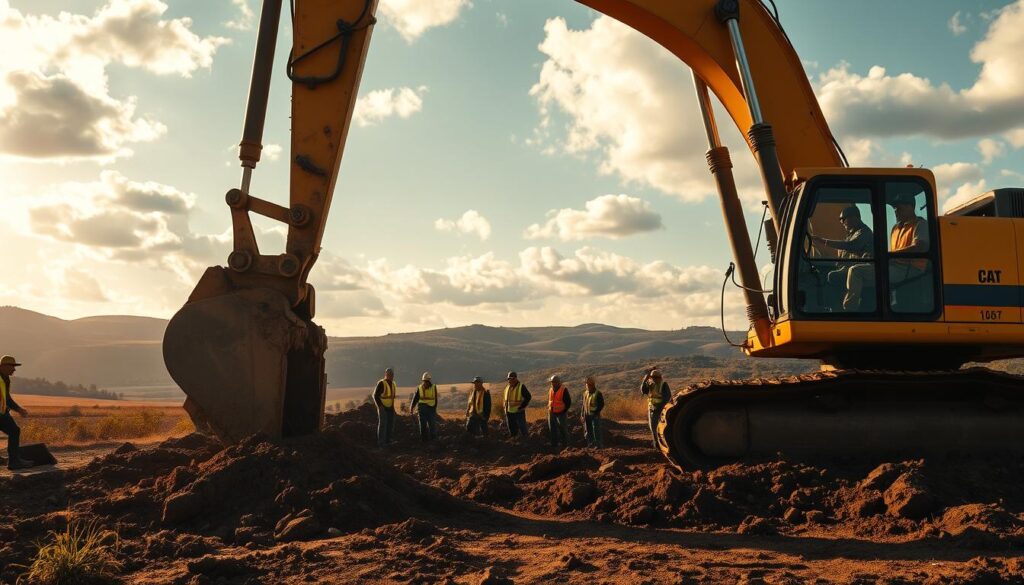
Mark the footprint, set elevations, and manage spoil
Cut plant shelves and a deepest zone—commonly around 2 feet for smaller projects—and dig slightly deeper to allow for underlayment and liner thickness. Place skimmers about 1 inch above the intended water level so final grades control runoff.
Soil testing, slope stability, and compaction for safe construction
Test the soil to set safe side slopes and compaction targets. Sandy ground needs gentler slopes; cohesive soil can hold steeper faces when compacted correctly.
- Design dewatering and drainage where groundwater may appear.
- Plan equipment routes to avoid ruts; use track mats or temporary stone.
- Stage materials and protective geotextiles near the basin to speed final work.
“Substrate smoothing and compaction beneath liners reduce punctures and future settlement.”
Verify skimmer and overflow elevations so water exits at controlled points without eroding adjacent areas. Treat lining prep as part of excavation: good grading now prevents costly repairs later.
Choosing and Installing Pond Liners at Scale
Start liner planning with soil tests and area calculations so you order correct sheets or bentonite rates. Accurate feet and area measures speed logistics and limit surprises during field work.
Rubber sheet options such as PVC, EPDM, and HDPE come in large rolls or made-to-order sheets up to many acres. They must be welded onsite to form continuous coverage. Underlayment is a nonnegotiable cushion to protect seams from rocks and roots.
Bentonite as an alternative
Bentonite arrives as powder in bulk bags, spread, mixed with the topsoil, hydrated, and compacted. When blended correctly it forms a low-permeability layer across slopes and basin floors. Heavy equipment like skid steers and compactors handle the quantities needed for big areas.
Match choice to conditions
- Compare flexibility, seam work, and puncture resistance when choosing liner type.
- Use feet and pond area to size sheets or to calculate bentonite rates and handling needs.
- Expect that some soils may require bentonite or thicker membranes; budget for contingencies.
“Expert liner installation reduces seepage and long-term leaks.”
Hire specialized crews for welding, staged inspections, and a slow fill test. Confirm seam integrity and subgrade compaction before admitting full water volumes so repairs are minimal and predictable.
Systems That Keep Water Healthy: Pumps, Filtration, and Skimmers
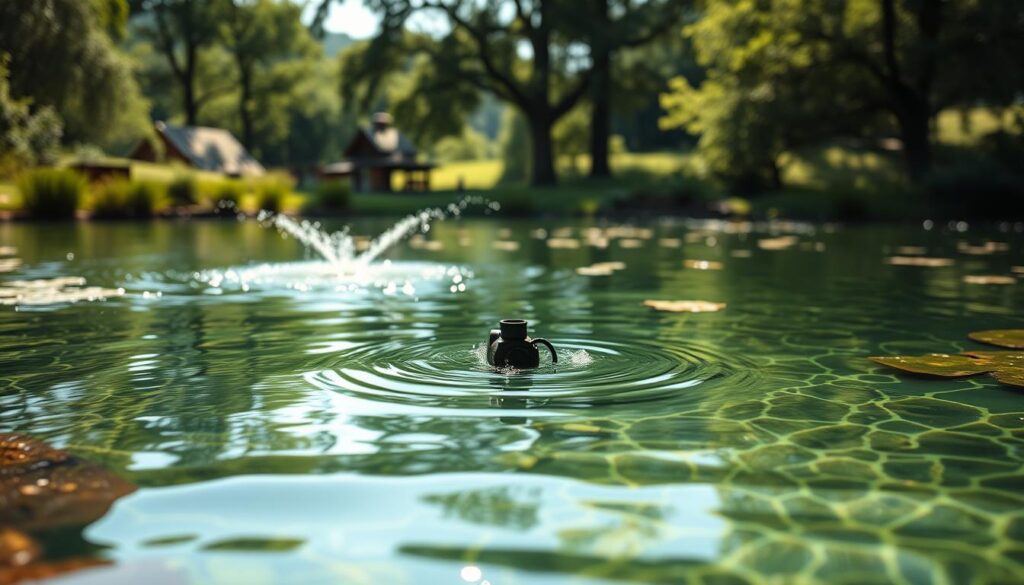
Well-sized circulation gear keeps water clear and avoids stagnant pockets that harm fish and plants. Place pumps at the deepest point for efficient circulation and to pull colder pond water into the filtration loop. Use underlayment to protect the liner where plumbing and valves sit.
Select the right pump and filtration capacity
Size pumps and filters to turn over the full volume at a rate matched to fish load and plants. Adjust for head height, pipe friction, and extra features like waterfalls or streams. Calibrate capacity higher for heavy stocking or dense planting.
Skimmer placement and water level control
Position skimmers about 1 inch above the intended water level and favor locations in line with prevailing winds. Add pre-filters or baskets to protect the main filtration and reduce maintenance.
Power, plumbing, and water source planning
Route suction and return lines to avoid dead zones and to push oxygenated water into deeper feet where fish gather. Plan electrical circuits with GFCI protection and bury plumbing to keep pads neat and serviceable.
“Verify priming, test unions for leaks, and document operating flows as baseline data.”
- Select durable materials—pump housings, valves, unions, and flexible PVC—to resist UV and continuous water exposure.
- Include redundancy or bypasses so you can service equipment without losing circulation.
- Confirm the water source and match system design to that supply to ensure reliability.
Edges, Rockwork, and Aesthetic Features
A strong edge treatment transforms raw liner into a natural border that holds up to feet of use and seasonal shifts.
Start with underlayment to cushion the liner and protect seams. Layer underlayment, then set the liner, and lock the perimeter with graded rocks and gravel sized to the slope. This approach protects materials and creates a natural look.
Protective rockwork and gravel transitions
Use rocks to hide liner edges and form a shadow line that blends into the backyard. Set coping stones or boulders on inch-to-feet overhangs to keep liner out of sight and reduce erosion.
Where people sit or step, mortar beds or pinned rockwork may be required to stop movement. Use small gravel to transition from submerged shelves to dry ground and to hold marginal plants in place.
Lighting, planting, and practical details
Integrate low-voltage or solar lighting to highlight focal features and ensure safe access after dark. Choose plants for texture and root behavior so they frame views without hiding the water.
- Lock edges with layered underlayment, liner, rocks, and gravel sized to slope.
- Set seating stones on mortar where traffic will occur to prevent shifting.
- Confirm splash zones and stage materials to protect finished edges during construction.
Large Pond Installation: Filling, Cycling, and Stocking
A careful, measured fill helps the liner settle and gives you time to spot leaks. Begin by adding water slowly so the liner seats into contours without stretching. Check edges and penetrations for drips before you reach full levels.
Fill the basin slowly
Treat municipal source water with a dechlorinator to remove chlorine and chloramines before it reaches pond water. Keep pumps running to circulate and to help temperature even out across feet of depth.
Add aquatic plants first
Place aquatic plants on shelves and edges measured in inches to feet. Early planting absorbs nutrients, adds shade, and lowers algae pressure while filtration systems mature.
Introduce fish gradually
Seed beneficial bacteria per label directions and allow time for the nitrogen cycle to stabilize. Add fish in small groups over several weeks, matching temperatures and watching gill movement and appetite.
“Track water levels daily during the first week to detect leaks and document tests and stocking dates.”
- Monitor levels: inspect any horizontal band where drops stabilize for liner issues.
- Test regularly: record initial water chemistry and follow-up results.
- Best practice: avoid overfeeding and keep pumps running while biological filters mature.
Maintenance, Troubleshooting, and Sustainability Over the Years
A steady maintenance habit preserves water clarity and supports a healthy ecosystem. Small, regular actions protect equipment and keep wildlife and plants thriving.
Routine care
Establish a weekly checklist: top off for evaporation, skim floating debris, and empty skimmer baskets.
Inspect pumps and filters, then test pH, ammonia, nitrite, and nitrate levels so problems show early.
Seasonal tasks
Spring: restart systems, prune plants, and service pumps.
Summer: limit algae with shade, aquatic plants, beneficial bacteria, or a UV clarifier.
Fall: net leaves and reduce feeding. Winter: use aeration or a heater in freezing areas to keep a gas-exchange opening.
Common issues and fixes
For algae, boost circulation and add plant cover. For leaks, let levels stabilize and inspect contour lines and edges.
When water quality slips, increase biological filtration, cut nutrient inputs, and adjust feeding.
- Use rainwater capture to reduce dependence on treated source water.
- Plant native species and mix floating, submerged, and emergent plants for natural filtration.
- Record maintenance by season and years to inform future work and budgets.
“A predictable routine reduces expensive repairs and supports local wildlife.”
Conclusion
An effective conclusion blends system testing with long-term routines so the feature performs as intended.
Use this guide to link design decisions, excavation checks, and materials selection into a single plan you can follow during construction and after handover.
Confirm seams on rubber sheets or bentonite coverage, set skimmers about 1 inch above the intended water line, and fill slowly while dechlorinating municipal supplies. Verify size and depth in feet and watch for stable levels as a final quality check.
Keep seasonal tasks—spring checks, summer algae control, fall cleanup, and winter aeration—on a simple calendar. Match pumps, filtration, and edging rocks to your site and the environment so fish and plants thrive.
If site complexity exceeds your experience, hire specialists for liners and critical systems to reduce risk and protect your property.
You Might Also Like...