
How to Prevent Mosquitoes in Your Pond
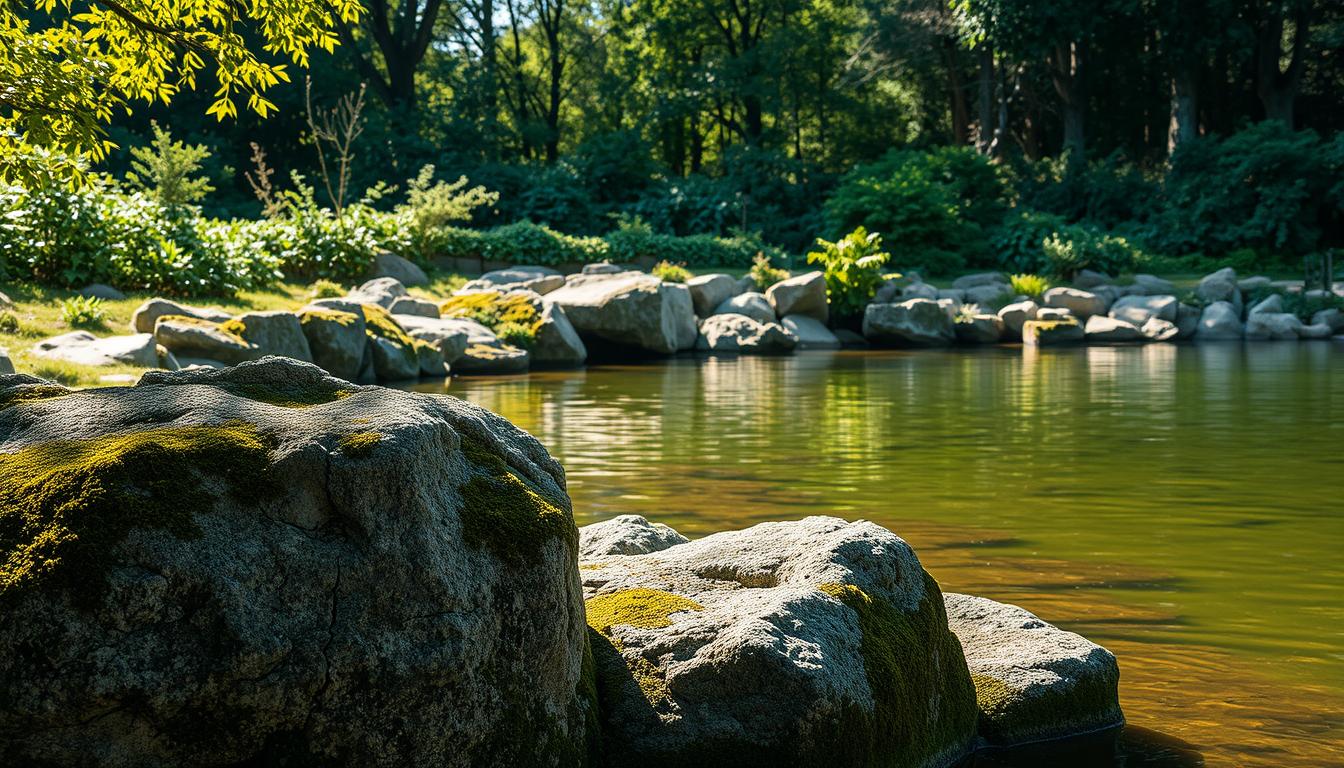
Bring a grounded, cohesive look to your pond this summer with thoughtful use of natural stone that blends the water, garden, and home. Well-chosen rock gives tactile beauty and long-lasting durability, so your hardscape holds up across seasons and saves time over repairs.
This Ultimate Guide lays out practical steps for planning, picking materials, and building details that prevent rework. You’ll learn how different stone types perform near water, where to place boulders, slabs, and capstones, and how to balance scale and proportion.
We also cover site assessment, safe access, permits, and how drainage and plant choices affect function. Expect actionable tips to make the pond a true focal point and a durable, low-maintenance feature that gains beauty with time.
Key Takeaways
- Stone hardscapes create a cohesive, durable pond edge that fits the home and garden.
- Choose materials and scale carefully to match water lines and plantings.
- Plan site assessment, permits, and utilities before starting the project.
- Boulders, capstones, and pathways guide views and movement around the pond.
- Durability and low maintenance make this the smart way forward for summer projects.
Why Natural Stone Belongs in Pond Design Today
A pond’s edge is where material choice most strongly shapes both look and performance.
Timeless beauty comes from subtle variation—mineral veins, mixed colors, and textures that catch light and deepen reflections on the water.
Timeless beauty, colors, and textures that complement water
Quarried blocks, pebbles, and split slabs offer finishes from smooth coping to cleft surfaces for traction.
These options let you match a yard’s landscape design—warm tones warm up clear ripples; cool grays calm reflective surfaces.
Durability and longevity that outlast seasons and trends
Installed over a proper base with drainage, this material resists freeze-thaw cycles and UV exposure better than many alternatives.
It often outperforms wood in load-bearing uses like retaining walls and steps.
- Hydrologic benefit: stone assemblies can be permeable, reducing runoff versus concrete.
- Local sourcing: regional types cut transport impacts and suit the native natural landscape.
- Versatility: types and finishes fit everything from intimate courtyards to larger yards.
In short, using the right rock and finishes turns a pond into a cohesive, long-lived feature that blends beauty with real function.
Natural stone landscaping for ponds: planning, placement, and design principles
Good planning links site conditions to material choices so your pond edge performs and looks intentional.
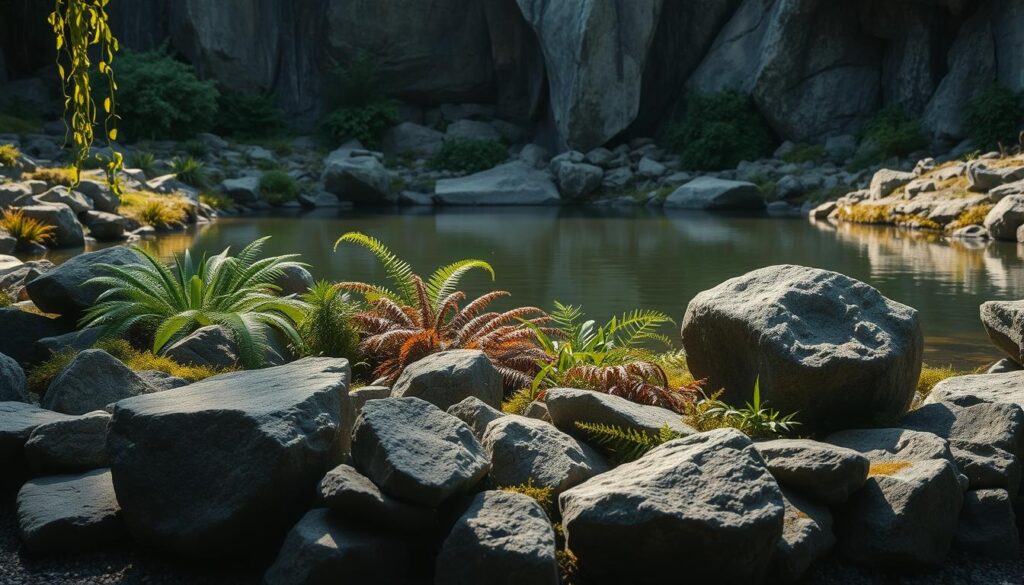
Site assessment starts with a walk. Note grade shifts, high-water marks, and where stormwater runs so you avoid placing materials that trap water or erode edges.
Map sun and wind paths. Place seating, steps, and walkways where they stay comfortable and align views from the home to focal boulders or cascades.
Choosing style and scale
Pick a style that fits the yard and architecture: rustic boulders for a natural look, refined flagstone for clean lines, or a mixed approach that blends both ways.
Size matters. Larger ponds and tall facades can handle big boulders and thick capstones. Small yards do better with mid-sized slabs and tighter joint patterns.
Safety, structure, and permits
- Design stable steps and gently pitched walkways with textured paving for traction in wet conditions.
- Use low stone walls or terraced seating to retain soil where grades change; walls often outperform wood for load-bearing uses.
- Call 811 before you dig and confirm setbacks and permits for walls, electrical runs, or expanded patios to keep the project on track.
Specify base prep and products that match drainage goals: permeable bedding for paths, cleft surfaces for walkways, and smooth coping for seating edges. Document elevations and materials to reduce change orders during building.
Stone types and materials that perform best around water
Choose materials that balance grip, color, and durability to keep pond edges safe and long-lived. Below are common options and where they work best.
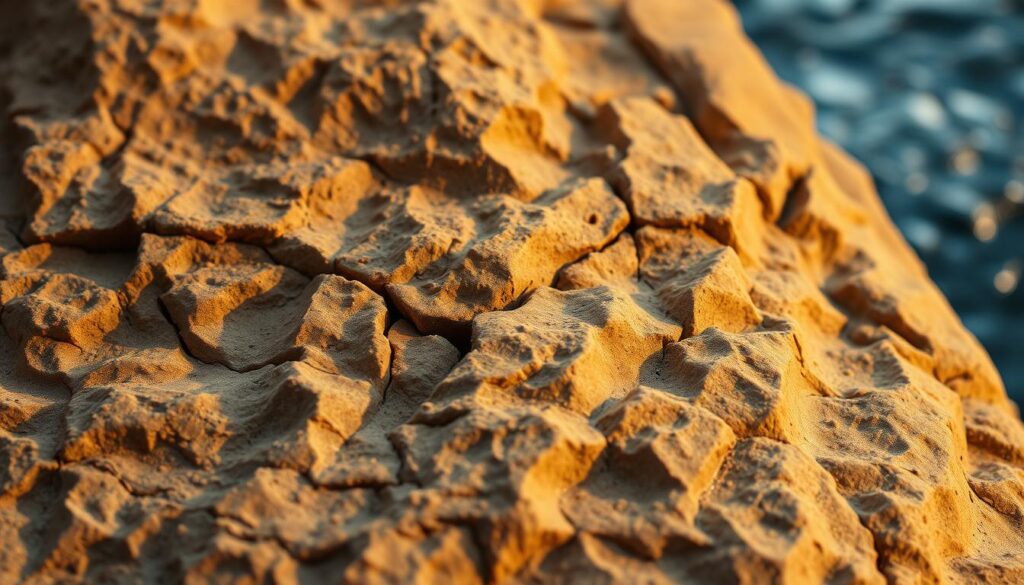
Sandstone
Sandstone offers warm tones and wood-like patterns that pair well with water features. It is porous, so seal porous surfaces to prevent staining and preserve beauty.
Slate
Slate’s natural cleft gives reliable traction for pathways and pond edges. Leave the cleft surface unpolished to keep anti-slip performance in wet zones.
Granite
Granite brings rugged strength for waterfalls, steps, and capstones. Use it where splash and wear are constant; its hardness resists erosion and maintains finish.
Limestone and travertine
Limestone provides a soft, uniform look but is porous—seal coping and seating surfaces as needed. Travertine can be filled for a smoother deck-like finish near pools or seating.
River rocks, flagstone, and boulders
- River rocks and pebbles work for shelves, mulches, and dry streambeds; mesh-backed pebble tiles give a consistent paving profile.
- Flagstone and stepping stones connect patios and viewing spots while handling freeze-thaw cycles.
- Boulders anchor focal points and stabilize shorelines—partly bury them so they resist seasonal movement.
Decomposed granite and gravel make great permeable paths and accents that help infiltration and reduce runoff. Match colors and products across capstones, pavers, and steps for a unified landscape and durable driveways or service access nearby.
Building with stone: edges, features, and finishes that make ponds shine
Thoughtful building choices for edges, cascades, and seating make a pond feel finished and lasting.
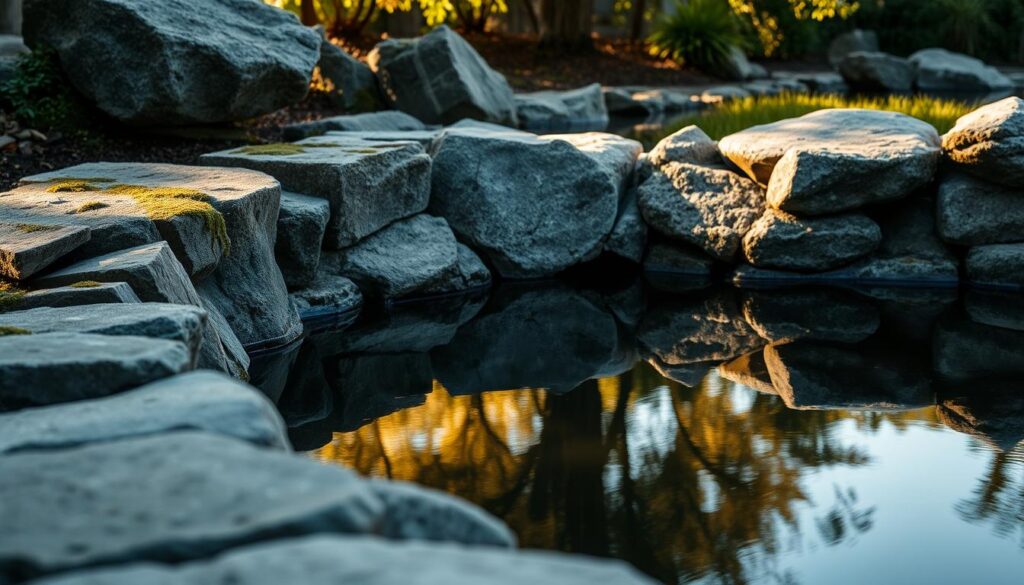
Naturalized pond edges and planting shelves
Layered stones and planting shelves blur the line between land and water. Create shallow shelves for marsh plants to improve habitat and soften the look.
Waterfalls and cascades: slab layering vs. boulder stacks
Slab-layered cascades give a smooth sheet of flow and a subtle sound. Boulder stacks create varied drops and deeper tones.
Tip: Use granite or dense products where water is constant for long wear.
Retaining walls and seating walls
Build walls with a solid base, slight batter, and drainage behind the face. Capstones should shed water and frame views across the pond.
Patios, landings, and steps for safe movement
Flagstone makes durable patios and landings through freeze-thaw cycles. Use slate cleft or textured sandstone for traction on steps, and add granite nosings where wear is high.
- Rough-set large boulders first, then infill with smaller stones to lock the composition.
- Partially bury boulders and tilt them back toward grade for stability.
- Document piece sizes and finishes in the project schedule to match procurement and field setting.
- Maintain paving joints, check wall weeps seasonally, and reseal porous pieces as needed.
Sustainable choices for American yards right now
Good design treats water as a resource, not a problem. Choose paving and mulches that let rain soak into the soil. This reduces runoff and helps recharge groundwater instead of pushing runoff toward ponds or storm drains.
Permeable assemblies to reduce stormwater runoff and recharge soil
Open-jointed paving over graded aggregate slows rainfall and promotes infiltration. Use geotextiles and recycled aggregate where local code allows to keep layers stable and lasting.
Xeriscaping with mulches to cut irrigation in drought-prone regions
Pea gravel, crushed granite, or lava rock make effective mulches around drought-tolerant plants.
They cut irrigation, suppress weeds, and protect soil near ponds and paths.
Local sourcing and right-sizing to lower transport impacts
Concrete production has a high carbon cost; choosing locally sourced materials cuts embodied energy. Contact regional quarries, stone yards, or networks like Freecycle to find nearby pieces.
- Right-size pavers to reduce waste and hauling.
- Use decomposed granite for driveways and service ways to limit runoff.
- Prioritize durability and integrate native plants to support habitat.
Decision path: pick local materials, design how water moves, and match the choices to climate and maintenance needs for a resilient yard and pond edge.
Conclusion
Conclusion
Natural materials unite the pond, garden, and home with a timeless look and low-maintenance durability. Pick products that match scale and climate so patios, steps, walls, and walkways perform through freeze-thaw cycles.
Start by assessing the site, confirming utilities and permits, and sourcing locally. Flagstone works well for patios; slate gives traction at edges; granite suits waterfalls and capstones. Use stepping stones, river rocks, and boulders as accents to guide movement and protect beds.
Choose permeable paving and right-sized pieces to cut runoff and transport impacts. Mock up placements, check risers and slopes, then set pieces carefully. Summer is a great time to build; document lessons to keep your stone landscape cohesive for driveways and future upgrades.
You Might Also Like...