
5 Family-Friendly Pond Activities for Summer
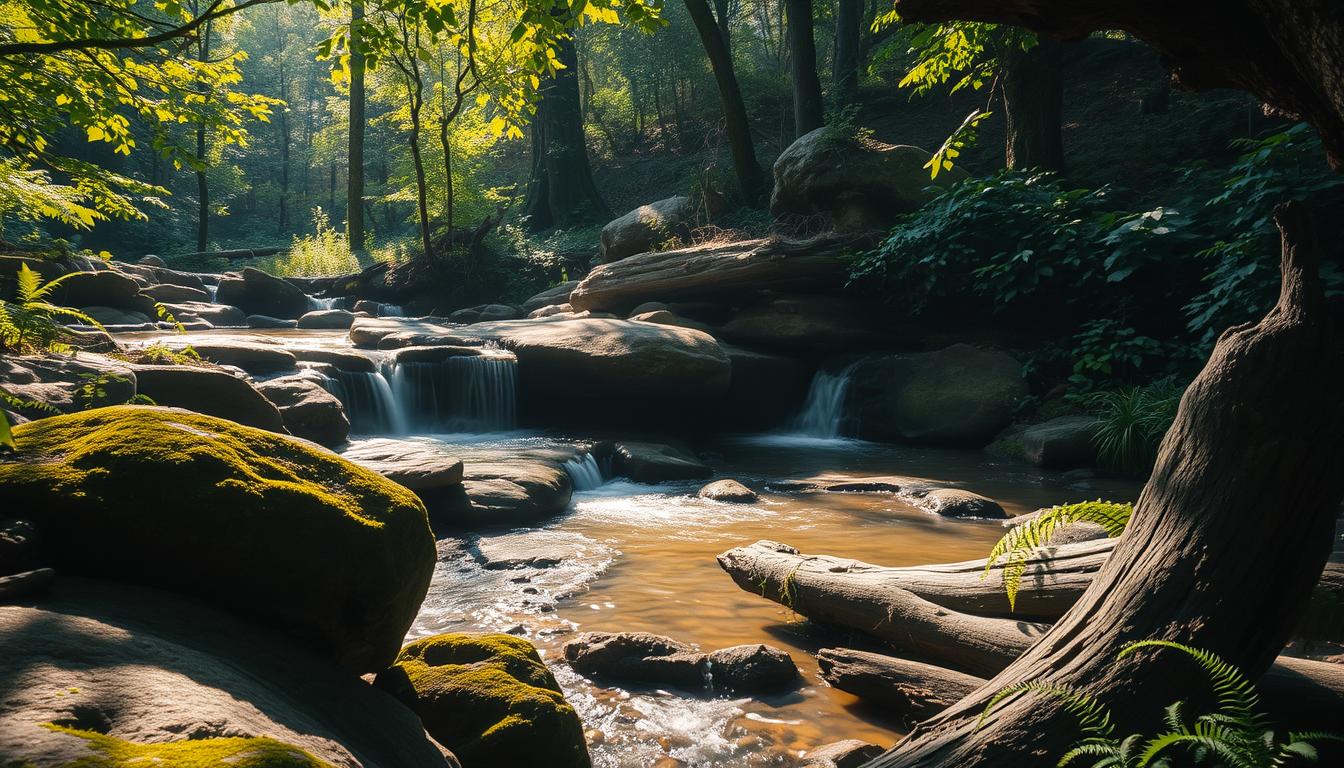
Bring moving water to your yard without a pond. A modern disappearing waterfall offers the sound and look of a natural cascade but uses a hidden recirculating system. This pondless water feature fits small yards and larger properties alike.
The system pushes water through concealed plumbing, over rock and gravel, and back into an underground basin. The effect is a tidy waterscape that seems to vanish into the ground. Designers match scale, planting, and materials so the feature suits your backyard style.
Expect upfront design choices to save time later. Good planning cuts maintenance and keeps operation simple. This guide answers common questions about costs, installation, and care so people can decide if this waterscape fits their lifestyle.
From morning coffee to evening rest, a pondless waterfall adds calm and curb appeal. It links well with beds, paths, and patios while avoiding fish or an exposed pond.
Key Takeaways
- A disappearing waterfall gives natural sound and look without a pond.
- Pondless systems recirculate water through hidden components.
- Design choices—scale, materials, and planting—shape appearance and upkeep.
- The feature suits small and large backyards and blends with landscapes.
- This guide covers what the system is, installation, operation, and care.
What Is a Disappearing Waterfall and Why Homeowners Love It
Homeowners get the charm of moving water without the open pond, thanks to a hidden recirculating design.
What it is: A pondless solution creates a running stream over rocks and gravel that never forms a visible pool. Water is captured in an underground basin with a concealed submersible pump and sent back through piping to the top of the stream.
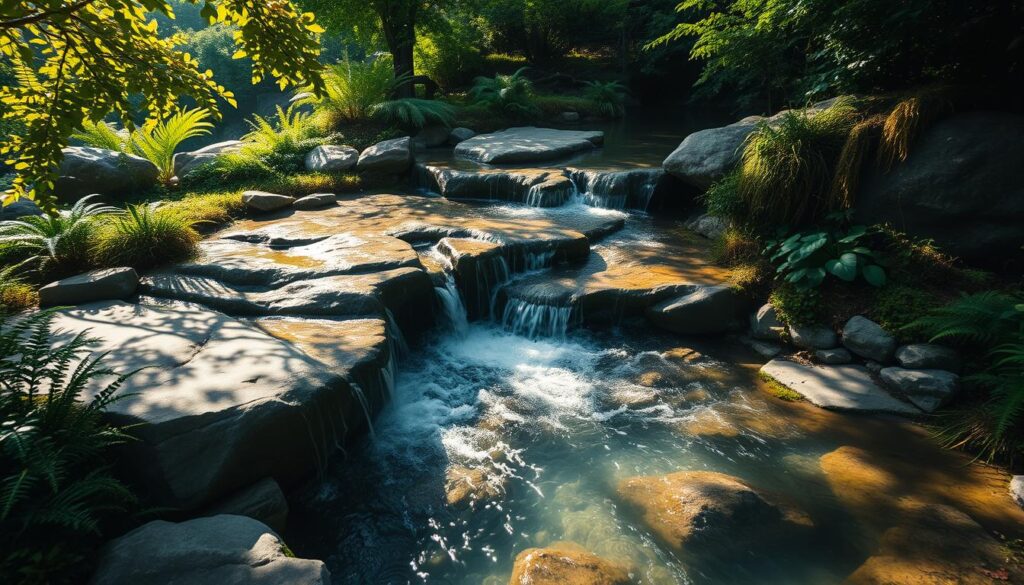
Why people choose it: This waterscape delivers the look and gentle sound of water without pond upkeep. Busy homeowners and travelers like that there are no fish to care for and the system can run on a timer, remote, or switch.
- Turns a dry creek aesthetic into a live stream while keeping the surface tidy.
- Reduces perceived liability in family yards and schools since no open pond exists.
- Attracts birds and dragonflies quickly and avoids stagnant water that breeds pests.
“A pondless design gives you all the sensory benefits of moving water with minimal maintenance.”
Bottom line: This simple water feature fits small yards and larger landscapes, adding curb appeal and the peaceful sound of running water without the complexity of a pond.
Designing a Disappearing Waterfall for Your Backyard
Good design starts with the site. Mark high and low points to trace a modest stream path that feels natural. Think about access, views from patios, and where the water should fade into the ground.
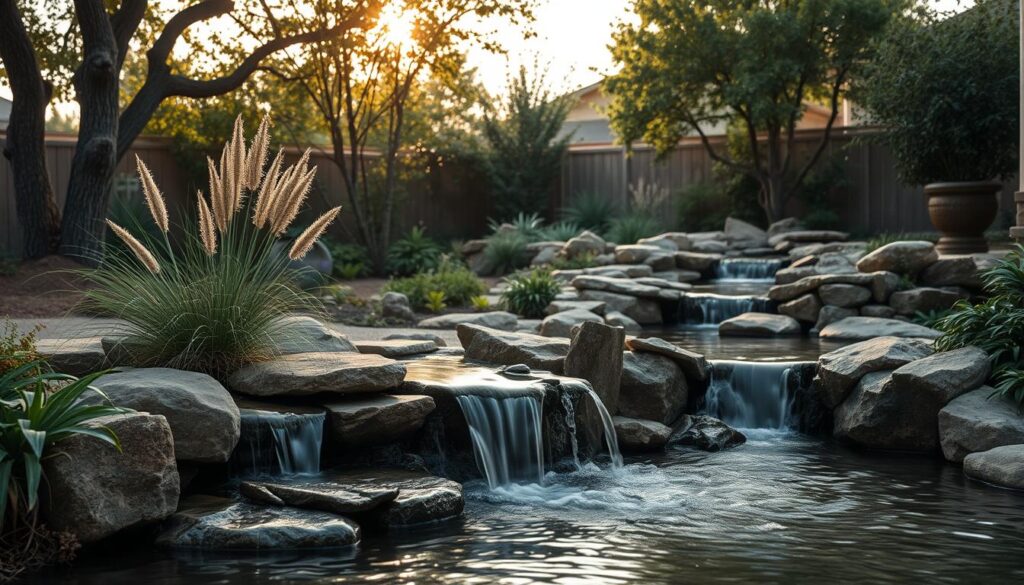
Site planning and basin layout
Size the underground basin below the cascade so a concealed submersible pump can capture return water reliably. Line the chamber and fill it with rock and gravel to stabilize the pump and hide the plumbing.
Rocks, gravel, and plants that thrive
Select layered rocks and varied-sized rocks to form ledges and weirs. Use rock gravel blends to fill voids and keep the streambed stable.
Choose shallow-rooted aquatic plants like bacopa, acorus, dwarf papyrus, and sagittarias. Avoid lilies and aggressive varieties to limit upkeep.
Sound, sightlines, and ecosystem balance
Tune the sound with an adjustable pump and stone placement: wider weirs make a gentler sheeted look; narrow drops add splash. Align sightlines from seating areas so the pondless waterfall becomes a focal point.
“A modest, well-placed stream delivers the look and calming sound homeowners want while keeping maintenance simple.”
Disappearing Waterfall Installation: Timeline, Components, and How It Works
A typical installation moves quickly: many residential builds finish in one to two days with minimal yard disruption.
Timeline & construction. Most simple pondless projects complete in one day or two for a standard yard. More complex designs or large commercial builds can extend toward a week depending on site access and rock work.
Core system components. The installation centers on an underground basin filled with rock and gravel and a robust pump chamber. A concealed submersible pump moves water up through underground pipe to the top of the waterfall stream. The flow returns into the basin where the pump collects it.
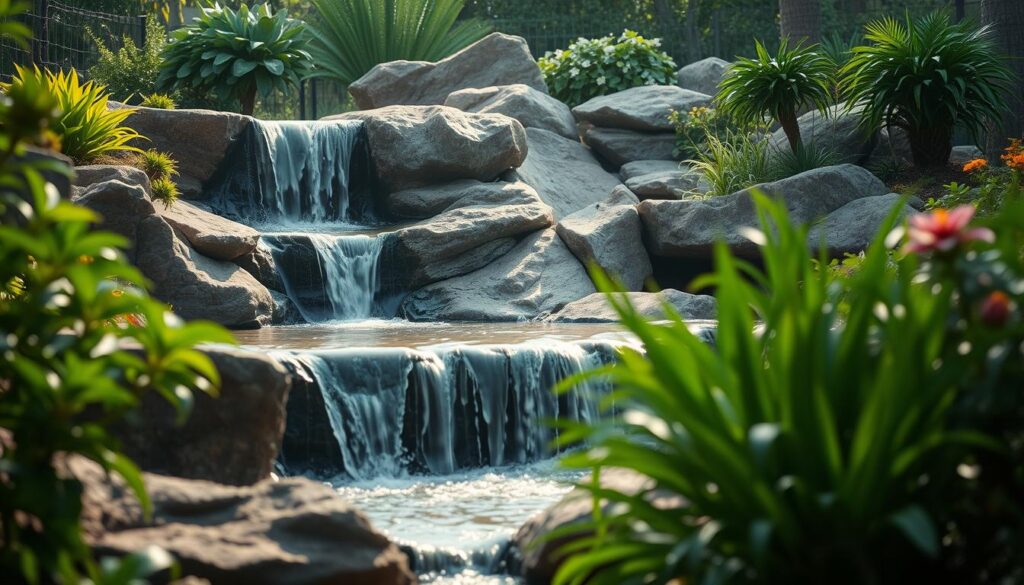
Operation and durability
Choose timers, remotes, or part-time schedules to cut running time and energy use. Unlike an ecosystem pond, a pondless waterscape does not require continuous operation.
Where it fits and construction options
This system adapts to a residential yard, schools, and business courtyards. Kits and professional construction crews speed installation and coordinate excavation, liner placement, and stone setting.
“Test flows, verify timer function, and confirm basin water levels before sign-off.”
- Set clear expectations: most installs finish in one to two day windows.
- Plan access and service points so maintenance stays simple.
- Use proven kits or experienced pond diggers for reliable results.
Maintenance, Costs, and Performance Expectations
Plan easy, regular tasks so your yard water feature stays attractive and low-cost.
Monthly maintenance is simple: add a small dose of beneficial bacteria or algae control and confirm the basin auto-fill works. Check the pump intake and look for steady flow so the system circulates without strain.
Operating costs are modest. A typical ornamental pump running 24/7 often costs about $1 per day. Running the feature part-time (for example 12 hours per day) cuts electricity roughly in half.
Expect seasonal change. Evaporation rises in hot climates and when tall drops create extra splash, so summer top-ups increase. Winter needs usually fall near zero. If the auto-fill cannot keep up, inspect for leaks in plumbing or liner edges rather than assuming normal loss.
- Wildlife wins: moving water discourages mosquitoes and attracts birds and dragonflies; no fish are required.
- Quick fall cleanup: switch the system off and use a blower to clear leaves from the dry creek bed before restart.
- Budget wisely: installation and construction matter, but ongoing costs are lower than for ponds since there are no fish or pond filters to manage.
“Check flow strength, basin level, and splash zones each season to keep the waterscape efficient.”
Conclusion
A compact stream feature adds curb appeal and a calming soundtrack without heavy upkeep.
Choose a pondless approach and you get the look and sound of moving water with almost no routine work. There are no fish to feed, and homeowners or travelers can shut the system off for one day or longer with confidence.
Whether you pick a kit or professional construction, many installs finish in a single day. Care focuses on simple checks: pump settings, basin level, and clearing leaves from rocks and gravel.
Ready to plan? We’ll help you match design, plants, and materials so your disappearing waterfall or pondless water feature fits the yard and delivers reliable, pleasant sound.
You Might Also Like...