
Preparing Koi for Winter Hibernation
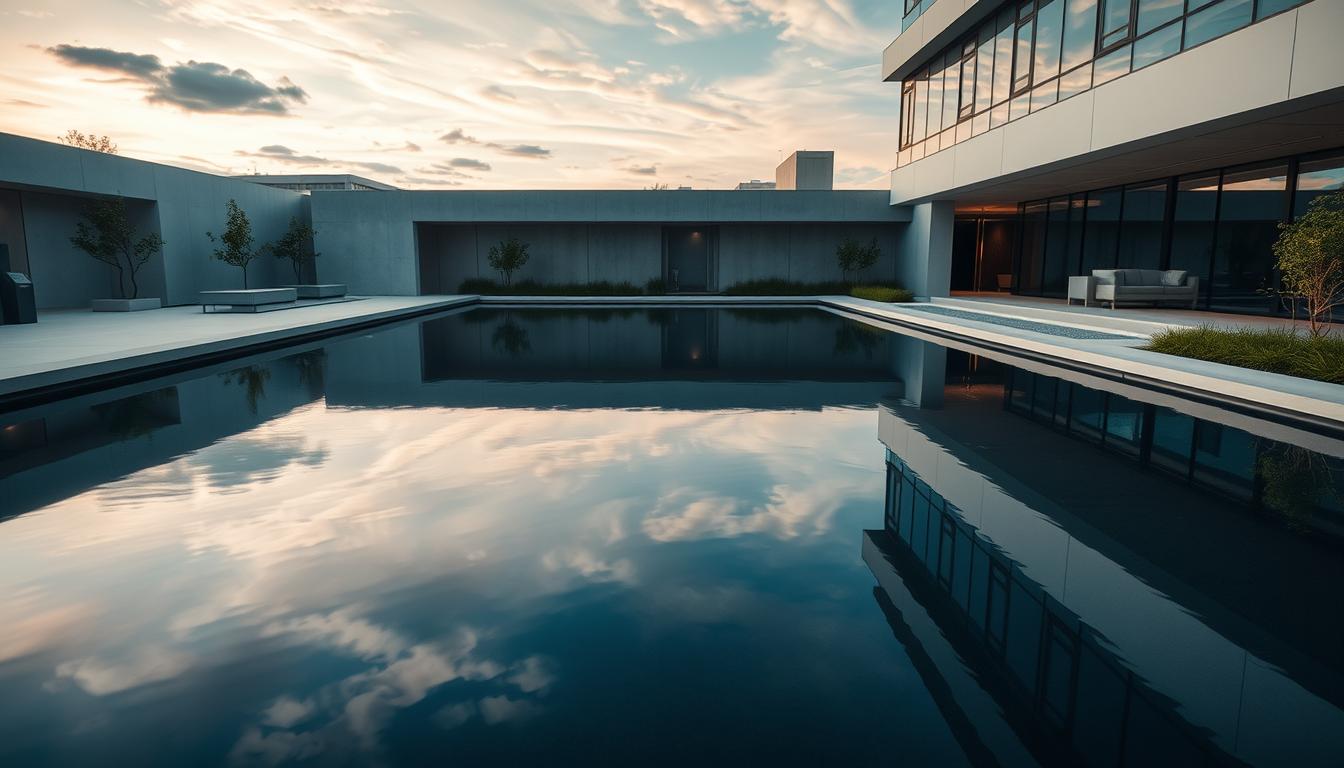
Clean lines, clear purpose, and simple materials define how many homeowners add a water centerpiece to a small yard. Today’s take blends geometric shapes with practical steps so a backyard water feature can be both stylish and easy to build.
From compact patio bowls to raised koi pond formats, there’s a way to fit water into almost any outdoor space without a huge budget. Small installations stay affordable and often work as DIY projects when you follow basics like liner choice, safe edge work with stones or rocks, and placing the feature for sun and shade.
This article offers practical pond ideas, material tips, and simple steps to help you pick the right shape, style, and edge treatment. Expect guidance on reflective pools, pebble and patio versions, pumps and filtration, and child- and pet-aware safety so the water feature feels intentional and useful.
Key Takeaways
- Simple plans win: start small and build smart.
- Use durable materials and clear edges with stone or rocks.
- Consider reflective black-water looks or a koi pond for calm impact.
- Balance sun and shade; add pumps or plants for water health.
- Prioritize safety with stable edges and comfortable viewing heights.
Why modern pond design is reshaping outdoor spaces right now
Clean geometry and careful material choices have pushed water features from backyard afterthoughts to intentional focal points.
Present-day aesthetics:
Clean lines meet living ecosystems
Rectangles, circles, narrow rills, and stepped levels give a clear shape that echoes house architecture. Polished concrete, Corten and stainless spillways, and frameless glass make the water read like built form while supporting plants and fish.
Balancing visual impact with sustainability
Design choices now pair high-quality materials with regeneration zones and closed-loop circulation. That reduces waste and keeps water clear with less effort.
“A pond should be both a reflective artwork and a healthy habitat.”
- Automated LED lighting and app controls lower upkeep.
- UV clarifiers, skimmers, and bottom drains improve clarity.
- Disciplined planting stabilizes nutrients and suppresses algae.
These ideas scale from compact courtyard garden projects to larger backyard installations. Treat the feature as a designed space that combines form, function, and long-term care.
Signature shapes for a contemporary look
Clean geometry—straight edges, perfect arcs, and slim rills—gives water features a purposeful presence in small yards.
Rectangular and geometric options for minimalist gardens
Rectangles and strict geometry read like an extension of linear paving and outdoor rooms. Long, orthogonal forms pair well with aligned slabs and grid-like planting to reinforce sightlines from house to backyard.
Cast-in-place concrete and cut stone copings deliver razor-straight edges that emphasize the shape. A rectangular koi pond works well with vertical faces for easy viewing and low-maintenance scrim access.
Perfect circles, narrow rills, and stepped levels
Perfect circles and slim rills soften hardscapes while still feeling intentional. Circles create calm focal points; rills elongate a garden visually.
Stepped levels add a subtle, low-splash waterfall effect. These tiers can double as debris traps that are easy to access when planned with clear skimming points.
Raised, courtyard-friendly patio ponds
Raised formats use concrete or stone walls to protect liners and define a secure edge. They simplify skimming and create built-in seating for viewing fish and plants.
- Proportion tip: match pond length-to-width ratios with nearby paving grids.
- Material pairing: concrete for crisp edges, stone for warm coping, aligned joints to accentuate form.
- Practical step: outline your chosen shape with a garden hose or stakes before digging to check sightlines.
“Simpler outlines reduce debris and make upkeep straightforward.”
Material trends that define the modern pond
Material choices now do more than finish a water feature — they define its character, longevity, and care needs.

Polished concrete and exposed-aggregate finishes
Polished concrete gives precise edges and a clean look that reads like built architecture. It supports sharp spill lips and tight joins with paving.
Exposed-aggregate keeps the same geometric feel while adding a non-slip texture. That makes walking edges safer and still visually minimal.
Corten and stainless steel spillways
Corten steel spillways develop a warm patina that softens metal while forming crisp water sheets for a steady waterfall look. Stainless steel offers mirror-like reflections and long-term durability where bright highlights are desired.
Both metals act as sculptural accents and can double as aeration devices when arranged as water walls.
Frameless glass and large-format slabs
Frameless glass panels create transparent viewing windows into aquatic life and submerged planting. Proper structural support and sealed mounts are essential for safety and even spill edges.
Large-format porcelain or stone slabs extend patio finishes to the perimeter. Fewer grout lines make transitions seamless and link the garden to the water visually.
- Mix materials — pair smooth concrete with textured stones or corten accents to add depth without clutter.
- Detailing — concealed weirs, tight level tolerances, and test mockups ensure even spill lines and expected color under changing light.
- Maintenance — seal concrete for stain resistance, choose frost-proof stone, and follow gentle cleaning protocols for metal features.
Smart tech upgrades for low-effort, high-drama water features
With app-driven lights and automated filtration, water in the yard becomes both a mood-maker and a low-effort ecosystem.
LED lighting scenes layer submersible accents, perimeter washes, and spotlights to build depth without big energy bills.
App control lets you schedule color fades, dimming, and timed scenes so the feature shifts from calm to party mode with one tap.
Advanced filtration and circulation
Clear water relies on mechanical prefilters, biological media for beneficial bacteria, and UV clarifiers to suppress algae blooms.
Complete circulation loops pull from skimmers at the surface and bottom drains below, which reduces debris and boosts oxygen for plants and fish.
Right-sized pumps and smart monitoring
Choose energy-efficient pumps sized for head height, the desired waterfall flow, and turnover rates. Variable-speed pumps save power and help manage water level precisely.
Smart sensors track temperature, pH, and clarity. They can adjust pump speed, send alerts for maintenance, and log trends to prevent issues.
- Resilience: use surge-protected transformers, wet-rated fixtures, and protected junction boxes for safe backyard installs.
- Integration: tie lighting and water movement scenes into patio lighting for a cohesive nightscape.
- Plan ahead: run conduits and add access panels so future pump swaps or upgrades don’t damage hardscape.
“Smart systems cut manual cleaning and stabilize ecosystems, especially with balanced planting.”
Eco-forward ponds: natural filtration and water-wise ideas
Build health into the feature from the start. Small-scale ecology and simple mechanics keep water clear and lower upkeep. Regeneration zones, layered media, and careful planting make the system resilient and resource-efficient.
Plant-powered regeneration zones and biological media
Regeneration zones use layers of gravel and biological media to host beneficial bacteria. Those microbes break down fish waste and organic matter, clarifying pond water without chemicals.
Targeting about 60% plant cover to suppress algae
Aim for roughly 60% surface cover with aquatic plants to shade the surface and compete for nutrients. This reduces algae and keeps clarity while supporting life and shelter for fish.
Closed-loop systems, rain capture, and auto top-off
Closed-loop circulation recirculates water through filters and regeneration zones to minimize loss. Auto top-off valves maintain level with minimal oversight.
- Hardy oxygenators and marginals: Elodea, Hornwort, Water Iris, Pickerel Rush — choose natives where possible.
- Rain capture: redirect downspouts or use underground tanks to supplement refill needs.
- Combine natural filtration with modest tech like UV and skimmers for redundancy.
Check periodically for leaks, evaporation in hot months, and plant thinning to hold the target coverage. Thoughtful planning conserves water, saves space, and preserves a clean, contemporary design in your garden.
Seamless indoor-outdoor integration
Align interior sightlines with the exterior to make water feel like an everyday view.
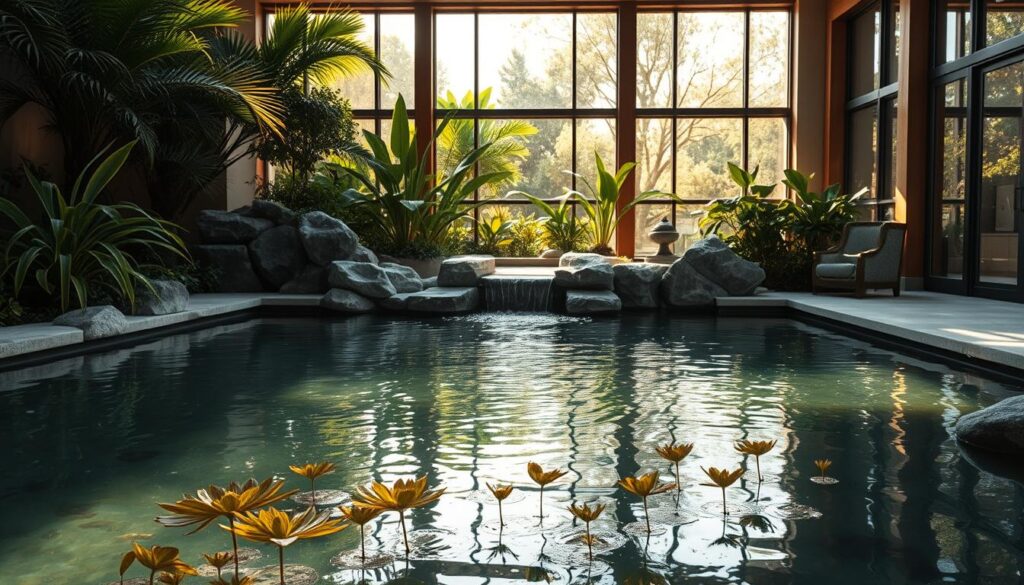
Place the pond where it shows from main living areas. Large glass doors or floor-to-ceiling windows frame the water as living artwork. This creates a daily connection between kitchen, dining, and living spaces and the garden.
Extend indoor flooring patterns or large-format tiles to the patio and terrace so the transition reads as one surface. Repeat colors and key materials to keep the look cohesive and calm.
Practical alignments and lighting
Match pond edges and patio joints with interior floor grids to reinforce sightlines. Use frameless glass or wide sliders to keep views clear in all seasons.
- Place the water feature where it’s visible from main rooms.
- Coordinate layered lighting inside and out for seamless after-dark scenes.
- Keep plants restrained near closest edges; add taller forms as a backdrop.
- Conceal pumps and valves but allow service access to avoid visual disruption.
“Treat the water as an extension of the living room; the right joinery makes it effortless.”
Planting palettes for modern water features
Choose plants that balance reflection, shade, and structure to make your water feature feel intentional.
Water lilies suit different scales—select dwarf varieties like Nymphaea ‘Aurora’ for small bowls and larger cultivars for extended surfaces. Size lilies to the pond so leaves create reflection and temper algae with surface shade.
Use oxygenators such as hornwort to absorb excess nutrients and keep circulation clear. Combine these with marginals—iris sibirica ‘Perry’s Blue’ or iris laevigata—for restrained blooms and edge color.
Texture and form: Acorus calamus thrives in shallow shelves; Hakonechloa macra adds fine texture and graceful movement around pond edges. Keep palettes disciplined by repeating foliage colors to preserve a cohesive look.
“Layer plants by height: taller marginals behind lower spreaders to preserve sightlines across the water.”
- Size water lilies to match depth and surface area for reflection and shade.
- Combine oxygenators, marginals, and grasses to support clarity and a restrained look.
- Use baskets or pots for aggressive spreaders and plan maintenance cycles: deadhead, thin, and replant as needed.
- Place marginals on shelves and lilies in deeper zones; add evergreens for winter structure.
Koi pond style, depth, and care cues
Raised koi installations offer crisp sightlines and comfortable seating that invite long afternoons of fish watching.
Raised edges for viewing and clean geometry
Raised koi pond walls create stable seating edges and make maintenance easier. Vertical copings read well with house lines and give clear, safe access for feeding and netting.
Depth guidelines and shade strategies for fish health
Plan deeper zones for overwintering. Larger Japanese koi need about 4 ft of depth to manage seasonal swings in temperature and stress.
Provide shade with trees, pergolas, or water lilies to keep water cool in heat. Secure lilies in pots with gravel so fish cannot uproot them.
- Filtration: skimmers, bottom drains, and a biological filter sized to koi biomass keep water quality high.
- Edge detailing: avoid snag hazards—use smooth coping and recessed net clips for safe routine care.
- Stocking & feeding: follow limits and feed by temperature to reduce waste and stress on fish and filters.
- Quarantine: isolate new fish for several weeks to prevent disease introduction.
- Seasonal routine: adjust feeding with water temperature, test ammonia and nitrate levels, and add aeration in freeze-prone areas.
“Clean geometry complements architecture while offering practical viewing windows or glass panels for unique perspectives.”
Wildlife-friendly modern ponds
A small water area can become a lively habitat with simple shaping and the right plants.
Sloped entries and shallow shelves let amphibians, bees, and small birds reach the water easily. Gradual slopes and wide ledges create safe exit routes so creatures do not get trapped.
Place the feature in a sunny spot to boost plant vigor and welcome dragonflies and pollinators. A sunny location encourages natural food webs and stronger growth of marginal planting.
Fish-free balance and gentle aeration
Omit fish to protect breeding frogs and salamanders. Without fish, eggs and larvae have a better chance to grow, keeping local life healthy.
Oxygenating plants and dense margins
Aquatic plants such as Elodea, Hornwort, and Waterweed clarify water and offer shelter. Use dense marginal planting—iris, sedge, and native grasses—to provide cover and nesting spots while keeping a clean, simple look.
- Discreet overflows and a low-flow rill or small waterfall add aeration without disturbing habitat.
- Perching stones and logs at the waterline support birds and beneficial insects.
- Chemical-free care: rely on plant uptake and hand-skimming to keep water clear.
“A wildlife-focused water feature gives the garden a living rhythm that needs only light care.”
Even a compact courtyard can host wildlife when you allow a safe slope, choose the right plants, and keep seasonal tasks like leaf skimming and trimming on a simple schedule.
Reflective black-water aesthetics for dramatic calm
A sheet of deep, ink-like water can turn a backyard into a quiet stage for light and silhouette.
Black-water treatments create a mirror-like plane that emphasizes architecture and plant silhouettes for a high-drama modern pond look. Safe, non-toxic dyes filter sunlight and slow algae photosynthesis, keeping the surface pristine with less effort.
Keep edges minimalist and level tolerances tight so any slight ripple or single water blade reads as a crisp line. Pair the dark plane with smooth texture—polished concrete, porcelain slabs, or stainless accents—to maintain a refined style.
Choose a restrained planting palette: evergreens, grasses, and structural forms read clearly in reflection and support simple colors and form. Subtle spillways or a thin waterfall sheet can animate the surface without breaking the calm.
- Night effect: dark water deepens LEDs and star reflections for immersive ambience.
- Care note: monitor clarity, adjust dye dosage seasonally, and test shallow zones to still view fish near the edge.
- Safety: reduced depth visibility calls for stable coping and discreet edge lighting.
“Black water amplifies form and light while cutting routine maintenance when used thoughtfully.”
Tip: trial the treatment in a small basin before scaling up to confirm the exact look and response in your light and colors.
Stepping stones, paths, and sculptural accents
Well-planned crossings and artful accents let you move through the garden while enjoying the water up close. Keep routes clear, safe, and visually tied to the rest of the layout.
Stone choices and stability for safe crossings
Safe stepping stones should be wide, non-slip, and set just clear of water to prevent slips. Use a stable bedding—compact gravel or a cast concrete pad—for long-term support.
Durable materials like granite, sandstone, and gneiss resist wear. Square slabs can sit on concrete foundations; add small rock anchors where extra hold is needed.
Planting around paths: irises, sedges, and bold foliage
Frame crossings with blue iris, iris laevigata, and sedges so plants do not block sightlines. Use Acorus calamus on shallow shelves and reserve bold foliage like gunnera for larger beds away from narrow steps.
Keep planting practical: allow access for trimming and feeding, and avoid tall specimens right at the edges where people pause.
Mirrored spheres, carved stone, and subtle water blades
Integrate a small set of mirrored stainless spheres or a discreet water blade as a focal point. Floating accents catch light and amplify reflection without complex mechanics.
- Echo path geometry with straight runs or rhythmic stepping sequences to reinforce the overall design.
- Match coping heights and use slip-resistant textures where feet cross or pause.
- Use low-glare, directional lighting to safely illuminate crossings and sculptures at night.
Sculptural bowls, scuppers, and compact features for small spaces
Small-scale water pieces make a big sensory impact on a patio while keeping installation simple and reversible.
Freestanding bowls are often “plug-and-go,” running on a small pump and needing no complex installation. Concrete bowls with a metal scupper create a quiet sheet of water that reads like a reflective channel.
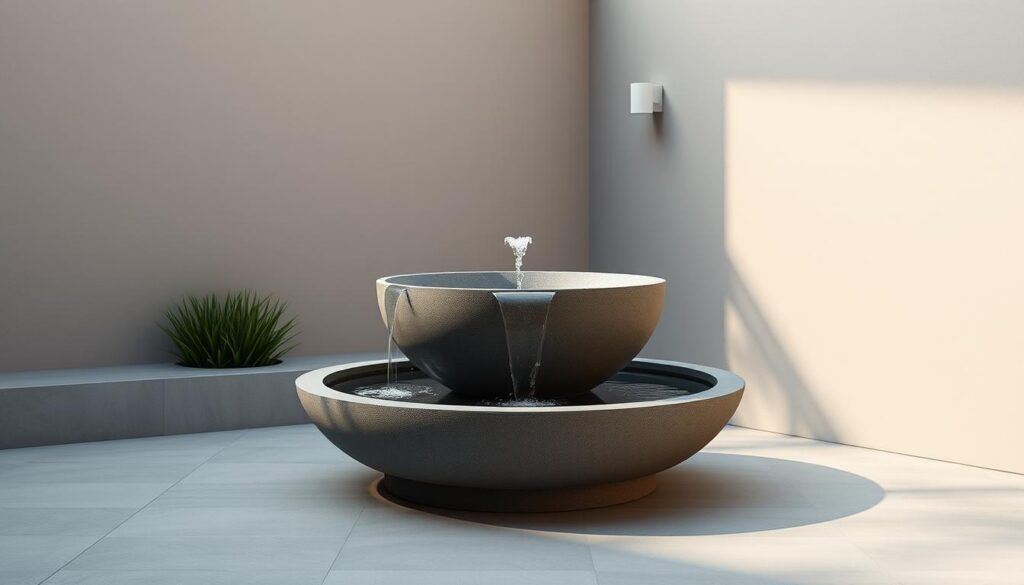
Corten steel bowls pair well with grasses and dwarf lilies such as Nymphaea ‘Aurora’. Cast concrete, smooth stone, and corten each support a different style and planting palette.
- Level a solid base, conceal power for the pump, and plan simple periodic cleaning.
- Top-offs matter in hot months; add an optional auto-fill where access allows.
- Keep furniture minimal and use large-format pavers to keep the outdoor space airy.
Flexibility: standalone bowls can later link to larger ponds as a garden evolves. The warm patina of corten contrasts beautifully with green plants and gravel for a low-build backyard focal point.
“Compact features bring the sound and calm of water to small yards without major construction.”
Where to place your pond and how deep to go
A careful siting choice will balance sun, shade, and leaf fall for clearer water.
Sun versus shade for plants, fish, and clarity
Pick a sunny area to boost plant vigor and oxygenation. Morning sun with partial afternoon shade works well in hot climates.
Too much direct sun fuels algae growth, so add nearby trees or a pergola for relief. Check wind and leaf-drop sources to reduce debris and cleanup.
Depth ranges for lilies, marginals, goldfish, and koi
Use depth benchmarks to suit your goals. A mixed small pond performs well around 2 ft for plants and small fish.
- Goldfish: about 18–24 in.
- Large Japanese koi pond: roughly 4 ft to overwinter safely.
- Wildlife-focused area: ~12 in with broad shallow shelves and safe slopes.
- Marginals: place on 6–12 in shelves; lilies belong in the deeper planting zones.
Level consistency matters: consider an auto top-off to maintain pump performance and plant health.
“Let the water settle several days before adding plants or fish to stabilize conditions.”
Before digging, map utilities and setbacks, trial outlines with a garden hose to confirm sightlines, and adjust depth for regional freeze or heat when picking final layouts.
From idea to install: getting started the modern way
Begin on paper and on-site. Start with scaled drawings, then trace your outline with a garden hose or string to validate size, sightlines, and circulation in the backyard.
Site outline, liner basics, and clean edge treatments
Dig small features to about 18–24 in with gently sloped sides for safe access and stable margins. Clear sharp roots and level shelves for marginals.
Underlay and liner matter. Lay geotextile underlay, then a heavy-duty EPDM or PVC liner and trim carefully. Plan overflow routes and hide liner terminations under flat stones for a neat edge.
Pumps, waterfalls, and oxygenation add-ons
Place a compact mechanical bay for the pump and filter that is accessible but discreet. Size the pump by turnover rate and any waterfall head height to balance oxygenation and efficiency.
- Use prefilters, skimmers, and aeration stones where fish loads or leaf drop demand clearer water.
- Set substrate and place rocks to create habitat without forming debris traps.
- Fill slowly, check levels, then let water settle for several days before planting or adding fish such as a koi pond starter stock.
“Test outlines first; a small change before digging saves time and cost.”
Commissioning checklist: leak checks, level verification, GFCI-protected electrical, initial water tests, and a realistic timeline that allows for weather and inspections. These steps make pond ideas buildable and lasting.
Maintenance that keeps modern ponds pristine
Simple weekly checks make a big difference in water clarity and system longevity.
Seasonal routines: skimming, trimming, and filter care
Skim leaves and debris regularly, especially in fall, to stop organic build-up that clouds pond water.
Check the pump and skimmer flow each week and clear screens so circulation stays steady.
Clean or replace filters every 3–4 weeks per manufacturer guidance, and rinse mechanical media gently to protect beneficial bacteria.
Testing pH, ammonia, and nitrates—plus winter protection
Test pH, ammonia, nitrite, and nitrate monthly and after heavy rain or big changes. Record results in a maintenance log for trends—this helps with koi pond management and stocking decisions.
Trim aquatic plants and deadhead lilies to control growth and remove decay promptly. Inspect bottom drains and valves seasonally to prevent blockages.
- Weekly: skim, check pump flow, clear skimmers.
- Every 3–4 weeks: service filters and rinse media.
- Monthly: test chemistry and note pond water readings.
- Winter: keep an opening in ice with a heater or de-icer; confirm adequate depth for fish survival.
“A steady, light-touch maintenance plan preserves the aesthetic without heavy intervention.”
Tip: verify lighting, seals, and GFCI outlets during service calls to keep features safe and your garden ready for year-round use.
Common mistakes to avoid in design and upkeep
Simple oversights during build or care often lead to leaks, cloudy water, and recurring repairs.
Under-sizing liners, poor placement, and edge oversights
Do not cut corners on liner size or subgrade prep. Undersized liners pull tight, tear, and cause persistent leaks.
Choose placement away from heavy leaf-drop and extreme sun exposure so your garden stays cleaner and plants thrive.
Watch edges: visible liner, unstable coping, or slippery materials are both unsafe and visually jarring.
Overstocking fish, invasive plants, and neglecting filtration
Overstocking fish or overfeeding creates ammonia spikes and algae blooms. Keep stocking conservative and feed by temperature.
Avoid invasive plants; routine thinning keeps flow paths clear and preserves sightlines.
Inadequate filtration and skipped water tests are the fastest route to murky water and stressed life. Skip quick-fix chemicals—improve circulation and plant uptake instead.
- Avoid undersized liner and poor bedding—tension causes tears.
- Plan overflows and French drains to protect nearby hardscape.
- Keep the mechanical bay accessible for routine maintenance and filter swaps.
- Use a commissioning and seasonal checklist: pump strainers, seals, valves, and water tests.
“Fix the root cause—good placement, proper materials, and steady maintenance—so small issues never become big ones.”
Conclusion
, Smart selection of scale, materials, and planting keeps a compact water feature both stylish and low-maintenance.
Balance matters: pair clean geometry and restrained colors with hardy lilies, oxygenators, and marginals to support clarity and life. Thoughtful materials — polished concrete, stone slabs, and Corten accents — tie texture and color across the garden.
Choose ideas that suit your backyard: a freestanding bowl, a reflective rill, or a raised koi pond can all work. Size depths and circulation to match fish and wildlife needs, and add LED lighting and filtration for easy care.
Start small if needed and phase in waterfall or planting upgrades. With sound planning and steady maintenance, you can create a lasting water feature that brings calm and life to your outdoor spaces. Pick a concept, gather materials, and begin.
You Might Also Like...