
5 Family-Friendly Pond Activities for Summer
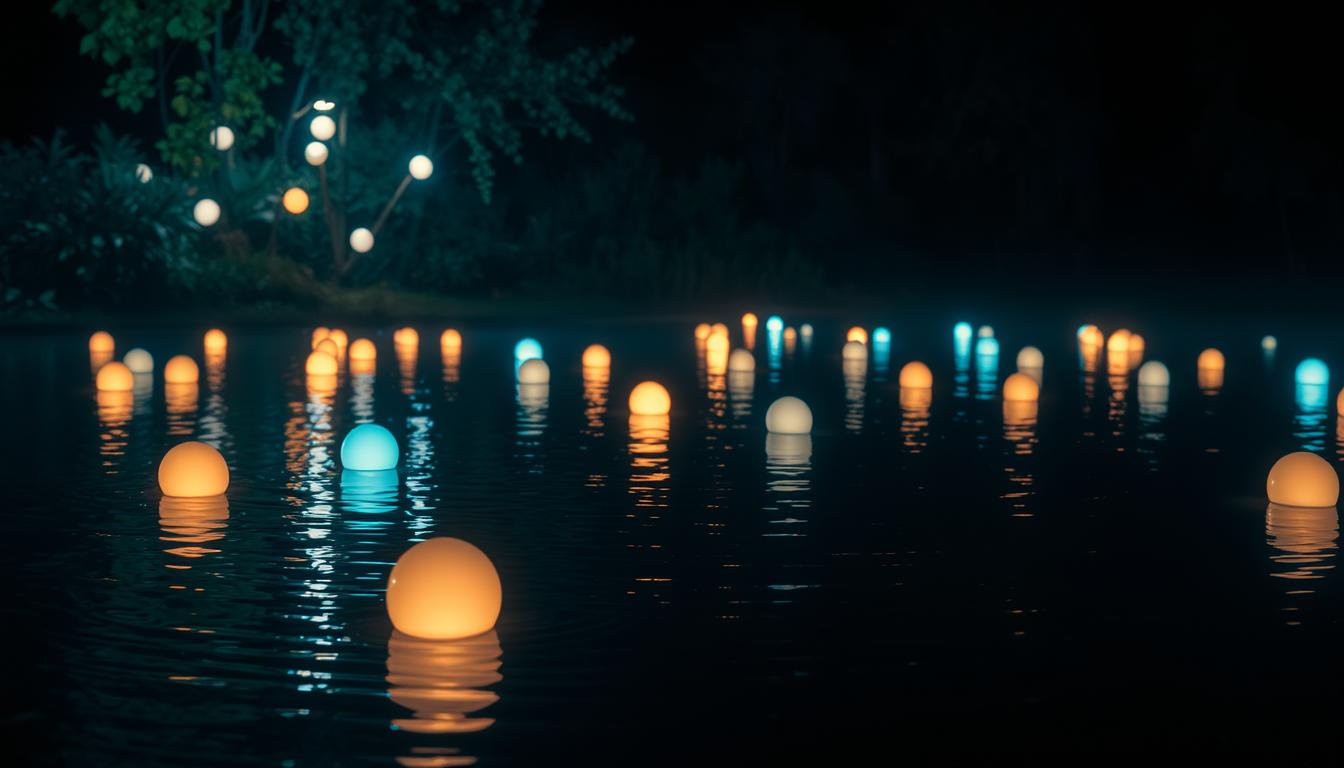
Turn a dark yard into a welcoming retreat. Thoughtful lighting adds ambience, boosts safety, and extends the time you can enjoy outdoor space after sunset.
Simple choices — from string lights to lanterns and solar path markers — can highlight architecture, plants, and the water’s surface without a full remodel.
Well-placed lights around a pond amplify the glow on the water and tie the rest of the backyard to the home for a cohesive look. Smart controls, motion sensors, and efficient fixtures make use easier and more economical.
This article will list practical and decorative light types, placement tips, and small upgrades that deliver big results. Expect ideas for string lights, deck and step illumination, path markers, and landscape lamps that improve safety for steps and paths while preserving soft reflections on water.
Key Takeaways
- Thoughtful fixtures increase safety and extend outdoor time after dark.
- Targeted lights around the pond enhance the water’s glow and cohesion with the home.
- Mix decorative and functional solutions: string lights, lanterns, and path markers.
- Smart systems add convenience and can cut energy use.
- Small swaps often deliver big visual impact without major work.
Why Outdoor Lighting Matters for Function, Aesthetics, and Safety
Thoughtful outdoor illumination turns evening hours into usable, welcoming moments around your home. Good planning balances beauty and performance so your property works well after day ends.
Extend your outdoor space from day to night
Outdoor lighting makes patios, decks, and garden corners usable once the sun sets. Small fixtures — like lanterns, string lights, or solar path lights — let you relax or entertain later without a big upgrade.
Highlight architecture, landscaping, and focal points
Targeted beams draw attention to stonework, siding, and water reflections. Warm accents near seating invite people to linger, while focused fixtures keep walkways and steps readable.
- Function: Use layered fixtures so each area has the right amount of light.
- Safety: Lighting paths and transitions reduces trips and missteps.
- Aesthetic: Spotlights and gentle washes elevate curb appeal and guide the eye.
Smart controls and dusk-to-dawn sensors remove hassle. They ensure lights are on when needed and off when they are not, saving energy and simplifying daily use.
Backyard Lighting Ideas: A Curated List for Every Outdoor Space
This curated list maps easy swaps and pro-level solutions that work for patios, decks, and lawns. It gives a clear roadmap from quick weekend upgrades to permanent installs that improve safety and style.
What to expect: glowing lanterns, café-style string strands, LED deck and step fixtures, solar pathway stakes, smart systems, and updated outdoor fixtures that scale with budget and need.
- Balance function and form: combine ambient, task, and accent beams to create depth and reduce glare.
- Renter- and budget-friendly picks: portable lanterns and solar stakes that need no wiring.
- Long-term solutions: hardwired deck lights and integrated step fixtures for steady performance.
- Pairings that work: solar markers on paths plus downlighting near seating for safe, intuitive flow.
Small patios benefit from fewer, brighter accents; large lawns need layered zones so the space feels complete without clutter. Prioritize upgrades that improve navigation and comfort first, then add decorative touches over time to match how you host, relax, or throw a party.
String Lights That Bring Warmth to Patios, Pergolas, and Decks
Hanging warm strings above a patio or pergola instantly makes evenings feel cozy and festive. These versatile strands—from classic café to globe and Edison styles—define seating zones and add charm without heavy work.
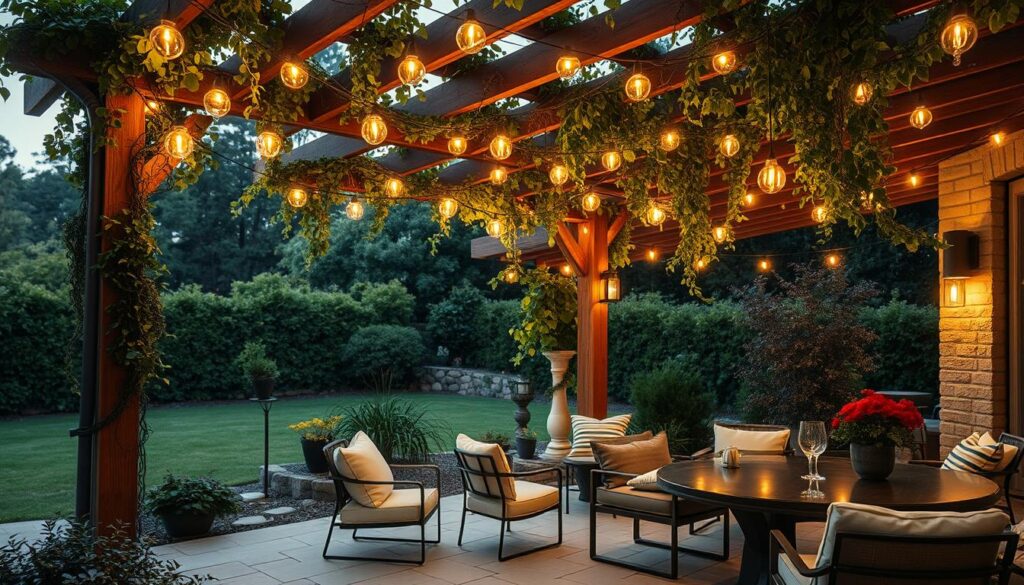
Style and performance: Café strands give even illumination, globe bulbs offer soft diffusion, and Edison bulbs add vintage flair. Choose shatter-resistant, weather-rated outdoor string lights for long life.
Layout options: Try overhead zigzags for a canopy, straight perimeter runs to frame the space, or tree-to-house spans to connect zones. Use dimmers or smart plugs to set mood for a quiet night or a lively party.
- Anchor with guy wires, screw hooks, or tension kits to keep lines tight and safe.
- Layer with lanterns or path markers so one set of lights does not carry all the work.
- Pick warm white for gatherings; neutral white if you need clearer visibility for dining or games.
- Plan power: map outlets, use outdoor-rated cords, or add a switch-controlled circuit for convenience.
- Space strands and set height to avoid glare and prevent sagging into walkways or pond-view areas.
Fairy Lights in Trees for a Magical Nighttime Garden
Winding delicate strands through a tree canopy gives a garden a subtle, star-like glow at night. Fairy string lights are simple to install and work in any season. They make a small yard feel special without heavy work.
Wrap and weave: Delicate fairy string lights wrapped around a tree trunk or woven through branches create a gentle glow that defines garden edges without harsh hotspots. Space bulbs to follow the tree’s natural lines for an organic look.
Power options: Battery packs, plug-in cords, and small solar modules each have pros. Batteries give flexible placement. Plug-in sets run longer but need outlets. Solar suits light canopies and low-use spots.
- Use soft ties or clips—never staples—to protect bark and cambium.
- Pair strands with ground-level markers to guide steps toward pond overlooks for safe navigation.
- Choose warm color temps for cozy evenings; cooler tones help show tree structure.
- Pick models with timers, dusk sensors, and good IP ratings so the lights endure rain and seasons.
For depth, layer fairy strings with low-output uplights to reveal leaf texture while avoiding glare into seating areas. This keeps the effect magical and practical for an inviting backyard glow.
Glowing Lanterns: Portable Accent Lighting You Can Move Anywhere
Portable patio lanterns add soft, diffused light and a cozy, intimate feel without permanent work. Use them to test layouts, guide guests, or create a small focal vignette that moves with your plans.
Paper, metal, and modern LED styles
Paper lanterns work well for festive nights and low-cost charm. Powder-coated metal models resist weather and last for seasons. Modern LED versions deliver steady output, long battery life, and USB-C charging for quick top-ups.
Placement, diffusion, and pairing
Hang lanterns from a pergola or tree, place them on steps, or group three at varied heights for a focal cluster. Frosted shades soften glare for conversation, while clear glass gives brighter task light when needed.
- Pair with a nearby fire feature to layer warmth and mood.
- Look for built-in dimmers and IP ratings for wet locations.
- Stabilize on flat surfaces and keep combustible shades clear of open flames.
Pro tip: Use portable lanterns to try different setups before you commit to hardwired lighting. They help you visualize how lights will warm a seating space or highlight features around your home.
LED Deck and Step Lighting for Beauty and Safety
A row of low-profile LEDs can both define a deck’s edge and reduce trips on dim stairs. These fixtures blend form and function to make evenings safer and more inviting near your home.
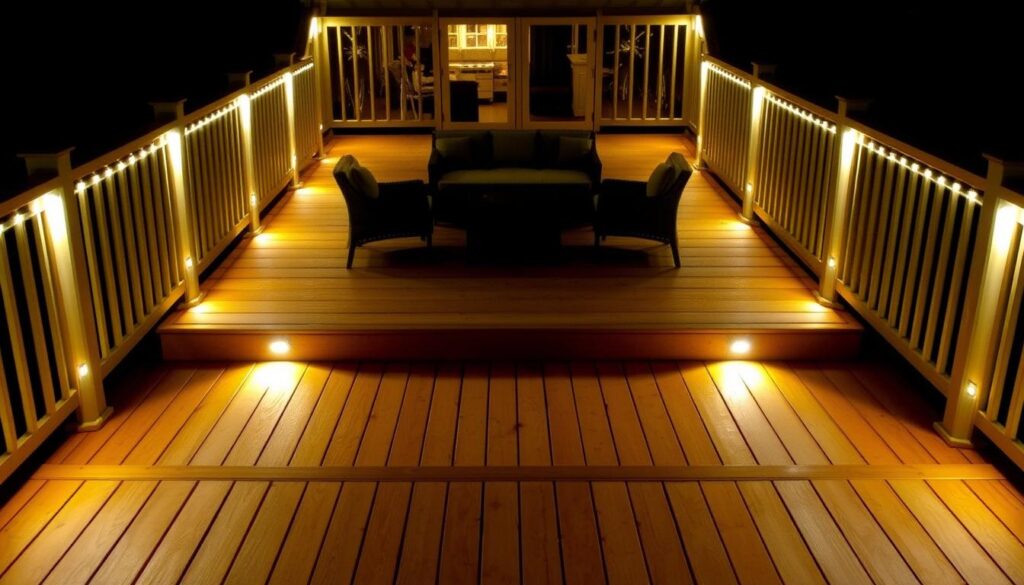
Integrated step fixtures and post cap lights cast a soft, downward glow that keeps each tread visible while adding a finished, custom look to the deck. LEDs last longer and use far less energy than incandescent bulbs.
Practical guidance
- Choose shielded, down-facing lenses to cut glare and keep sightlines comfortable when seated.
- Compare low-voltage led lights with solar options for installation ease, runtime reliability, and consistent color across the system.
- Space fixtures so every step and landing is readable without over-brightening adjacent garden beds or views.
- Coordinate finishes with rail and door hardware for a cohesive exterior that complements your home.
- Plan wiring: size the transformer, pick junction locations, and route cables to meet code while keeping components discreet and protected.
- Add path lights near deck entries to lead guests naturally toward seating and water features.
- Pick quality housings and sealed components for long life under foot traffic and weather, keeping maintenance low.
Solar Path Lights to Guide Walkways, Stairs, and Garden Beds
Solar path lights make marking a route simple: they charge by day on a top-mounted panel and switch on at dusk. This removes wiring and gives true dusk-to-dawn operation for walkways and steps.
Siting matters. Place fixtures where panels get full sun and avoid shade from shrubs or structures. Proper placement improves runtime and keeps the row bright through the evening.
- Space fixtures evenly to form a continuous ribbon of light that clarifies edges and curves.
- Choose warm output for cozy garden borders and neutral tones for clear navigation on high-traffic routes.
- Mix with low-voltage fixtures in shaded zones so the whole path looks consistent.
Durability and upkeep: pick sealed housings and sturdy stakes that tolerate freeze-thaw and mower bumps. Wipe panels clean, replace rechargeable cells when capacity drops, and re-aim heads as plants grow.
Use solar markers to guide the approach to a pond, but set them back from the waterline to limit glare on the surface. This keeps the yard safe and visually calm at night.
Smart Outdoor Lighting Systems with Scenes, Sensors, and Voice Control
Voice, app, and sensor control make it easy to set the right mood and safety level for every outdoor moment. Smart systems combine schedule-based runs, motion triggers, and scene presets so the exterior works without manual switches.
Motion, dusk-to-dawn, and app-based automation
Motion and dusk-to-dawn sensors automate paths, entries, and pond edges so areas are lit when needed and dark when not. This increases security and removes guesswork when you arrive at the home.
- Auto-on at dusk keeps walkways ready without a tap.
- Motion boosts brightness only for occupancy, saving energy.
- App-based scenes let you dim walkways, highlight the deck, or warm a seating space for a party.
Energy efficiency and color-tunable options
Color-tunable bulbs shift from warm to cool to match seasons or tasks. Change hue for holidays or set neutral tones for clear visibility near driveways.
- Schedule run times and dimming to cut wasted hours and lower power use.
- Voice assistant support offers hands-free on/off and scene changes when your hands are full.
- Plan your network: place a bridge, use outdoor-rated smart plugs, and add geofencing so lights greet you and turn off when you leave.
- Pair smart control with dark-sky practices: limit brightness and aim beams precisely to protect night views and neighbors.
Landscape Lighting Techniques: Uplighting and Downlighting
Ground-mounted fixtures can transform ordinary trees and sculptures into dramatic night focal points. Thoughtful placement brings texture and depth to a yard while keeping the scene calm and usable after dark.

Uplighting trees, statues, and garden features for depth
Uplighting places fixtures at the base of a subject so beams graze trunks, stone, and sculpted surfaces. This reveals bark texture, branch structure, and architectural details in the garden.
- Angle beams up the canopy to catch branching patterns and create layered shadows that move with the breeze.
- Use shielded optics to focus the beam and avoid glare into windows or the sky.
- Test first with temporary stake lights to preview beam spread before final installation.
Downlighting to mimic moonlight over patios and walkways
Downlighting mounts high on a house or mature limb to cast soft, moonlike pools over a patio or walkways. The effect feels natural and reduces harsh contrasts.
“Combine subtle uplighting and gentle downlighting for a balanced, layered landscape that guides the eye and keeps movement safe.”
Hire an expert to hide wiring, set beam spreads, and maintain low glare. Regular maintenance—clearing leaves, re-aiming fixtures, and replacing gaskets—keeps the scene reliable season after season.
Light Your Garden Plants and Trees for Nighttime Drama
Use focused ground spots to reveal leaf veins, bark texture, and the sculptural forms of specimen plants after dusk.
Spotlighting specimen plants changes familiar landscape into a fresh after-dark scene. Aim narrow beams at tall grasses and vertical stems to emphasize lines. Use wider beams for shrubs and perennial beds so leaves and blooms read clearly.
Try cross-lighting for trees and layered plantings. Place two low fixtures at opposing angles to reveal depth without flattening shadows. Backlight some specimens to create silhouettes that move with the breeze.
Color temperature matters: warmer tones flatter bark and blooms, while neutral whites make greens crisp and defined. Keep outputs modest so plants glow rather than glare, and leave dark pockets to preserve contrast.
- Re-aim lights seasonally as plants grow and after leaf drop.
- Cut wattage in winter so trunks and branching stay balanced.
- Pick durable stakes and low-profile housings that blend into beds and resist irrigation and mulch.
“Well-chosen accent lighting can transform a garden into a living nightscape best appreciated in person.”
Pond Glow Essentials: Reflective Light, Submersibles, and Perimeter Accents
Start with the water: let shoreline fixtures and a few underwater accents create a calm, reflective scene that reads as one cohesive feature.
Use indirect shore washes so the pond mirrors nearby sources and produces a smooth, shimmering glow. Aim shielded beams slightly away from the waterline to cut glare and keep reflections comfortable for viewers.
Underwater and floating options
Low-profile underwater LEDs and floating lights give soft, even illumination that reveals koi, stones, and ripples without harsh hotspots. Choose submersibles with high IP ratings and route cables in conduit to protect connections.
- Set subtle path lights back from the edge to guide foot traffic and keep the water surface calm.
- Favor warm tones near seating for relaxation and neutral tones near bridges or steps for clear visibility.
- Test beam angles at dusk and clean lenses regularly to remove mineral buildup and preserve output.
Pro tip: combine a few underwater accents with perimeter washes and one focal highlight—like a boulder or fountain—to anchor the scene while keeping most of the ground quiet and dim.
Outdoor Fixtures and Finishes: Sconces, Pendants, Floods, and Bollards
Pick fixtures that echo your house’s architecture so each porch and path feels intentional at night. Covered porches and patios do well with ceiling pendants and wall sconces that offer downcast, glare-controlled beams. Open decks and balconies benefit from wall-mounted options and a modest run of string lights to soften edges.
Choosing styles for covered porches, open decks, and walkways
Match fixture type to place. Use sconces and pendants under roofs, bollards along paths, and shielded flood lights for larger approach areas. Integrated step lights and solar markers help keep transitional spaces safe without excess brightness.
Black, bronze, copper, and powder-coated metals to match your home
- Finish matters: black offers classic versatility; oil-rubbed bronze and copper add warmth; powder-coated colors give contrast or coordinate with trim.
- Choose weather-rated housings and sealed wall plates where the wall meets the fixture to prevent moisture issues.
- Scale fixtures to door and facade size so the assembly reads balanced from the street and patio.
- Bollards define circulation without glare; shielded floods must be aimed precisely to avoid light trespass.
- Pick models with replaceable bulbs and standard bases to simplify future maintenance.
“Coordinate architectural fixtures with subtle accent lighting to bridge the house and surrounding spaces.”
Mix Warm and Cool Color Temperatures for Balanced Ambience
Combining warmer porch tones with crisper path light gives your exterior both mood and function. Use color deliberately so each zone supports how you use the space after dark.
Kelvin basics: pick warm bulbs (2700–3000K) for entries and seating. They flatter skin tones and finish materials. Use cooler bulbs (4000–5000K) along long walkways and driveways to improve contrast and wayfinding.
Keep a consistent color family within each zone—porch, patio, or path—so the view from your home reads cohesive. Match tones to fixture purpose: accents use warmer output; task areas use cooler output for clarity.
- Test sample bulbs at dusk to see how stone, paint, and water respond.
- Use dimming to tame cool beams or deepen warm glows as the evening progresses.
- Even solar lighting can vary by color—choose models that align with your plan.
“Aim for balance: warm near walls and gathering spots, cool where clear navigation matters.”
Create Lighting Zones for Parties, Privacy, and Cozy Nights
Zoning lets you tailor each space for how you use it. Modern systems let you dim path lights, spotlight the deck, or leave only the fire pit glowing. Control is a tap away on your phone.
Dim path lights, highlight the deck, or let the fire pit glow
Group fixtures by area—paths, deck, pond edge—so one command sets the mood. Sample scenes help:
- Party: brighten circulation and feature highlights for guests.
- Privacy: dim paths and darken perimeters near the hot tub.
- Cozy: spotlight seating and let the fire feature anchor the scene.
Isolating the fire feature keeps nights intimate while small indicator lights near steps remain on for safety.
Scene presets you can control from your smartphone
Use separate circuits or smart controllers per space to fine-tune ambience without affecting the whole yard. Save presets on your phone for fast changes when a party starts or when you move from dinner to stargazing.
“Test scenes at different times of evening so each zone feels balanced and comfortable.”
Pro tip: zoning simplifies maintenance and upgrades—swap fixtures in one group without rewiring the entire system.
Safety-First Planning: Steps, Walkways, and Perimeter Visibility
Start by lighting the routes people actually use most at night so movement feels natural and safe.
Prioritize critical routes: illuminate steps, walkways, and edges to prevent trips and clarify elevation changes after dusk. Use shielded fixtures at low mounting heights to reduce glare and keep sightlines open across the yard.
Space fixtures so beam spreads overlap and remove dark gaps on stairs and turns. Aim for a subtle contrast between the main path and adjacent beds to define edges without over-brightening planting areas.
- Choose matte, non-slip surfaces near steps to avoid reflections when damp.
- Add small perimeter markers for orientation while limiting skyglow and neighbor impact.
- Clean lenses, trim plant overgrowth, and re-aim fixtures seasonally to preserve output.
Test at different angles and distances so faces and footing are visible without discomfort. Simple trials at real night hours reveal glare issues and let you fine-tune spacing and beam angle for reliable safety.
“Proper planning keeps movement safe and the scene comfortable after dark.”
Installation Pathways: DIY-Friendly Options vs. Pro-Installed Systems
Start small with portable strings and stakes to learn beam angles, then scale up to hardwired systems where reliability matters most.
String, solar, and plug-in lights for quick wins
String runs, solar stakes, and plug-in accents let you brighten a yard or path quickly with minimal tools. They avoid trenching and complex wiring so you can test placements and adjust beam direction over time.
These DIY options are ideal for weekend projects and trial layouts. Use weather-rated cords, GFCI outlets, and simple timers to keep things safe and convenient.
Hardwired fixtures, transformers, and code-conscious installs
Hardwired systems deliver steady performance for steps, decks, and multi-zone control at your house or home. They require transformer sizing, run planning, and attention to voltage drop on long circuits.
Key pro practices: weatherproof junctions, conduit for buried runs, correct burial depths, and GFCI protection at exterior circuits. These steps ensure a durable, code-compliant result.
- Contrast DIY: quick setup vs. wired systems that need load calculations and secure connections at the house.
- Transformer sizing and voltage drop matter for long runs—plan amp loads before you buy fixtures.
- Call a pro for integrated step, deck, or complex tree-mounted downlights and multi-zone controls.
- Document runs and connections to save time on future maintenance or expansion.
- Start with trial placements, then upgrade to durable fixtures where consistent performance matters most.
“Quick wins let you learn what works; professional installs lock in reliability and compliance.”
Conclusion
Finish with a simple plan that balances glow, safety, and a few choice highlights. Recap the most effective lighting ideas: string strands over the patio, portable lanterns, deck and step led lights, solar markers, smart scenes, and selective uplighting to add depth.
Layer your approach. Use ambient strings for mood, focused deck and path fixtures for navigation, and a couple of uplights to shape the landscape. Combine solar lights for easy starts and hardwired fixtures where consistency matters.
Smart controls make this easier: set a party scene, dim for quiet nights, or automate dusk-to-dawn runs to save time and power. Before you finish, do one final pass at dusk to tweak aim and brightness so water reflections read intentional and steps stay comfortable.
Start small and grow. A few outdoor string lights or solar markers can kick off a plan. Then add LED lights and architectural outdoor light fixtures as you refine the look. Keep safety in view—clear paths and steps—while preserving dark pockets for the fire feature and pond to shimmer.
Make it yours: pick the elements that fit your space and schedule, test them by day and night, and expand over time as you learn what works best for your home and how you spend evenings outdoors.
You Might Also Like...