
5 Family-Friendly Pond Activities for Summer

Clear surface views can be deceiving. Many owners assume good clarity equals a healthy ecosystem, but chemistry shifts beneath the surface can stress fish and plants. A simple, regular routine catches problems early and saves money and grief later.
Use basic kits like the API Pond Master Test Kit to check pH, ammonia, nitrite, and phosphate at home. For microbiology concerns—such as E. coli or cyanobacteria—collect samples and send them to a certified lab via local health or EPA-linked services. Results usually return in one to two weeks.
Goal ranges help guide action: pH ~6.0–9.0, Ammonia-N
Key Takeaways
- Visual clarity isn’t enough; chemistry matters for fish health.
- Use master kits for routine checks and labs for microbiology.
- Follow target ranges for pH, ammonia, nitrate, and phosphate.
- Adjust testing frequency by pond type and season.
- Keep a log to spot trends and prevent costly problems.
Why Testing Frequency Matters for a Healthy, Thriving Pond
Regular checks catch small shifts before they become costly problems. The right cadence for monitoring depends on how the feature is used and stocked. Display gardens and koi systems need closer attention than low-use, naturalized areas.
Commercial vs. ornamental needs
High-use settings—like recreation or commercial sites—carry stricter safety expectations and should run frequent tests and periodic lab confirmation.
Higher fish density, heavy feeding, and strong filtration drive faster chemistry swings. That means shorter intervals between checks and more reliance on digital meters and full reagent kits.
Seasonal triggers and after-treatment checks
Spring start-up calls for a full panel before biofilters settle. Hot spells speed up biology and can lower oxygen, so increase sampling during heat waves.
- Test after heavy rain, major treatments, or fish additions.
- New or recently cleaned systems need tighter monitoring at first.
- If fish show stress (gasping, clamped fins), run immediate tests.
- Use labs for microbe confirmation; results often take 1–2 weeks.
“Sustained, regular testing keeps small deviations from compounding into health issues and algae blooms.”
pond water testing
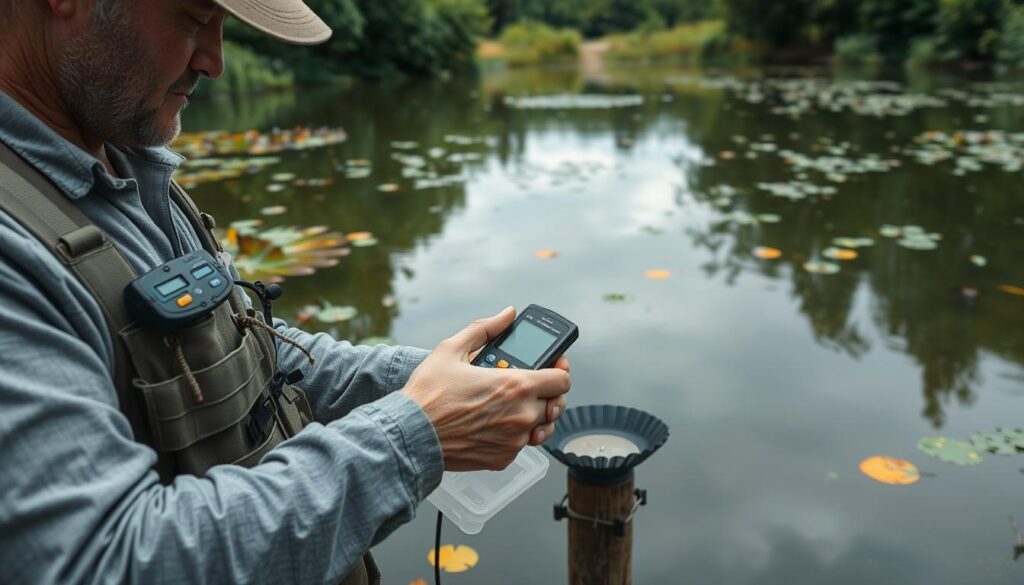
A short panel of readings reveals whether your ecosystem is balanced or drifting toward trouble. Use simple checks to protect fish health, keep clarity honest, and maintain long-term biological balance.
Core goals: clarity, fish health, and long-term balance
Clear looks aren’t proof of safety. The main aims are to keep the surface clear, shield fish from ammonia and nitrite stress, and stabilize the biological filter that breaks down waste.
Matching tests to how you use the feature
Koi and ornamental pond owners should run nutrient and nitrogen checks more often. Heavy stocking and frequent feeding raise risk.
- Protect fish: routine chemistry checks catch early ammonia or nitrite rises that harm gills and immunity.
- Support plants: balanced nutrients and hardness help plant vigor and buffer pH swings.
- For recreation or livestock: include microbiology labs for safe contact or drinking water concerns.
Log every test, note feed changes, new fish, or treatments, and run quick checks before fish introductions or heavy feeding events. Choose strips for spot checks, master kits for full panels, and certified labs when microbiological certainty is needed.
“Consistent, targeted tests keep small changes from becoming serious problems.”
Essential Water Quality Parameters and Ideal Ranges
Monitoring core chemistry keeps your system resilient and prevents sudden fish stress. Below are the critical parameters, target ranges, and when to act.
pH, alkalinity, and carbonate hardness
pH controls how toxic compounds behave and how well biofilters work. Aim for a stable range of 6.0–9.0. Sudden swings cause stress even if values sit in range.
Alkalinity/KH provides buffering against pH crashes. Test KH if you see persistent swings and consider supplementing hardness in soft regions to protect stability.
Ammonia, nitrite, nitrate: nitrogen cycle checkpoints
Ammonia is highly toxic; keep Ammonia-N under 0.5 mg/L. Any measurable ammonia demands immediate action, especially at higher temperatures and pH when toxicity rises.
Nitrite affects oxygen transport in fish blood. Monitor until biofilters convert nitrite to nitrate. Keep Nitrate-N below 3 mg/L to reduce stress and algal risk.
Phosphate and nutrient control
Phosphate and nitrate act like fertilizers for algae. Target phosphate under 0.025 mg/L to curb blooms while still supporting aquatic plants.
Dissolved solids and when they matter
Total dissolved solids (TDS) creep up with evaporation and top-offs. High TDS in closed systems suggests routine partial changes are needed to reset levels.
- During peak season: test pH, ammonia, nitrite, nitrate, phosphate, and KH more often.
- When feeding heavily or after filter start-up: increase frequency to catch spikes.
- Log every result to reveal trends, not just single values.
“Use kits with clear color charts and calibrated droppers to ensure consistent, repeatable tests.”
Recommended Test Kits and Tools
Choose tools that match your routine: occasional spot checks need different gear than seasonal overhauls. Picking a reliable kit reduces guesswork and helps protect fish and plants.
API Pond Master Test Kit — a solid baseline
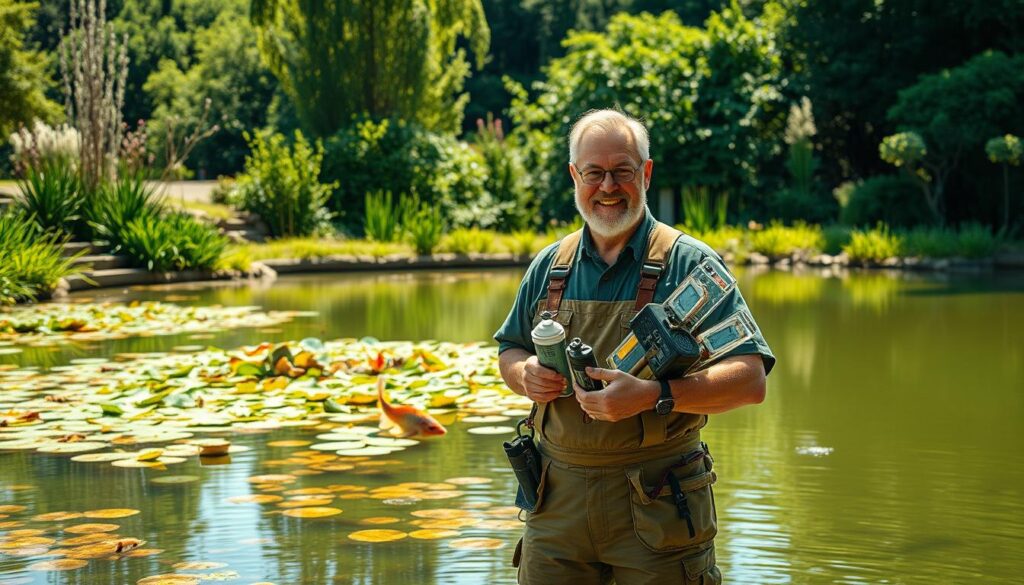
API Pond Master is a comprehensive, value-forward choice for pH, ammonia, nitrite, and phosphate monitoring. The pond master test includes clear color cards, droppers, tubes, and full instructions, making it ideal for spring start-up and seasonal checks.
Master kits vs. strips vs. digital meters
Master test kits give the most reliable, repeatable chemistry results for troubleshooting. Test strips and 5-in-1 strips are great for quick trends between panels. Digital meters speed up pH reads but need calibration.
- Master kit: accuracy and control for baseline panels.
- Strips: fast, low-cost spot checks.
- Digital: quick pH, convenient but requires upkeep.
When to use a lab
Step up to professional lab analysis for microbiology or complex issues like cyanobacteria. Labs return detailed reports in about one to two weeks and confirm issues beyond what at-home kits can detect.
“A master test kit plus strips and a simple logbook makes routine care faster and more accurate.”
DIY Testing vs. Professional Lab Services
A quick at-home test can flag immediate concerns, while lab analysis unlocks deeper answers. Use DIY kits for routine checks because they are fast and low cost. They give immediate feedback so you can act that same day.
At-home kits depend on user technique and reagent freshness. Accuracy varies by method, so keep supplies fresh and follow directions closely.
At-home kits: speed, cost, and accuracy trade-offs
Master kits and strips let you run weekly or biweekly checks with minimal expense. They are ideal for spotting trends but can miss microbiological or species-specific issues.
All-in-one sample kits with expert reports
Professional kits arrive with an insulated box, ice pack, sampling bottles, gloves, a sealed bag for weed collection, and a prepaid return label. Labs run calibrated analyses for pH, alkalinity, phosphate, nitrate, and ammonia, plus cyanobacteria checks and weed ID.
When to mail samples
Send samples when you suspect cyanobacteria, see unexplained fish stress with normal basic chemistry, or need results for recreational or drinking water safety. Lab deliverables include a written expert report, a preventive plan, and a 20-minute consult.
- Typical timeline: 2-day return shipping, 5–7 business days for analysis and report, follow-up call within 1 business day of report completion.
- Combine DIY weekly checks with quarterly lab panels for high-stakes systems to validate trends and gain peace of mind.
“A professional report clarifies results and cuts down on costly trial and error.”
How to Test Pond Water the Right Way
Clean, dedicated vials and careful timing turn a simple kit into a diagnostic tool. Start each session with a plan so your results stay consistent and useful.
Prepare and follow the instructions
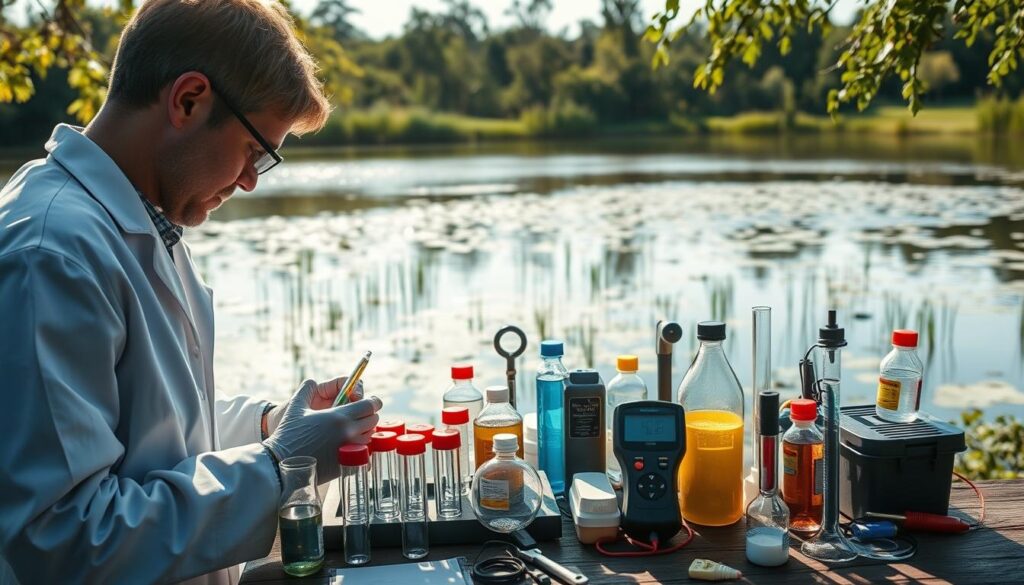
Rinse vials with sample water; never use soap. Many kits include an instruction book, tubes, and color cards—read the directions before you begin.
Timed reactions and reading color
Measure reagents drop-for-drop, cap and invert when required, and use a timer for the exact reaction time. Use daylight or a daylight-balanced lamp to compare against color charts for the best match.
Record results and avoid contamination
Write date, time, temperature, and a short note about feeding or recent treatments. Keep reagent tips clean, do not touch vial interiors, and sample away from surface films or falls to reduce false positives.
- Calibrate digital meters per manufacturer steps and store reagents cool and dark.
- If a reading looks wrong, re-test with a fresh vial and check expiration dates.
- For fish-forward systems, prioritize ammonia and nitrite when troubleshooting.
“Consistent technique and accurate records turn routine tests into actionable trend data.”
How Often to Test: Schedules by Pond Type and Season
A simple calendar reduces guesswork: match inspection frequency to risk and season so problems are caught early.
Koi and fish-heavy systems
During warm months, check weekly to biweekly. High feed rates and dense stocking speed chemistry shifts, so run a full panel more often. Increase frequency after adding fish, changing feed, or cleaning filters.
Ornamental water gardens
For modest fish loads, test biweekly to monthly. Also test immediately after heavy rain, heat waves, or major treatments. These checks keep plants healthy and reduce algae risk.
Livestock and recreation uses
Establish a baseline with a comprehensive panel, then schedule periodic lab confirmation for microbiology and safety. Labs validate chemistry and provide documented results for users or regulators.
Seasonal checkpoints
Spring start-up and fall close demand full panels to confirm filters and beneficial bacteria are stable. Re-test within 24–48 hours after any corrective action to verify safe conditions.
- Tip: Align routine checks with weekly maintenance to build a habit.
- Track results in a log to refine your ideal schedule across seasons.
“Regular, targeted checks prevent minor shifts from becoming major problems.”
Interpreting Results and Taking Action
Start by comparing values to proven target ranges so you know if action is needed. Clear test results guide fast fixes and longer-term tweaks.
Quick targets to check
Target ranges: pH 6.0–9.0; Ammonia‑N < 0.5 mg/L; Nitrate‑N < 3 mg/L; Phosphate < 0.025 mg/L. If a level sits outside these bands, plan an immediate response.
Stabilize pH safely
Raise alkalinity and carbonate hardness slowly to prevent sudden swings. Sudden pH shifts stress fish and harm biofilters. Use measured doses and re-test after each change.
Responding to ammonia or nitrite spikes
- Reduce feeding and remove uneaten food.
- Increase aeration and run partial water changes.
- Boost biological media and pause chemical dosing unless guided by a pro.
- In some nitrite cases, adding chloride helps—verify dosage first.
Cut phosphate and nutrient inputs
Manage runoff, limit overfeeding, and clean filters. Use targeted phosphate binders if needed. Re-run a water test and compare new results to confirm progress.
Log all test results, actions taken, and the date so you build a clear record of what works for your system.
Beyond Chemistry: Weeds and Cyanobacteria
Species-level identification of plants and microbes steers targeted, low-impact remedies. Professional services can identify aquatic weeds and recommend mechanical removal, selective herbicides, or biological controls that preserve habitat and curb invasions.
Aquatic weed identification and ecosystem-sensitive treatments
Not all plants are pests. Many species support fish and invertebrates. Correct ID prevents over‑treatment and protects biodiversity.
- Match control to species: mechanical removal, targeted herbicides, or biological agents.
- Preserve beneficial plants: keep native cover where possible to stabilize banks and reduce erosion.
- Periodic pro reviews: schedule follow-ups for recurring infestations.
Cyanobacteria presence vs. species ID and why it matters
Cyanobacteria can produce toxins harmful to fish, wildlife, pets, and people. Labs distinguish presence and often genus or species to assess toxin risk.
Early-warning signs, safety, and preventing harmful blooms
Watch for pea‑soup coloration, paint‑like scums, or an oily sheen. These visuals can signal escalation.
- Restrict swimming and animal access until lab results clear safety.
- Send samples to a lab when visuals or at-home tests are inconclusive; expect 2‑day shipping and 5–7 business days for analysis plus a pro report and consult.
- Focus on nutrient control and regular checks to reduce bloom risk and protect drinking water quality and customer use.
Professional reports translate findings into season‑long action plans that balance recreation, aesthetics, and habitat value.
Buying Guide: Choosing the Best Water Test Kit for Your Pond
Pick a kit that measures the core chemistry and is simple to read under natural light. Good readability and clear instructions speed learning and reduce errors. Match the kit to your fish load, seasonal needs, and how often you plan to run a full panel.
What to look for: parameters, accuracy, ease, and readable results
Prioritize kits that cover pH, ammonia, nitrite, and either nitrate or phosphate; include KH if you need pH stability insight.
Readable color charts and large color blocks cut misreads. Good documentation and step-by-step instructions shorten the learning curve.
When a master test kit beats strips—and when strips are enough
A master test kit wins during start-ups, seasonal panels, or troubleshooting because it offers more accurate, repeatable readings. Use it monthly for heavy bioload systems.
Test strips are fine for quick midweek spot checks or when you only track one or two stable parameters between full panels.
Trusted brands and must-have accessories
API and the API Pond Master Test Kit are reliable choices with widely available refills and clear guides. Their pond master products are a good baseline for most hobbyists.
- Must-haves: spare vials, a timer, a logbook, and a cool, dark storage case to protect reagents.
- Look for kits with clear packaging of tubes, droppers, and color cards to cut setup friction.
- Match kit choice to pond size and fish load—heavier systems need more frequent master test kit panels.
A two-tier approach works best: use a master test kit for monthly panels and strips for weekly spot checks to balance accuracy and convenience.
Conclusion
Small, regular checks let you spot trends before they become expensive problems. Build a right-sized routine that blends a reliable master test kit with quick test strips for midweek spot checks. Log each result with date, time, and context so patterns show up fast.
Act on chemistry: treat measurable ammonia or nitrite immediately, adjust pH and hardness slowly, and cut phosphate inputs to limit algae. Follow instructions, time reactions exactly, and store reagents cool and dark to keep results consistent.
When safety or persistent issues arise, use a professional lab for a detailed report and action plan. Set your next testing date now, refresh supplies each spring and fall, and keep your system on a happy, healthy path.
You Might Also Like...