
Is It Safe to Walk on a Frozen Pond?
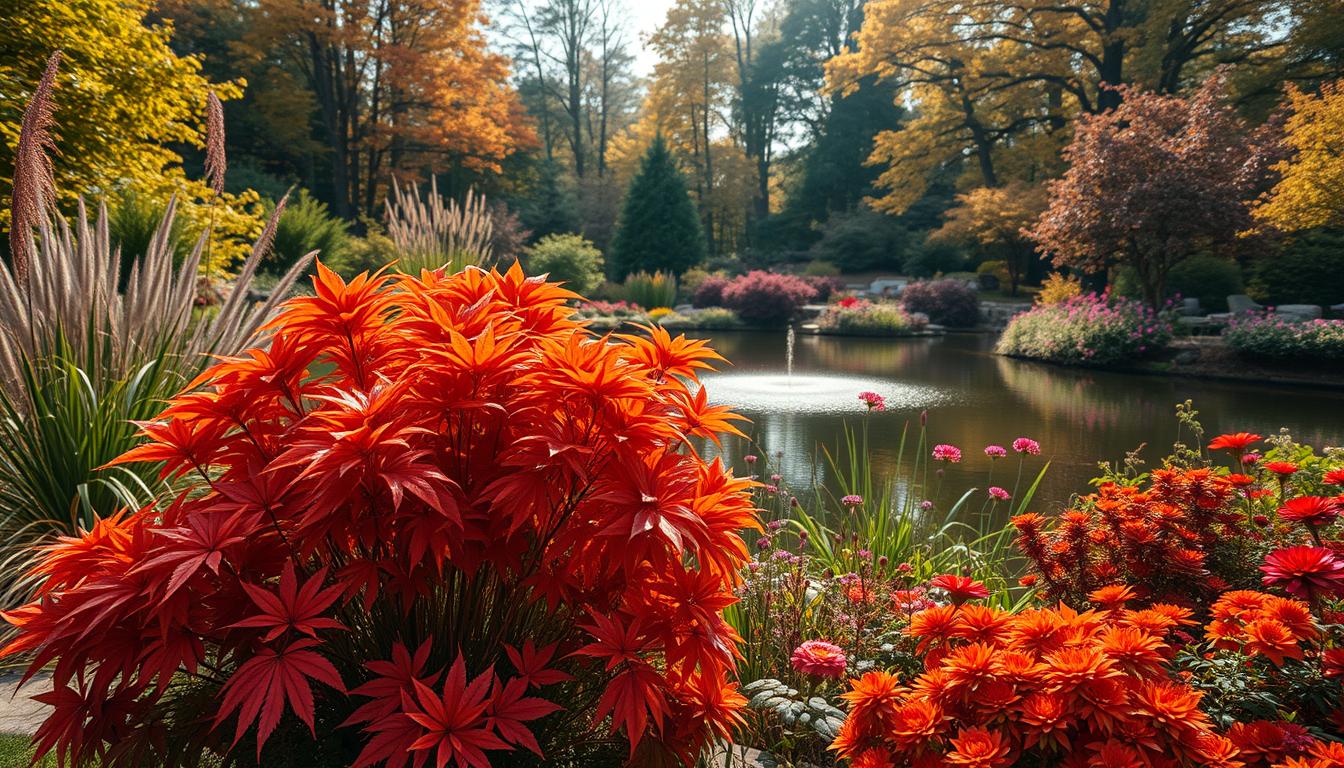
Cooler air and moist soil make this season the best time to refresh the pond’s edge. As temperatures drop and soil holds more water, many plants shift energy into roots. That helps pondside plantings establish quickly and come back stronger next spring.
Practical moves now pay off: give the lawn a final mow to about 1¼ inches to reduce disease and keep leaves from matting. Start a compost pile with raked leaves and turn it weekly to create rich humus. When planting shrubs, dig a hole twice the root ball diameter, set the top at ground level, water well, and mulch without touching trunks.
This guide previews moisture-loving perennials, ornamental grasses, shrubs, bulbs, containers, and pollinator picks. Expect tips on color palettes that reflect well across water, quick wins for instant structure, and placement ideas to frame views and soften hardscape in your yard.
Key Takeaways
- Cool, moist weather favors root growth—planting now helps establishment.
- Final mow at ~1¼” and leaf composting improve lawn and soil health.
- Proper shrub planting depth and thorough watering set roots for success.
- Choose low-glare, warm color palettes to read well across water.
- Use perennials, grasses, bulbs, and containers for layered pond-edge interest.
Why fall is the best season to plant around your pond
When air cools and the ground stays damp, plants shift energy belowground—making this an ideal planting time. That change means new shrubs and perennials can put energy into roots instead of forcing tender top growth.
Cooler temperatures boost root growth for next year
Cooler temperatures cut transpiration and lower heat stress. Plants use that saved energy to build a stronger root system that will support vigorous leafing and blooms in spring.
Moist soil and reduced heat stress mean better establishment
Shores stay consistently damp, so roots expand steadily into surrounding ground. That helps anchor specimens before hard frosts arrive.
- Plant early enough to get 4–6 weeks of mild weather for root growth.
- Keep the top of the root ball at ground level to avoid waterlogging near the water’s edge.
- Lawns near ponds keep growing roots until soil cools to about 40°F; a late-season fertilizer like 12-25-12 boosts root reserves for next season.
Quick tip: Prioritize perennials and woody plants while the soil is still workable. The combination of cool air, warm earth, and steady moisture gives new plantings a forgiving window to establish with less stress.
Moisture-loving fall perennials that thrive at the water’s edge
Late-season color and wildlife value come from perennials that tolerate damp soil and cool nights. Choose species that bloom late and keep nectar flowing for pollinators.
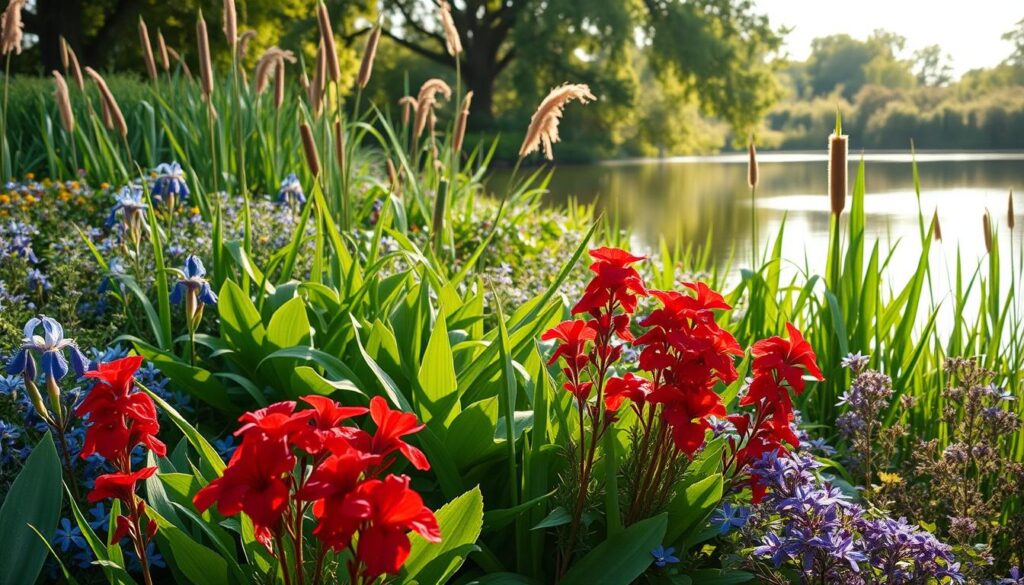
Asters and autumn-blooming sedums for late color
Asters and sedums provide steady flowers into colder weeks. They form mounds that contrast well with taller stems.
Black-eyed Susan and Shasta daisies to extend the season
Both give bright, long-lasting blooms that attract bees and butterflies. Divide crowded clumps every three years to renew vigor.
Joe Pye weed, turtlehead, and swamp milkweed for damp margins
Use upright Joe Pye with mounding sedum and daisies to vary texture. Swamp milkweed supports monarchs and other native species.
Design tip: massing perennials for bold pondside drifts
- Massing creates strong reflections and simplifies maintenance paths along the shore.
- Light mulch helps stabilize damp soil and suppress weeds; avoid burying crowns.
- Remove tired annuals to limit snails and slugs, and cut back only non-ornamental stems late in the season.
Prep compacted strips, ensure good drainage for overflow, and plan divisions to reduce disease in garden beds.
Ornamental grasses that add movement and winter interest
A mix of clumping grasses adds texture and movement that reads well from lawn to water.
Switchgrass and little bluestem are excellent native picks to frame shorelines. Their upright forms sway in breeze and hold tawny seedheads into winter, giving the pond area sculptural silhouettes.
Switchgrass and little bluestem for shorelines
Choose clump-forming cultivars and space plants to maintain airflow. This reduces lodging near the water and keeps roots healthier as temperatures drop.
Sedge and rush selections for consistently wet spots
Sedges and rushes tolerate saturated soils and help stabilize banks. Use them where roots stay damp; they also filter runoff before it reaches the pond.
- Leave stems standing through winter for wildlife and structure.
- Cut back in late winter just before new growth begins.
- Mix grasses with late-blooming plants to provide color now and form later.
Fall-friendly shrubs and trees to anchor your pond landscape
Well-chosen shrubs and small trees create the bones of a pondside planting scheme. Use woody specimens to frame views, stabilize banks, and add seasonal color without overcrowding the shore.
How to plant shrubs in early autumn: hole, depth, and watering
Dig a hole twice the diameter of the root ball and about 2 inches shallower than the root-ball height. Set the top of the root ball at ground level so water drains away from the crown.
Backfill, tamp lightly, and water deeply to remove air pockets. Repeat a second soak after soil settles to ensure good root-to-soil contact.
Evergreens that give year-round structure
Boxwood works for low hedging. Spruce and pine make effective screens and reflect well on calm water. Choose sizes that suit the site and avoid crowding sightlines.
Autumn color picks to layer near the pond
Sugar maple, Japanese maple, native dogwood, and redbud add warm tones and varied form. Space these trees so mature crowns preserve views across the water.
Mulch ring basics
Apply a 2–4 inches mulch ring, keeping mulch off trunks and stems. This moderates soil temperature, retains moisture, and reduces weeds without inviting rot.
“Plant early enough to give roots time to establish before deep cold sets in.”
Plant spring-blooming bulbs now for a show around the pond in spring
Planting bulbs now gives your pond a dependable ribbon of color when spring arrives. Many bulbs must be set in fall so they develop roots through cool months and bloom reliably next spring.
Daffodils, tulips, and hyacinths that naturalize near water features
Choose daffodils, tulips, and hyacinths for garden beds and turf islands near the shore. Plant them on gentle slopes or berms where the soil drains well to avoid standing water and bulb rot.
- Group bulbs in drifts through garden beds to create bold swaths of color that mirror on the water.
- Follow depth and spacing guidelines per bulb type; cover with a light mulch to buffer temperature swings without keeping crowns soggy.
- Mix early-, mid-, and late-spring varieties for weeks of staggered blooms and tuck specialty bulbs into pockets of improved soil for diversity.
Naturalize daffodils in small lawn islands for a soft edge between lawn and planting zones. Mark bulb areas to avoid accidental removal during late-season cleanups.
“Planting now sets up dependable flowers next spring and gives the pond instant seasonal appeal.”
Container ideas for instant pondside color
Container plantings bring immediate color and flexibility to a pond edge without disturbing existing beds. Use pots to test palettes, add texture, and move specimens before hard freezes.
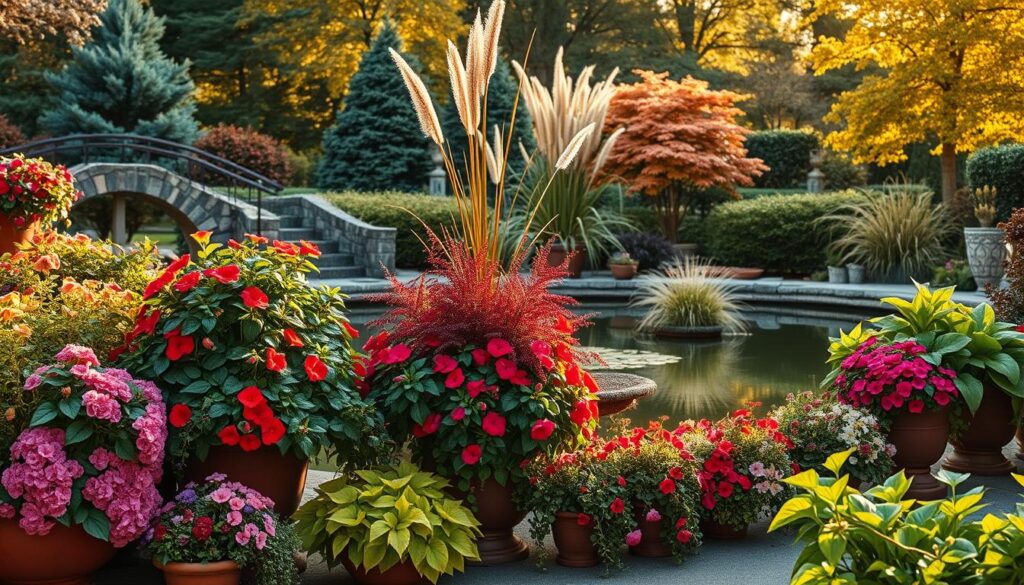
Mums, stonecrop, and cold-tolerant succulents
Choose hardy mums, Sedum (stonecrop), and cold-tolerant sempervivums for bright, low-maintenance displays. These plants hold color as temperatures drop and can be potted with structural foliage like dusty miller or ornamental kale for contrast.
Elevated pots to protect crowns from soggy soil
Raise containers on risers or stands to keep crowns above splash zones. Elevation prevents crown rot and limits soil saturation near the water’s edge.
- Place paired pots to frame a path or view for striking reflections.
- Use fast-draining mixes and pot feet so saucers don’t hold excess water.
- Pick portable containers to move into a sheltered place before severe cold.
Container swaps are an easy way to test color and layout before committing plants to the soil.
Pollinator-friendly planting along pond edges
A thoughtful mix of perennials keeps bees and butterflies fed when many sources dwindle. Planting nectar-rich species by the water helps wildlife through the colder season while adding late color to your garden.
Perennials bees and butterflies love in fall
Asters, autumn-blooming sedums, black-eyed Susan, and Shasta daisies are top picks. They offer abundant late nectar and sturdy landing platforms for insects.
Creating continuous bloom with staggered varieties
Mix early-, mid-, and late-season perennials to maintain steady forage. Space clumps so they don’t block wildlife access to water but still provide shelter.
- Leave some sturdy stems and seedheads standing into winter for habitat.
- Prefer native species where possible to boost local pollinator populations.
- Avoid pesticides near water; use cultural controls and healthy soil practices instead.
“Monitor bloom gaps and replace with staggered varieties to keep the pond garden lively into next year.”
Leaf management, compost, and mulch for healthy pond beds
Keeping pond edges clean of leaf litter protects water quality and your plants. Prompt removal limits nutrients washing into the water and stops leaves from smothering turf.
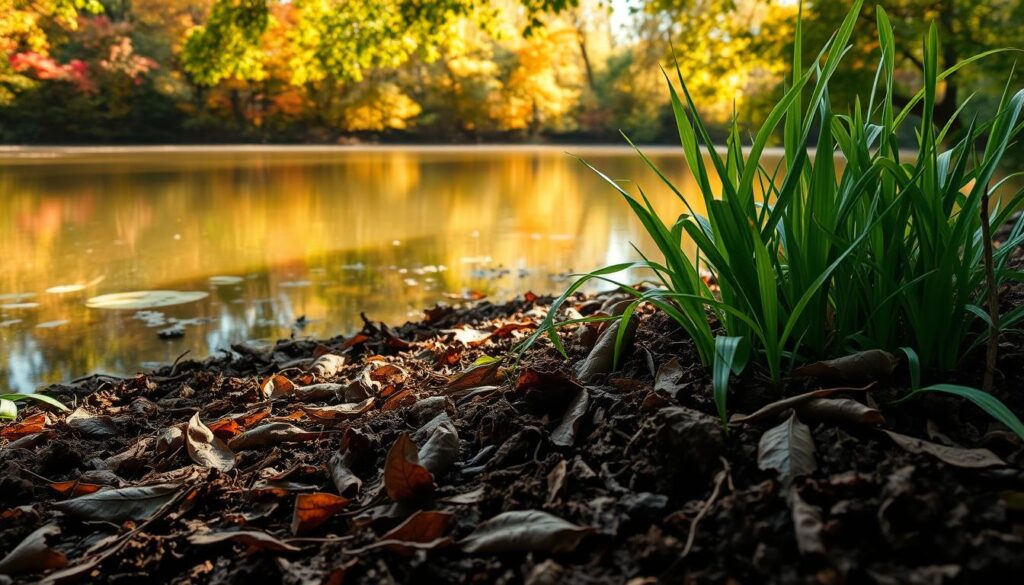
Keep leaves out of the water and into a compost pile
Rake leaves from the lawn onto a tarp for quick hauling. Stage debris away from drains so heavy rains don’t wash it into the pond.
Start or add to a compost pile with leaves plus green trimmings. Turn the pile weekly to aerate it and speed breakdown.
Turning your leaf pile into nutrient-rich “black gold” by spring
With regular turning, a leaf pile becomes useful compost in months. Use a simple chicken-wire bin or a lined corral to keep the pile tidy.
“A turned pile of leaves becomes valuable soil amendment by spring.”
Refreshing mulch: 2-4 inches to protect roots and suppress weeds
After a light frost but before the ground freezes, add 2-4 inches of organic mulch to beds. Keep mulch pulled back from stems and trunks to prevent rot.
- Choose chopped leaves, weed-free straw, or wood chips for moisture control.
- Till decomposed mulch into the soil before adding fresh layers to improve structure.
- Remove tired annuals during cleanup so they don’t add pests to the compost or pile.
Pruning and plant care before winter
A short round of pruning and debris clearing sets your pond edge up for a safer winter. Tidy beds now cut pest pressure and reduce the chance that limbs or litter will end up in the water.
Cut back spent growth; keep helpful seed heads
In late fall, cut back tired annuals to reduce slug and disease problems near the pond. Compost healthy material and bag or burn diseased debris to stop spread.
Leave sturdy seed heads on select perennials to feed birds and add winter structure.
Tree checks and safe pruning technique
Inspect nearby trees for cracked, loose, or diseased limbs. Remove small hazards yourself; hire pros for large or risky work close to structures.
Make cuts just outside the branch collar, not flush, so wounds heal naturally without sealants.
- Divide crowded perennials (irises, daylilies) about every three years to keep vigor and control spread.
- Clean and oil tools after use to prevent rust and improve performance next season.
- Focus maintenance that preserves sightlines and reduces the risk of wind-thrown limbs entering the water.
“Strategic end-of-season care simplifies spring cleanup and protects the pond through winter storms.”
Protect irrigation and hardscape near your pond
Protecting irrigation and hardscape now saves time and prevents costly repairs after the first freeze. A brief prep session on your drip system and surrounding hardscape keeps the pond area safe and tidy through winter.
How to blow out drip lines to prevent freeze damage
Shut off the water supply and unscrew the tap-joint adapter. Attach a high-volume, low-pressure compressor to the connection point.
Use short bursts of air and move through zones until lines run dry. Keep pressure low so fittings and emitters do not crack. Cap exposed emitters and risers when finished.
Check edging, stones, and pathways before frost heave
Inspect edging, stepping stones, and paths for loose pieces or poor pitch. Reset stones so water drains away from the pond and not toward planting areas.
Confirm joints are secure and adjust heights by a few inches where frost heave is likely. Note repairs and photo-document tasks for easy spring follow-up.
- Inventory replacement parts and record tube lengths and fittings for spring startup.
- Protect exposed bits with caps or guards to keep debris out during the off-season.
- Keep the yard safe and the presentation neat—stable hardscape improves both safety and landscaping appeal in cold months.
“A quick blowout and a short hardscape check prevent leaks and trip hazards when temperatures swing.”
Fall landscaping accents: lighting and seasonal decor by the water
Adding gentle illumination and a few well-chosen accents transforms the water’s edge into a cozy outdoor space.
Path and patio lights for shorter days and safer strolls
Install low-glare path and patio lights to guide evening walks and improve safety by the pond. Choose warm LEDs and shielded fixtures to reduce glare and protect night-flying insects.
Solar-powered lanterns and string lights lift seating areas without complex wiring. Use weatherproof cords where power is needed and place fixtures to avoid splash zones.
Pumpkins and simple structures for cold-season focal points
Simple obelisks or trellises act as vertical anchors once many plants die back. Add subtle uplighting to turn them into dramatic features after the first frost.
Decorate steps, benches, and landings with pumpkins in mixed sizes and hues to add seasonal color without overwhelming the natural scene. Two pumpkin displays keep the look tasteful and balanced.
- Use shielded, warm LEDs to highlight specimen trees or shrubs for depth near the shoreline.
- Place structures where they frame views and remain visible from seating areas across the yard.
- Choose cohesive color accents so decor complements existing plantings and winter tones.
“Thoughtful lighting and modest decor extend use of the pond area into the darker months.”
Plan ahead for next year’s pondside garden
Sketching sightlines and marking problem spots this season saves hours when planting time arrives.
Walk the pond’s perimeter to record plant moves and bare zones. Note where perennials should be divided and where paths need widening for safer access.
Map plant moves, divide perennials, and note bare spots
Make a simple map of the shore from seating and indoor views. Mark areas of waterlogging, wind exposure, and shade so replacements suit each microclimate.
- Flag clumps to split next spring and mark new planting spots for better spacing.
- Record lawn edges that need redefining and where paths should be widened.
- Log what thrived and what struggled to guide plant choices for the next season.
Create a shopping list for spring additions
Turn observations into prioritized tasks and a clear shopping list. Capture sizes, counts, and must-have varieties for shoreline conditions.
- Inventory mulch, edging, compost, and tools so procurement fits early-season gardening time.
- Schedule basic tool maintenance: sharpen blades, oil metal parts, and store gear dry.
- Set a short task list so budget and purchases stay focused when planting time opens.
Thoughtful planning now saves money and reduces rework when the planting window opens next year.
Conclusion
This short checklist wraps up the most important tasks to set your pond edge up for winter and a strong spring.
Compost leaves into a turned pile so you have usable compost by spring. Apply 2–4 inches of mulch, keeping it away from trunks and stems. Cut back tired annuals but leave sturdy seedheads for birds.
Feed the lawn with a phosphorous-rich fertilizer like 12-25-12 while the soil is above about 40°F. Inspect trees for cracked limbs and prune hazards now.
Winterize your irrigation system by blowing out lines to protect the system from freeze damage. Add simple touches—path lighting and pumpkins—to keep the yard inviting through frost.
With a short plan and a final walkaround to store tools, control weeds, and check beds, your pondside plants will wake up vigorous next season.
You Might Also Like...