
How to Prevent Mosquitoes in Your Pond
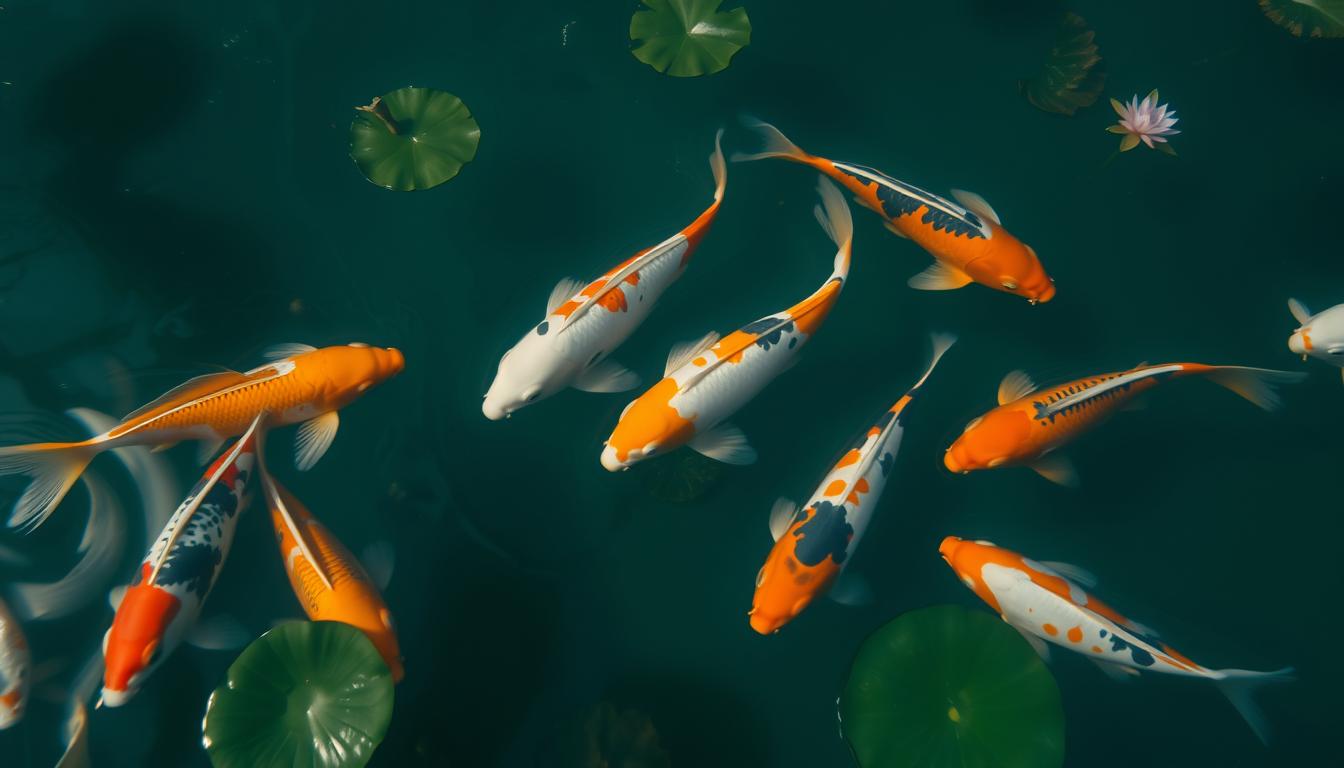
This short guide helps U.S. pond keepers prepare fish for cold months. It explains how rest-like dormancy differs from true bear-style sleep and why that matters for backyard care.
Koi enter a torpor-like state at the pond bottom: upright, fins tucked, with a slowed heart rate and metabolism. They do not wake suddenly; activity returns gradually as water warms.
Extended cold and darkness can weaken immune defense. That raises health risks and calls for planned winter care.
The article will outline timing cues, feeding changes, water-quality steps, aeration and de-icing tips, and when to move fish indoors.
Small steps taken early—asking the right questions and checking equipment—can prevent stress and losses. These practices scale from single ponds to multiple water features.
Key Takeaways
- Understand the difference between true hibernation and the koi’s torpor-like rest.
- Monitor water temperature and behavior to time feeding and interventions.
- Prioritize stable water quality, gentle aeration, and minimal disturbance.
- Plan when to relocate fish if a pond risks freezing solid.
- Simple, early preparation reduces stress and winter losses.
Koi hibernation: behavior, temperature, and biology
When days shorten and water cools, ornamental fish enter a reversible torpor to save energy. This state is not deep sleep; it slows movement, digestion, and the metabolism that normally fuels daily activity.
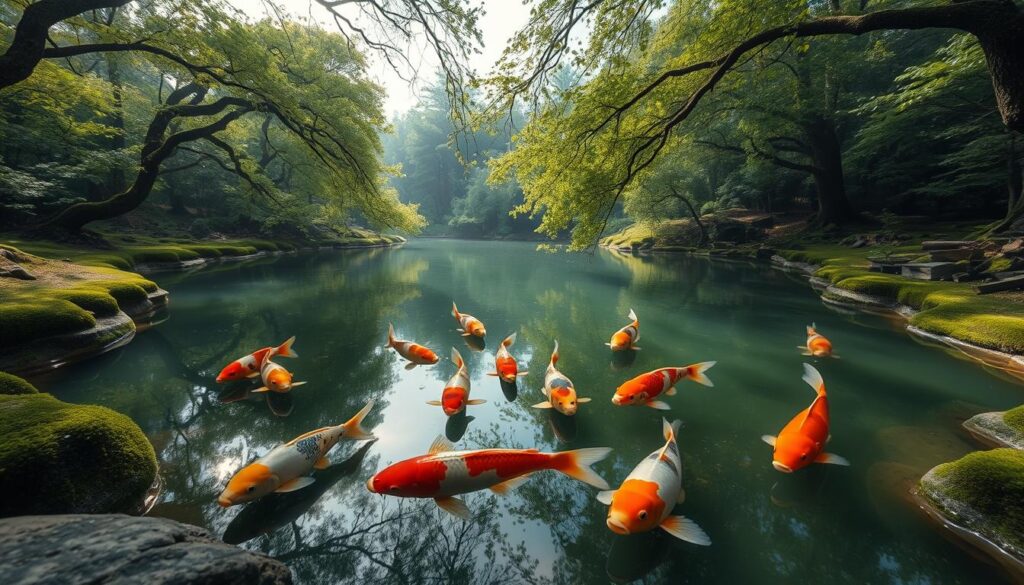
What torpor means for koi fish in winter months
Torpor is a temporary, reduced-activity state. Fish lower their metabolic rate and conserve reserves until the pond warms again.
Typical winter behavior
Expect fish to hover upright near the bottom with pectoral fins tucked. Movement is minimal and gradual, with small fin or body shifts to stay balanced.
Water temperature thresholds
Feed normally at about 55°F and above. Many keepers cut back around 51°F. Below roughly 45°F, digestion becomes inefficient and feeding should stop.
Metabolism, immunity, and pond layers
Lower temperature reduces metabolic pace and weakens immune response during long cold months. Fish favor the bottom pond because it holds steadier, slightly warmer water than the surface.
“Watch for shorter daylight and steady bottom behavior; those are the best cues that fish are in torpor.”
- Keep a simple log of water readings to know patterns.
- Avoid sudden disturbances—startle responses waste vital energy.
- Observe subtle movements to ensure joint and gill function.
Pre-winter pond prep: stabilize water, control waste, and set your system for the cold
A crisp fall cleanup and system check prevents surprises when cold weather sets in. Do this work several weeks before sustained low temperatures so treatments and biology settle.

Clean the pond
Skim leaves and vacuum muck from the bottom to remove organics. This limits decomposition and lowers the risk of toxic gases forming under ice.
Aeration and oxygen
Add or optimize aeration so dissolved oxygen remains steady for low-activity fish. Place diffusers where they move water without chilling the deepest layer.
De-icer, water treatment, feeding, and system checks
- Install a de-icer to keep a small hole in ice; never break ice by hand to avoid shocking fish.
- Run water treatments for at least two weeks in the fall to reduce bacteria and parasite loads before dormancy.
- Adjust feeding by water temperature: feed normally near 55°F, cut back around 51°F, and stop before the low 40s degrees.
- Inspect filters, pumps, and power backup to keep aeration and the de-icer running through storms.
Keep a short blog-style log of fall tasks and temperature readings to stay consistent and ready for deep cold.
In-winter care: monitoring, minimal disturbance, and when to move koi indoors
When ice threatens to close a pond, relocation and careful monitoring become top priorities.
Know when to relocate: If your region sees prolonged freezes or your outdoor pond is shallow enough to risk freezing solid, plan to move koi and compatible goldfish to an indoor pond or tanks. Keep lists of who, when, and what to move ahead of time.
Setting indoor conditions
Keep indoor water cool and stable to preserve the natural torpor state. Use adequate biofiltration and steady aeration so oxygen levels stay safe while fish remain mostly inactive.
Do’s and don’ts
- Do maintain continuous aeration and a de-icer that keeps a small hole in the ice.
- Don’t break ice manually — that can create shock waves and stress fish.
- Do check equipment quietly at set times to avoid startling the population.
Occasional warmer days
Mild winter days can raise brief activity. Offer only tiny, easily digestible treats during these windows, then return to non-feeding as water cools.
“Quiet checks and minimal handling preserve energy and reduce disease risk while fish stay at the pond bottom.”
Watch position and fins at the bottom pond level for steady orientation and tucked fins. These simple steps protect fish dormant through the winter months.
Conclusion
A clear winter plan keeps pond fish safe through cold months. Fish enter a torpor-like state and stay near the bottom pond layer with fins tucked to conserve energy. That behavior, paired with lower metabolism, is why you must match feeding to temperature degrees.
Follow simple fall tasks: remove leaves and muck, stabilize water, add aeration, and fit a de-icer to keep surface gas exchange. Stop food well before temperatures fall into the low 40s and cut back around 51°F, with normal feeding near 55°F.
If freeze-over is likely, move koi and compatible goldfish indoors to stable systems. Keep checks quiet, log temps in a blog or notebook, and test backups so equipment and oxygen run through extended periods.
Small, steady steps—tracking degrees, keeping calm routines, and using a checklist—are the reason your koi fish emerge healthy in spring.
You Might Also Like...