
How to Prevent Mosquitoes in Your Pond
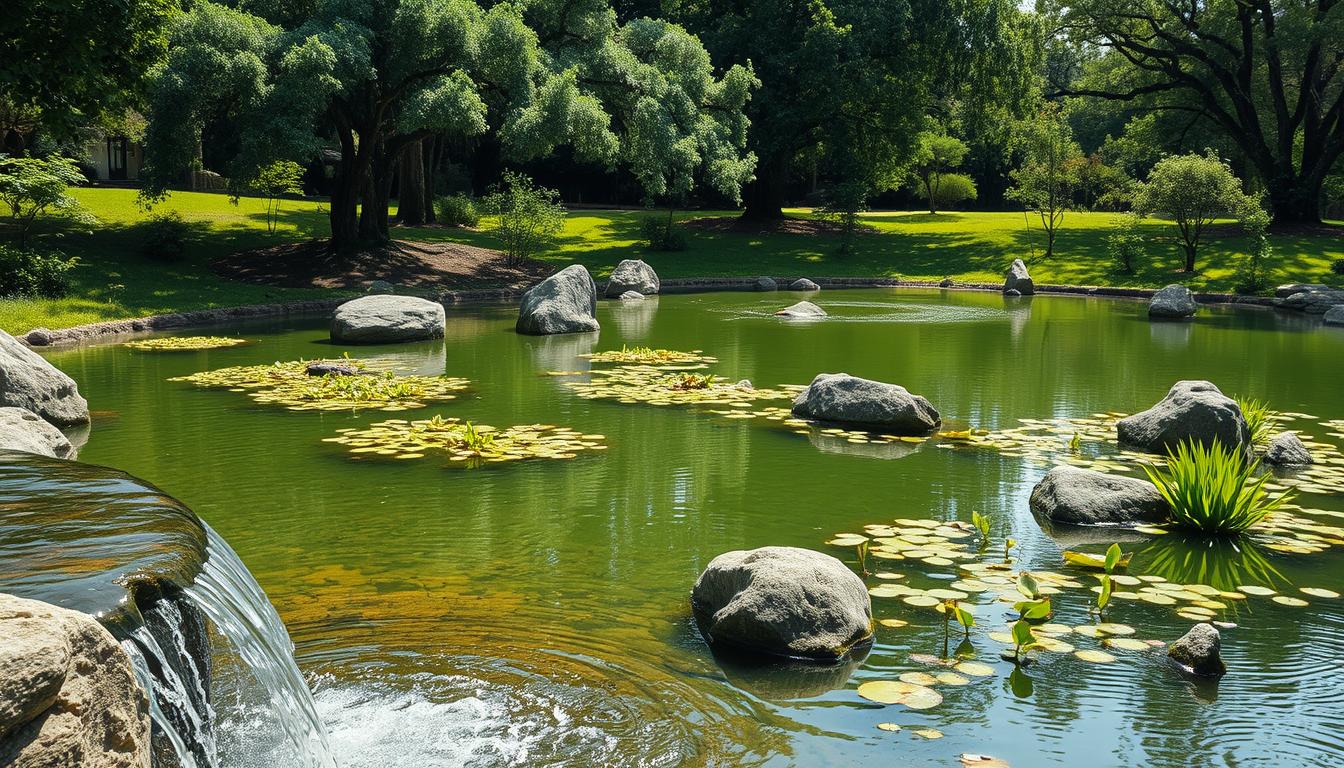
Cool, comfortable pond edges start with a plan. This short guide shows practical ideas that blend plant layers, shade elements, and smart hardscapes to lower heat near water and improve your outdoor space.
Tall trees and large shrubs give shade, privacy, and measurable cooling. Permeable paving and drought-tolerant or native plants cut watering and fit lawn-free approaches.
Water features—moving water, fountains, and small falls—help cool air, mask noise, and invite wildlife. Patios and seating placed to catch breezes make your home feel larger and more usable.
Think in layers: canopy trees, mid-level shrubs, and ground covers plus mulch to retain moisture and suppress weeds. Plan what you can do now and what fits your schedule through the year.
Key Takeaways
- Start with a clear plan that prioritizes cooler microclimates around the pond.
- Use shade trees, permeable surfaces, and reflective-heat reduction at the water’s edge.
- Introduce water movement and sound to lower air temperature and add comfort.
- Choose low-water plants and mulch to save time and support the environment.
- Place seating to capture breezes and extend usable outdoor spaces into evening.
How Summer Landscaping Keeps Pond Water Cooler and Healthier
Smart planting and targeted shade keep water temperatures steady and reduce stress on fish and beneficial microbes.
When direct sun heats the pond, evaporation rises and water quality suffers. Shade from trees and shrubs cuts solar gain, slowing evaporation and keeping surface temperatures more stable.
Layered plants—overhanging branches, mid-level shrubs, and ground covers—create cool air that drifts across the basin. These layers also trap dust and debris before it reaches the water, lowering sediment and nutrient loads.
Healthy soil around the edge acts like a sponge. It slows runoff, supports steady root growth, and helps stabilize banks so less sediment washes into the pond.
Watering habits matter: water deeply but less often in the early morning—the best time to reduce evaporation and disease risk. Mulch cuts maintenance by conserving moisture and suppressing weeds.
- Targeted shade reduces algae surges and helps oxygen stay in the water.
- Deep, infrequent watering promotes stronger root growth for longer-term bank stability.
- Plan late-summer pruning and fall division to keep upkeep moderate and the environment resilient.
Shade First: Trees, Shrubs, and Structures That Drop Temperatures Around the Water
Strategic trees, dense shrubs, and built screens work together to cool the air above your pond. Start with broad-canopy trees that cast shade during peak sun hours to lower surface temperatures without adding excess debris.
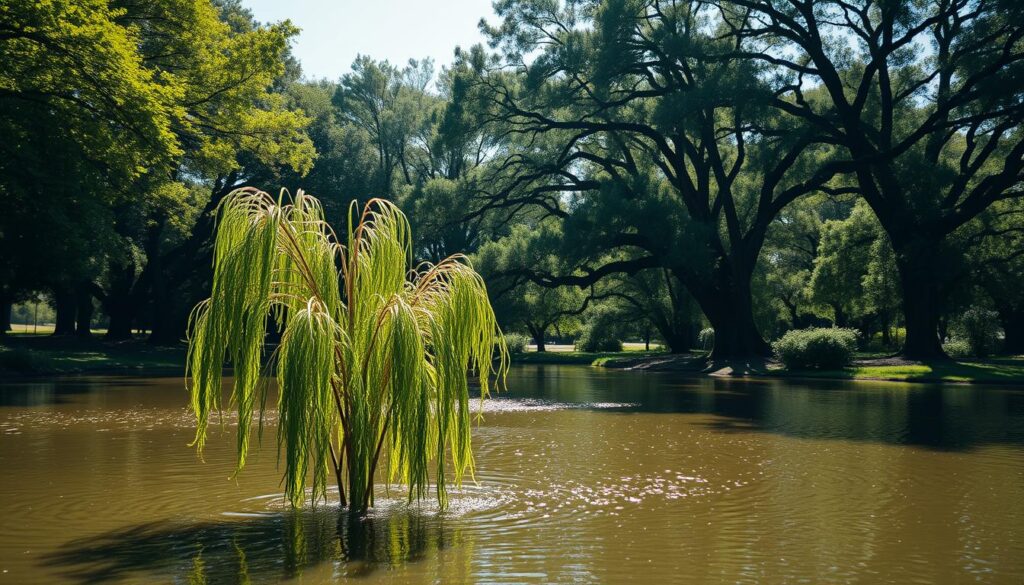
Planting canopy trees for cooler microclimates
Prioritize fast-growing or site-appropriate trees that reach wide canopies. Choose species that shade the pond but send minimal leaf litter into the basin.
Using large shrubs as living screens
Place tall, dense shrubs on hot western edges to block afternoon sun. They add privacy and structure while cooling air near the water.
Pergolas, trellises, and privacy screens for targeted shade
Install pergolas or trellises over seating zones to create defined, shaded areas. Train climbers for seasonal flowers and added color.
Layering container gardens and hanging baskets
Use planters and hanging baskets to add dappled shade where space is tight. Size choices to your garden and home so roots stabilize banks without harming liners.
- Keep airflow when defining shaded areas to avoid humidity buildup.
- Pick species that tolerate splash and variable moisture near the water.
Water Movement and Feature Design That Reduce Heat Stress
A well-designed circulation system blends fountains, falls, and hidden currents to protect water quality and comfort.
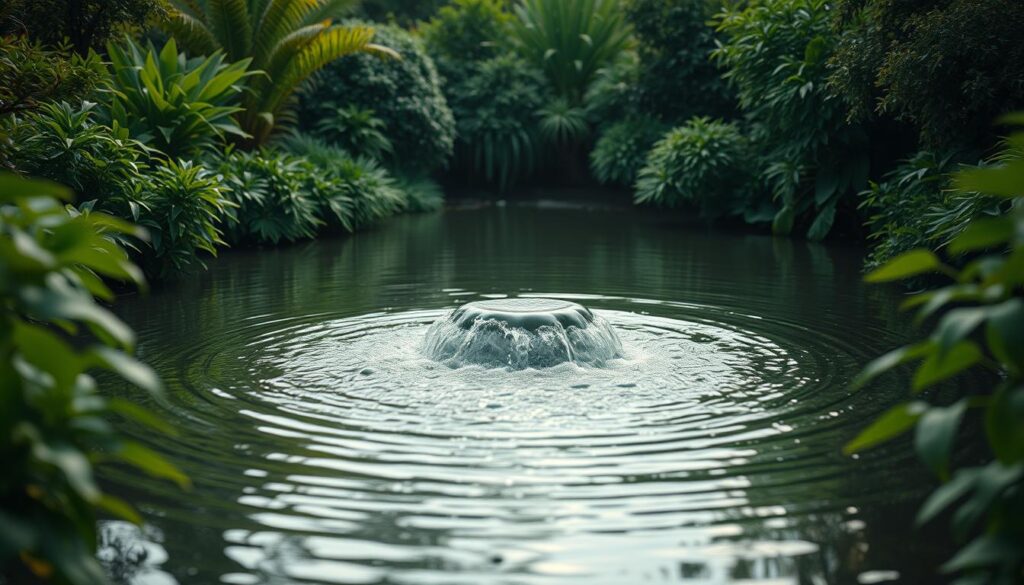
Fountains and waterfalls to boost circulation and surface cooling
Water features like fountains and small falls add aeration that mixes surface layers. This mixing increases evaporative cooling and cuts perceived heat in the nearby landscape.
Pick pumps and nozzles sized to move enough water without over-splashing banks. That keeps soil stable and supports steady growth of beneficial bacteria.
Depth, shelves, and rock placement to keep water columns cooler
Design the basin with deeper pockets and shaded shelves to protect cooler bottom layers at peak time of day.
Place rocks to baffle currents and prevent short-circuiting. Proper rock layout preserves thermal layering for fish comfort and clearer water.
- Tune flow seasonally: boost circulation during heat waves, reduce it as temperatures fall to save energy.
- Use permeable ground and paths near the pond to limit runoff and sediment entering the basin.
Smart summer landscaping around ponds: ground covers, mulch, and lawn management
Good edge treatments and simple yard habits keep water cooler and reduce upkeep. Small choices—mulch, paths, and ground cover—cut reflected heat and protect the basin.
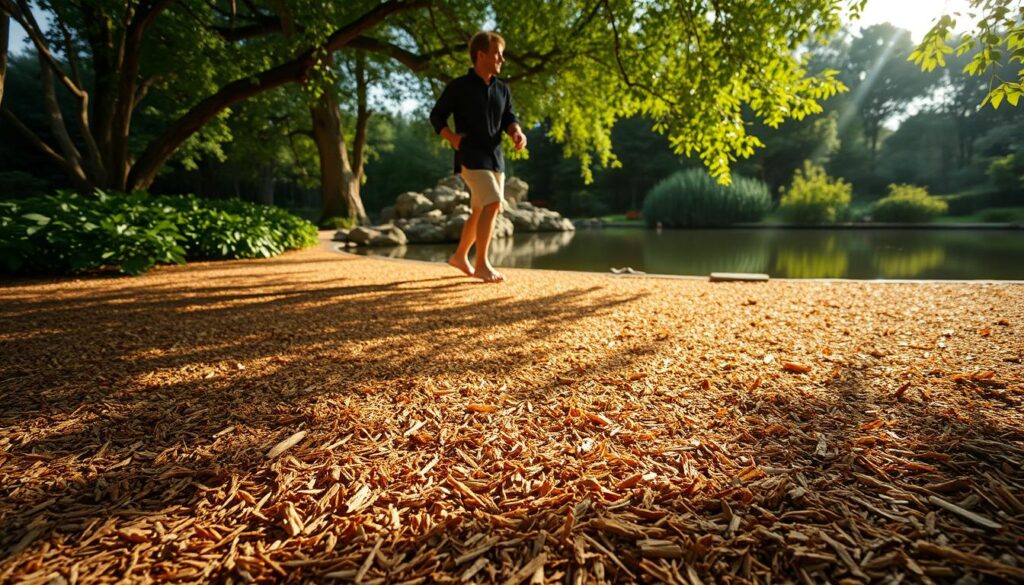
Mulch garden beds to hold moisture and limit heat
Apply a 2–3 inch layer of mulch around pond-adjacent plantings. Mulch retains moisture, suppresses weeds, and reduces reflected heat at the water’s edge.
Permeable paths and crisp edging to lower radiant heat
Use gravel or permeable stone for paths so rainfall infiltrates and nearby areas stay cool. Define beds with stone or metal edging to keep soil in place without trapping heat.
Late-season lawn and bed care for stronger roots
Time aeration, overseeding, and light fertilization from late summer into fall to help grass recover. Water deeply but less often to encourage root depth and reduce runoff to the pond.
- Select ground covers that hold slopes and outcompete weeds for lower maintenance.
- Compost yard waste to build soil and improve long-term resilience.
- Keep turf at a modest height so grass shades soil and limits heat gain.
Pondside Planting: Perennials, Grasses, and Flowers That Help Cool and Protect
Layered plantings at the pond edge cool air, stabilize banks, and lift visual interest. Use a mix of hardy perennials and ornamental grasses to create dappled shade and habitat without crowding the rim.
Edge plantings that provide shade, color, and habitat
Place staggered heights: low groundcovers, mid-height perennials, then taller grasses. This approach stabilizes soil and casts gentle shade onto the water.
Avoid planting directly in the water. Keep groups just back from the edge to limit leaf drop and organic buildup.
Seasonal color with heat-tolerant bloomers near, not in, the water
Choose flowers that hold color late into the season. Black-eyed Susans, coneflowers, sedum, Russian sage, and asters extend interest as other beds fade.
- Divide mature perennials in early spring or after flowering in fall to refresh clumps.
- Use raised beds or containers where soil and drainage need control; they also break up heat near hard edges.
- Favor nectar-rich, native plants to support pollinators and suit your home garden climate.
Design for Comfort: Outdoor living features that support a cooler pond environment
Design outdoor spaces that balance sun, shade, and airflow to protect pond temperatures and comfort.
Position patios, seating, and lighting to avoid heat buildup by the water
Place patios and seating on the shaded side of the pond so they catch breezes and reduce reflected heat. Keep reflective stone off west-facing edges where afternoon glare concentrates and warms the space.
Use pergolas, hedges, and tall plantings to define intimate areas without blocking airflow. Ensure openings for cross-breezes so humidity does not linger over the water.
- Lighting: choose low-glare path lights and uplights to extend safe use into evening without heating surfaces.
- Outdoor features: site compact kitchens or grills away from prevailing winds so smoke and heat don’t drift across the pond.
- Year-round planning: pick flexible wind screens and layered lights that work in fall and winter as well as the warmer months.
Small design choices—permeable hardscapes, divided yard areas, and thoughtful feature placement—keep your yard comfortable and increase home value while protecting pond health.
Conclusion
Small design moves—shade, circulation, and mulch—stack to protect water and ease maintenance.
Start with a simple checklist: add overhead shade with trees and shrubs, boost circulation, and soften hard edges with plantings and permeable paths.
Map sun paths and hot spots so the right plants and structures land in the best time and place for your yard and garden beds.
Mulch garden beds to hold moisture and cut maintenance. Choose heat-tough perennials and group plants for shade, habitat, and long color.
For the lawn, plan core aeration, overseeding, and deep, infrequent watering to build strong roots that cool surrounding ground.
Small, steady steps add up. Stage projects by season, keep pruning and watering consistent, and your landscape will keep the pond cooler and the outdoor living space more enjoyable year after year.
You Might Also Like...