
How to Prevent Mosquitoes in Your Pond
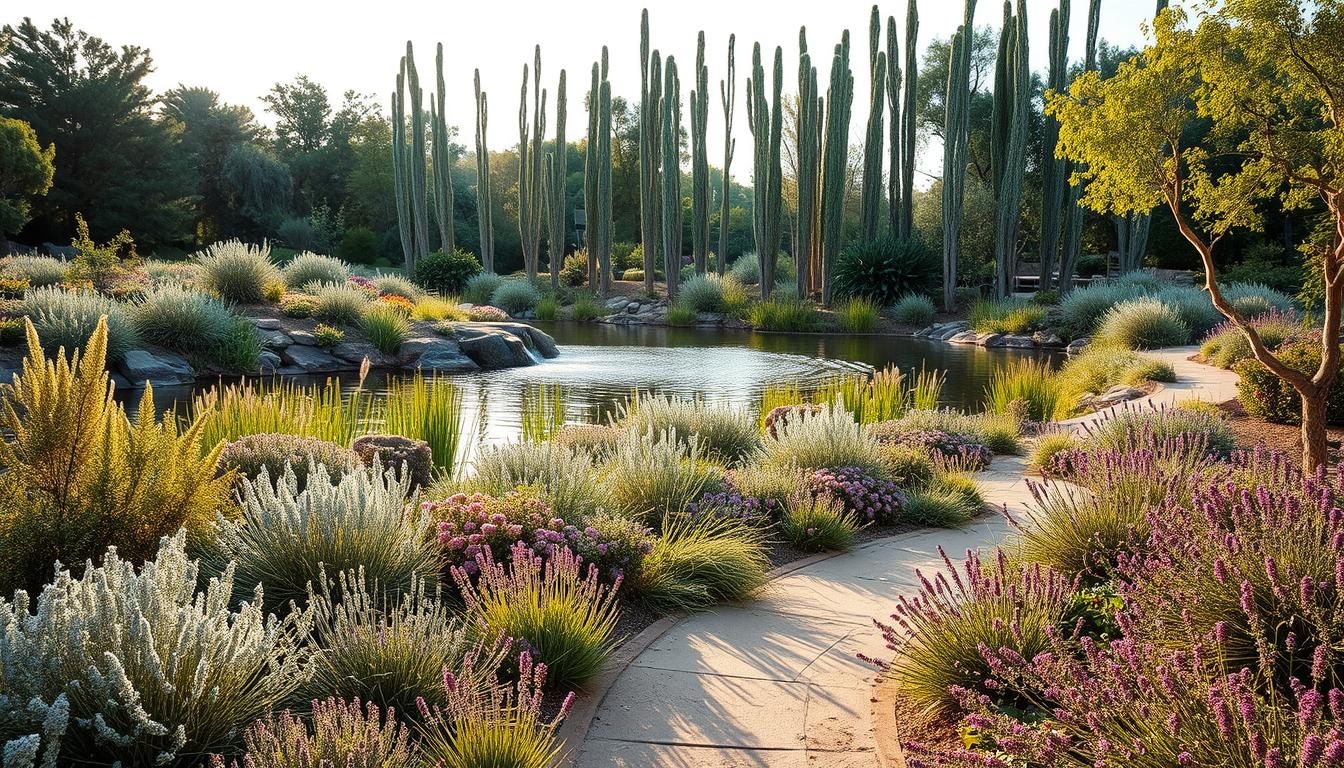
Transforming the edges of your pond into a water-efficient landscaping design helps conserve water while boosting curb appeal and property value. This practical approach aligns plant choices and irrigation with local evapotranspiration (ET) rates, climate realities, and homeowners goals.
In this short guide, you will learn to plan a water-efficient landscape that uses ET data, hydrozoning, drip irrigation, mulches, and smart controllers. These methods ensure plants get only the water they need, cutting waste without sacrificing beauty.
Shoreline soils, slopes, and splash zones can drive erosion and extra water loss. Thoughtful plant selection and simple systems stabilize banks, filter runoff, and protect the pond ecosystem.
Examples like the Alameda County Water District’s ReScape demo garden show how stormwater capture basins, native plants, permeable hardscapes, and weather-based controllers make attractive, high-performing landscapes you can adapt to your outdoor space.
Key Takeaways
- Use ET and hydrozoning to match watering to real plant needs.
- Prefer drip irrigation, soaker hoses, and smart controllers for early morning watering.
- Group plants by water needs and limit high-water turf near the pond.
- Add rain gardens, bioswales, and capture basins to filter runoff and reduce erosion.
- Local agencies can provide ET rates and on-site assessments to help design a resilient pond-side landscape.
Why a Water-Wise Pond Landscape Matters Right Now
A well-planned pond edge saves water, cuts costs, and keeps your yard attractive through dry spells. Homeowners gain immediate curb appeal and long-term value while lowering monthly bills.
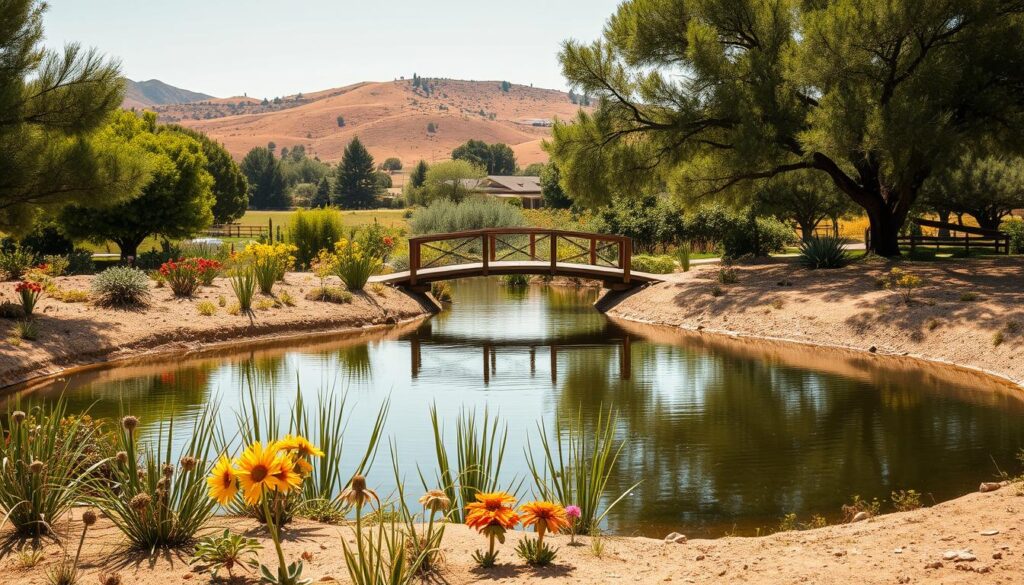
Conservation goes beyond cutting bills. Native and drought-tolerant plants hold color and habitat with less water, and permeable materials improve infiltration to protect the pond and soil.
Efficient systems—hydrozoning, drip lines, and smart controllers—focus usage where plants need it most. That reduces runoff and erosion, safeguarding your property and pond ecosystem.
Homeowner Benefits
- Lower water usage and utility bills.
- Reduced maintenance in your outdoor space.
- Stronger resilience during drought and variable climate.
- Visually stunning landscapes that support pollinators.
“Real-world demo sites, like ACWD’s ReScape garden, show how beauty and performance coexist through weather-based controllers and stormwater capture basins.”
Even small changes—mulch, targeted irrigation, and fewer high-water areas—compound into measurable savings. Track your usage and set goals so systems and plants keep delivering efficient performance year after year.
Plan and Design for Water Conservation Around the Pond
Begin design work by mapping local ET rates and microclimates to set realistic irrigation and plant priorities. Use regional evapotranspiration (ET) to measure evaporation and plant loss so you can calculate the amount water each zone needs.
Use regional ET and microclimate mapping
Match irrigation to ET so systems deliver the right amount. Check with your water district or extension for ET data and consider early morning irrigation to cut evaporation.
Hydrozoning and grouping plants
Implement hydrozoning to group plants similar by water needs. Group plants by drip zone and valve so irrigation schedules fit each hydrozone and reduce waste.
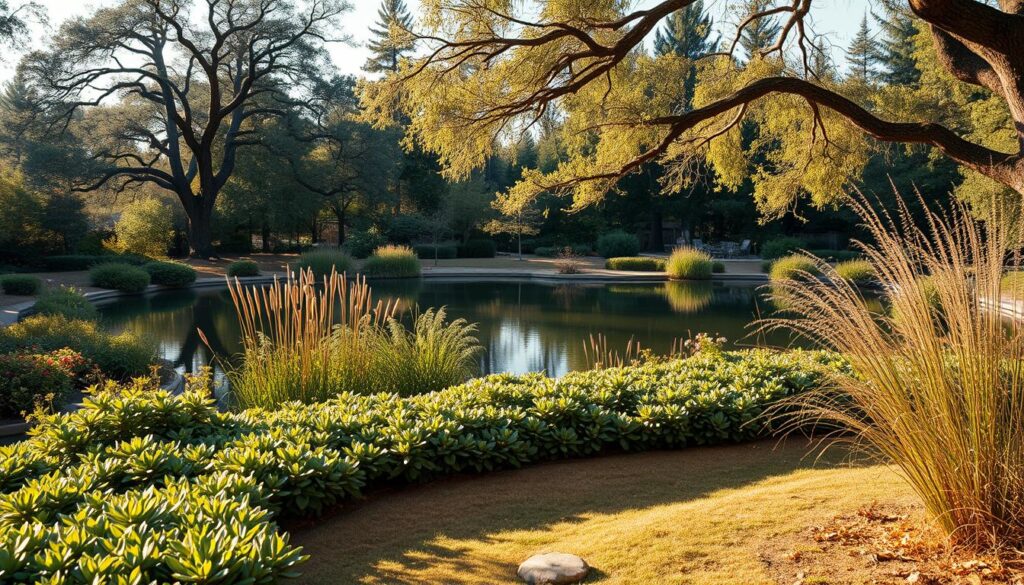
Limit turf and favor permeable surfaces
Reduce high-water lawn near the shore. Choose permeable hardscapes—gravel, decomposed granite, or open-joint pavers—to let stormwater soak in rather than run into the pond.
- Improve soil with compost to hold water and stabilize banks.
- Design gentle slopes and buffer strips to filter runoff and lower the amount water entering the pond.
- Add windbreaks or shade elements to lower leaf temperatures and evaporation.
Xeriscaping planning design ties these steps into a clear yard plan with hydrozones, valve labels, and controller programs so your landscape performs through dry spells.
Selecting and Placing Plants for a Water-Efficient Landscape
Smart plant choices and placement make your pond edge resilient, attractive, and easier to maintain. Focus on species that suit your local climate and microclimates so beds establish quickly and need less water.
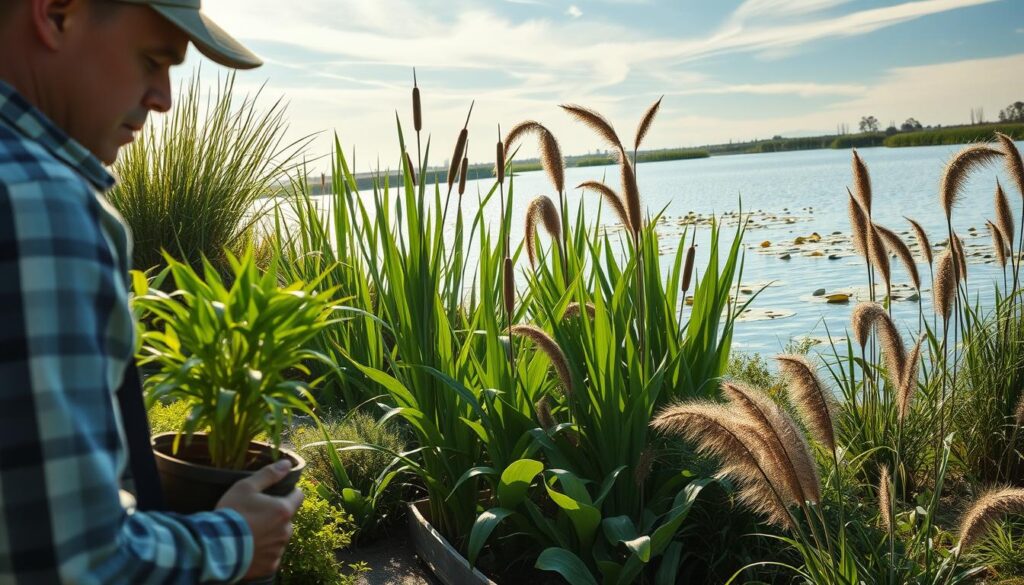
Native and drought-tolerant species that thrive with less water
Prioritize native and climate-adapted, drought-tolerant plants that keep form and seasonal interest with minimal irrigation. These selections reduce care near sensitive shorelines and support pollinators and birds.
Group plants by water needs and rooting depth
Group plants similar in exposure and water needs into tidy hydrozones. This simplifies irrigation and prevents overwatering low-demand species.
Mix deeper-rooted shrubs with shallower perennials so plant roots anchor slopes and stabilize pond banks against erosion.
Improve soil and add mulch to cut evaporation and weed growth
Build soil health with compost to boost water-holding capacity and nutrient supply. Healthier soil helps new plants establish with fewer irrigations.
Apply 2–4 inches of mulch to shade soil, limit evaporation, and reduce weed growth. Refresh annually to keep the layer effective and avoid soil crusting.
- Place higher water-needs plants upslope in their own zone so excess water does not flow into the pond.
- Use ground covers or low shrubs at the waterline to slow sheet flow and improve filtration.
- Tie your palette to examples like ACWD’s ReScape garden for species ideas and placements that fit your site.
Efficient Irrigation and Stormwater Features for Ponds
A focused irrigation plan paired with stormwater controls improves plant health and water quality.
Drip lines and early morning watering
Install drip irrigation or soaker hoses so water reaches plant roots and cuts overspray and runoff into the pond.
Program watering for early morning to reduce evaporation and support plant uptake. Then fine-tune schedules seasonally based on ET and observed water needs.
Smart controllers and efficient irrigation systems
Choose a weather-based irrigation system or smart controller that adjusts runtimes using local climate and ET data.
Separate valves by hydrozone so each area gets the right amount. Add pressure regulators, filters, and check valves to keep output even and stop low-point drainage.
Stormwater features and alternate supplies
Build rain gardens, bioswales, or a capture basin to slow, filter, and infiltrate runoff before it reaches the pond.
Where permitted, harvest rainwater or use greywater to offset potable supply and lower overall water usage.
- Mulch drip lines to hold moisture and suppress weeds.
- Use permeable paths and dry creek beds to direct flows and protect slopes.
- Document maintenance: flush lines, audit flow, and recalibrate controllers after establishment.
Conclusion
Translate planning insights—ET, hydrozones, and plant palettes—into phased upgrades that deliver lasting conservation and curb appeal.
Start with a simple path: map ET and microclimates, set hydrozones, and build a landscape design that places water where it’s needed, not where it drains into the pond.
Choose climate-adapted plants, group by demand, and keep the lawn footprint small near the shore. Use rooting depth to stabilize banks and reduce maintenance across your yard.
Combine drip irrigation with smart controllers, and add rain gardens, bioswales, or a capture basin to filter and slow runoff.
Learn from real examples like ACWD’s ReScape garden to help design site-specific details. Audit zones, set ET-based schedules, and tackle one upgrade at a time to protect your property and keep your outdoor space beautiful.
You Might Also Like...