
How to Prevent Mosquitoes in Your Pond
Prepare early and protect your ecosystem. Freezing conditions cut oxygen exchange and shift chemistry under ice. That makes a simple fall routine essential for a healthy backyard pond in cold weather.
Start with a pre-freeze cleanup: skim leaves, vacuum sludge, and remove only a portion of muck so beneficial bacteria survive. Disconnect and drain pumps, filters, and UV units that aren’t ice-proof. Store pumps in a bucket of water indoors to preserve seals.
Aeration and a floating de-icer keep a gas-exchange hole and steady oxygen levels, which helps protect fish from trapped toxins. Move aeration to shallower water and never strike or drill ice—melt a hole with hot water if needed.
Trim hardy plants, move pots down for protection, and remove tropicals. Do a 10–20% pre-freeze water change with dechlorinator, and check weekly for an open vent, snow clearance, and safe ammonia/nitrite levels. These steps reduce spring algae and prevent costly gear damage when thaw arrives.
Key Takeaways
- Prep early to prevent low oxygen and chemistry shifts under ice.
- Disconnect and drain exposed pumps, filters, and UVs; store pumps submerged in water indoors.
- Skim leaves and remove limited sludge to protect beneficial bacteria.
- Use aeration and a floating de-icer to keep a safe gas-exchange opening.
- Switch feeding near 50°F and stop below 40°F; trim and protect plants.
- Do a 10–20% pre-freeze water change with dechlorinator and check weekly.
Understand Utah’s Freezing Weather and How It Impacts Your Pond
Rapid cooling in Utah commonly forms a solid ice layer that alters oxygen and ammonia levels. This sealing effect prevents gas exchange and lets ammonia and CO2 build under the ice.
As water temperatures fall, thermal layering develops: the warmest water sinks near the bottom. Disturbing that layer with strong surface circulation can chill fish and remove their refuge.
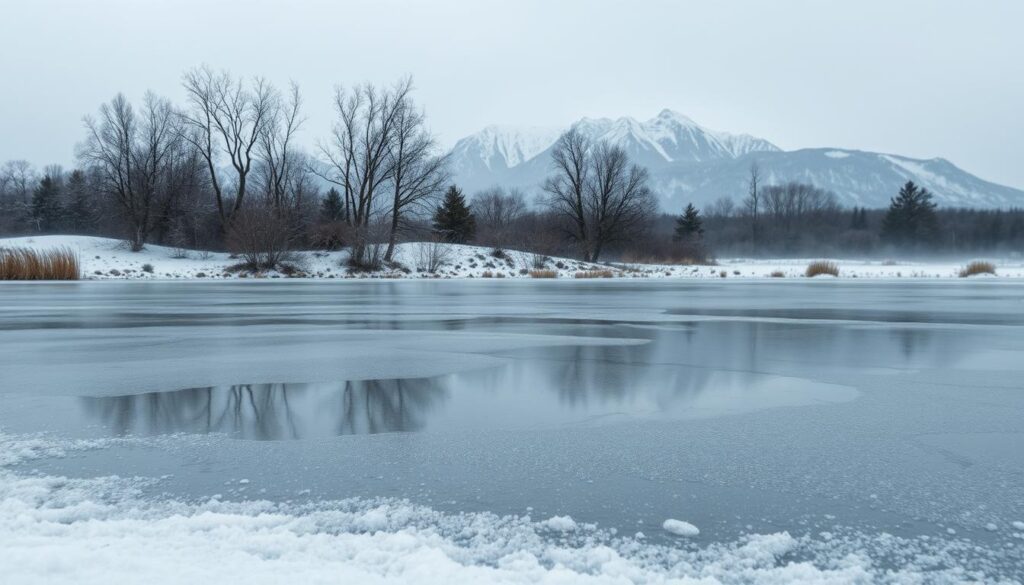
Cold water holds more oxygen, yet decaying leaves and sludge keep producing ammonia. Thick ice and snow block light, cut photosynthesis, and speed oxygen loss.
Monitor pond water temps around 50°F and 40°F to guide feeding and aeration choices. Keep a small, steady ice vent for gas exchange rather than trying to heat the whole water body.
- Freeze-thaw snaps form an ice cap that traps gases.
- Thermal layering protects fish unless disturbed by pumps.
- Snow and ice block light, reducing oxygen production.
- Tailor actions to pond size, depth, wind exposure, and shade.
Pre-Freeze Cleanup: Remove Leaves, Sludge, and Set Water Level for Winter
Tackle leaf cleanup early to stop organic waste from fouling the water and harming fish. Start after most leaves have fallen and remove any cover netting for indoor storage. Skim the pond surface daily with a fish or pond skimmer net to collect leaves before they sink and rot.
Use a pond vacuum to lift settled sludge from the bottom, but work in stages. Avoid removing more than one-third of muck at a time so beneficial bacteria remain to help filter the system through the cold period.
Filter and water-level steps
Pull and rinse filter pads and bio-media from skimmers, waterfall boxes, and in-pond filters so trapped solids don’t decay inside housings. Inspect pads and fittings now and note worn items to replace at spring startup.
- Lower water below the skimmer opening and drain skimmer/waterfall boxes to prevent freeze cracking.
- Where no skimmer exists, maintain the water line about four inches below the coping during heavy rain to avoid overflow; check weekly.
- Plan your time so skimming, vacuuming, and media cleaning finish before the first hard freeze locks debris in place.
Protect Your Gear: Pumps, Filters, UV Clarifiers, and Storage Best Practices
Protect your equipment now to avoid costly damage when temperatures plunge. Power down and disconnect each pump and electrical line before hard freezes. Allow plumbing and housings to drain fully so trapped water does not expand and crack fittings or unions.
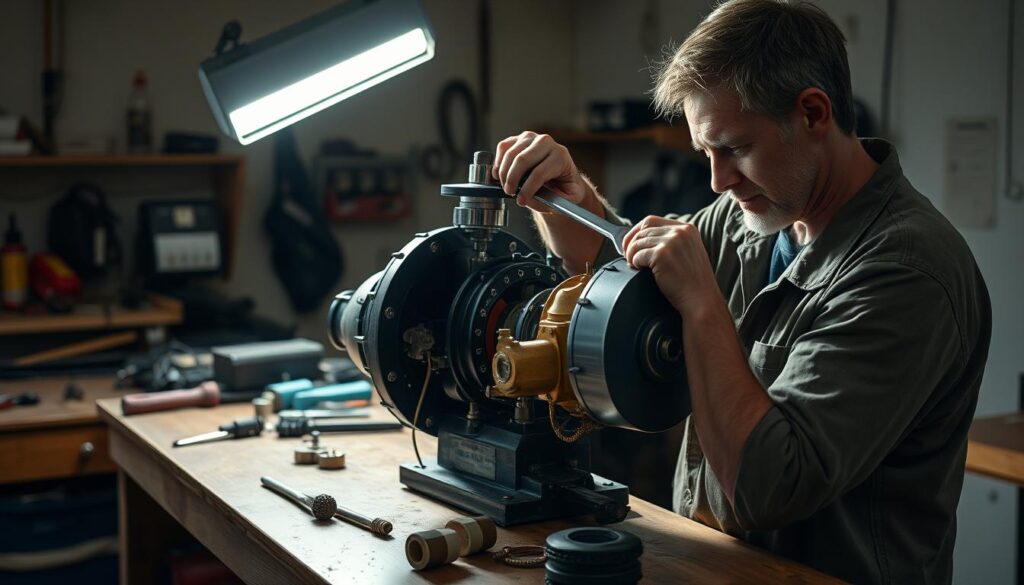
Clean pump intakes and inspect impellers and seals. Rinse debris from inlets, then store pond pumps submerged in a bucket of clean water to keep mechanical seals from drying. Keep all gear in a frost-free space such as a basement or heated garage.
Rinse filter media and housings to remove solids. Store pads and bio-media indoors or in skimmer boxes out of the cold. Replace worn media at spring startup to restore system performance.
UV clarifiers and circulation tips
Disassemble clarifiers and clean quartz sleeves with white vinegar or a gentle descaler. Replace the UV bulb each season and remove units during prolonged sub-zero spells—most housings are not ice-proof.
- Move any circulating pump to a shallower shelf so it does not pull super-cold surface water to fish at depth.
- Drain waterfall boxes and long plumbing runs to prevent freeze damage.
- Label hoses, valves, and unions now to speed spring reassembly and reduce downtime. Consider a small pond heater only in extreme conditions.
Winter Pond Care Essentials: Oxygenation, De-Icers, Heaters, and Ice Safety
A small, steady opening in the ice makes the biggest difference to fish survival. Gentle aeration and a floating de-icer provide that vent, preventing CO2 and other gases from building up under the surface.
Use aeration in shallow water to protect the warm refuge
Place diffusers higher in the water column so they stir air and keep oxygen near the surface without pulling cold surface water down. This preserves the deeper, warmer layer where fish rest.
Keep a hole in the ice and never strike or drill
Run a floating de-icer to maintain a palm-sized vent for gas exchange. Do not pound or drill the ice; shock waves can injure fish and harm your liners or equipment.
Melt closed vents safely
If the opening freezes shut, pour hot (not boiling) water on a small spot to restore the vent. Check every few days and brush off snow so some light reaches the water and aids oxygen levels.
Heater vs de-icer: when extra warmth helps
Understand the difference: a de-icer only preserves an opening, while a heater raises overall temperature. Most hardy species need only aeration plus a de-icer. Reserve a pond heater for extreme cold, sensitive stock, or special setups.
- Size aeration to avoid strong currents that disturb thermal refuge.
- Keep devices on GFCI-protected circuits and use winter-rated cords.
- Check vents and equipment regularly for safe operation.
Fish and Plants: Feeding Schedules, Depth, and Trimming for Cold Weather
A clear feeding plan and gentle plant trimming will help fish thrive as temperatures fall.
Feeding changes: Monitor water temperatures with a reliable thermometer. Transition to a wheatgerm-based food near 50°F to aid digestion and lower waste. Reduce portions as the temperature drops and stop feeding once water temps fall below 40°F. Uneaten food sinks and raises ammonia.
Protect roots and trim dead growth
Trim dead foliage from hardy plants to limit decay. Move potted plants down to the bottom shelf so roots stay warmer and stable. Remove tropical and floating plants and overwinter them indoors.
Depth and fish behavior
Keep at least two feet of depth so pond fish can rest at the slightly warmer bottom level. Avoid moving or stressing fish during cold snaps. Watch for reduced movement and grouping near the bottom—this usually signals normal winter rest.
- Monitor water temperatures to time diet shifts.
- Use wheatgerm-based fish food at ~50°F.
- Trim plants and move pots to the bottom to protect roots.
Water Quality Watch: Testing, Water Changes, and Ice-Hole Check-Ins
A simple weekly check-in protects water quality and keeps fish safe under ice. Quick tests and small water swaps stop slow decay from becoming a toxic problem.
Pre-freeze water change and dechlorination
Complete a 10–20% water change before sustained freezes to dilute wastes and stabilize pH. Always treat tap water with a dechlorinator to protect fish gills, even when temperatures are low.
Weekly inspections and simple tests
Plan a short weekly visit to confirm the de-icer keeps an opening and to brush off snow so light and oxygen reach the surface. Use ammonia/nitrite test strips monthly; if ammonia appears, perform a gentle 10% change during the next mild spell.
Filters, tools, and efficient routines
Rinse mechanical filter components as needed to prevent trapped debris from decomposing and burdening winter water quality. Keep a net handy to remove debris drifting toward the ice opening so it does not freeze over.
“Small, regular checks save time and protect fish; bundle testing, visual inspection, and tiny maintenance into one weekly visit.”
- Track water temperature and weather to anticipate refreeze problems.
- Use a net and quick rinses to keep filters working without full cleanouts.
- Save notes for spring startup so you know when to reverse steps and restart equipment.
Spring Restart: Safe Bring-Up of Pumps, Filters, and Feeding
When ice has cleared for good, remove de-icers first. Unplug and lift floating units as soon as open water appears so the device does not overheat in air.
Next, reinstall mechanical equipment carefully. Refit pumps, reconnect unions, and restore plumbing in a methodical order to prevent leaks. Prime lines and purge trapped air until flow is steady.
Rinse sponges and other filter media in a bucket of pond water to protect helpful bacteria. Avoid tap water for media cleaning so biological filtration restarts quickly.
Final checks before feeding
- Inspect clarifiers: clean quartz sleeves and replace bulbs for full UV efficiency.
- Confirm there are no drips or weeping fittings and that flow rates match manufacturer specs.
- Allow about 24 hours of circulation before offering the first small feeding.
- Observe fish activity and return pumps to their warm-season positions if needed.
- Note any parts that need replacement so you can order them in good time.
Give the system a day to clear and stabilize the water. After that time, start with a light feeding and monitor behavior closely.
Conclusion
Plan a compact pre-freeze sequence and weekly quick-checks to keep oxygen steady and gear safe through cold weather.
Clear leaves and a bit of sludge, service and store pumps and clarifiers, then run a floating vent so gases can escape. Do a 10–20% water change with dechlorinator before hard freezes.
Match feeding to temperature: switch to wheatgerm as the water cools and stop feeding once readings hit 40°F. Keep at least two feet of depth so fish have a warmer bottom refuge.
Position aeration and pumps on a shallow shelf to avoid pulling super-cold surface water down. Keep a net, test strips, and a thermometer for efficient weekly checks.
In spring, remove de-icers first, reinstall pumps and filters, rinse media in pond water, and let circulation stabilize before resuming feeding. Follow these steps and you’ll cut spring work, limit repairs, and protect your garden pond for the year ahead.
You Might Also Like...