
How to Create a Disappearing Waterfall Feature
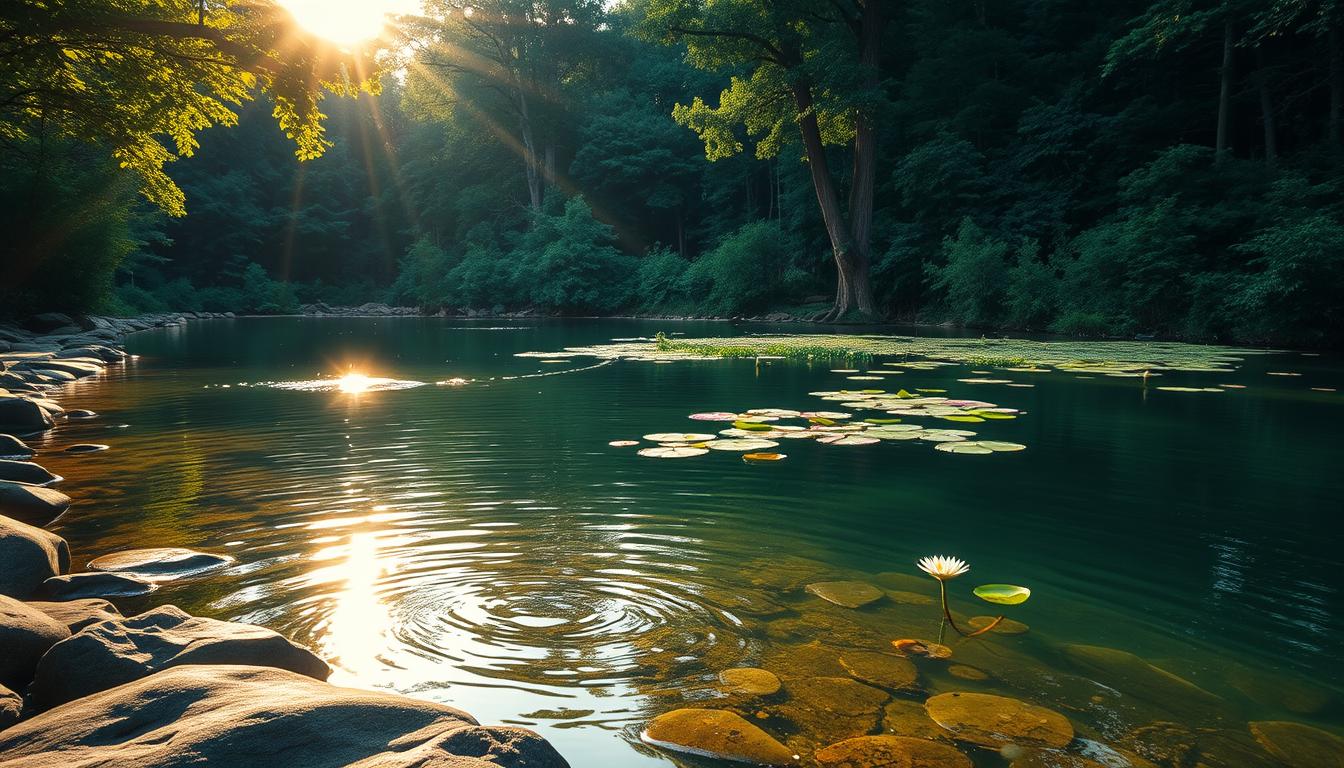
Thinking of a backyard that feels like a calm lake? A natural swimming pond is a swimmable water feature that uses plants, beneficial bacteria, and engineered circulation instead of chlorine. Builders like Gartenart and Ellicar design regeneration zones and submerged pumps sized to swimmer load to keep water clear and balanced.
The main idea is simple: a regeneration area planted with oxygenating species works with a mechanical skimmer and wetland filter to circulate and clean the water. US installers often use rubber liners such as PondGuard by Aquascape, plus boulders, gravel, and optional UV units for extra clarity.
Compared to a traditional pool, these systems cut chemical use and energy needs, support wildlife, and feel softer on skin and eyes. Design choices—beach entries, stone finishes, or wooden decking—help the pool blend into a garden and make access safe and attractive.
Key Takeaways
- Plant-led filtration replaces heavy chemicals while keeping reliable water quality.
- Engineered components—skimmers, wetland filters, and pumps—ensure hygiene and flow.
- Expect biodiversity: dragonflies and birds often arrive after planting.
- Design for space, sun, and maintenance access; check local permits in the US.
- Costs vary, but long-term savings come from fewer chemicals and lower energy use.
Natural swimming pond basics: how they differ from traditional swimming pools
Instead of dosing with chlorine, these systems rely on planted zones and quiet hydraulic flow to keep water clear.
Construction and materials vary. A swimming pond often uses gravel, clay, or a liner with organic edges. A natural swimming pool may use concrete walls and a more engineered basin. Both keep a clear swim zone and a planted regeneration area for filtration.
Biological filtration and hydraulics
A filtration system centers on aquatic plants and beneficial bacteria that absorb nutrients and curb algae growth. Submerged pumps move water through skimmers and wetland filters without a dedicated plant room.
“Correctly sized filters and flow matter more than fancy finishes; undersized systems risk algae and poor plant growth.”
- Design: regeneration zones take part of the footprint; the swim area stays deep and clear.
- Maintenance: monitor plant health, skim debris, and service skimmers rather than shock-treating with chemicals.
- Experience: many users report softer, fresher water and a garden-integrated atmosphere that attracts wildlife.
Planning your site today in the United States: space, sunlight, access, and permits
Good placement begins with a quick site survey: check sun angles, slope, and how equipment will access the area.
Evaluate available space for size, shape, and clear routes for excavation gear and staging. Mark where trucks will deliver liners, stone, and topsoil to protect your garden.
Choose a sunny spot to help warm the water and support plants. Avoid deep shade and keep the build away from deciduous trees to reduce leaf fall that can clog skimmers and hurt water quality.
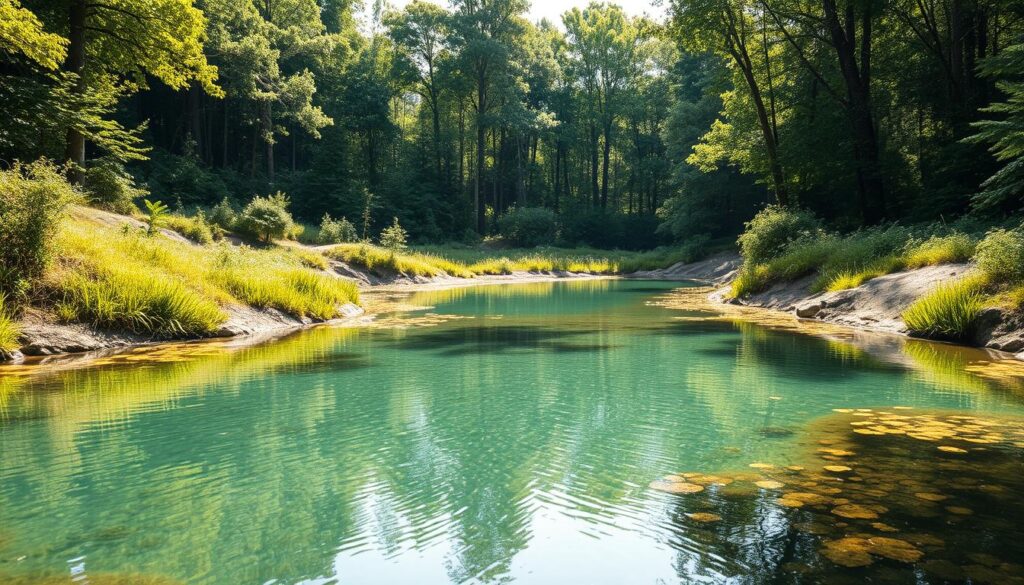
Avoid low-lying drainage paths and steep slopes where runoff can carry nutrients into the pool. Plan safe entries—shallow beaches or steps—and use good footing at access points for year-round use.
Site logistics, privacy, and permits
Orient the layout for privacy and sun while keeping pump controls, outlets, and conduits at a safe distance. Check local US permits, setbacks, and utility locates before digging.
“Confirm truck access and staging early to protect lawns and speed construction.”
- Assess space and access routes.
- Pick a sunny, well-drained area.
- Keep clear of trees and downhill runoff.
- Verify permits, utilities, and privacy sightlines.
How to build a natural swimming pond: a step-by-step overview
Good construction starts with a clear plan that separates the deep swim zone from planted filter shelves and service access.
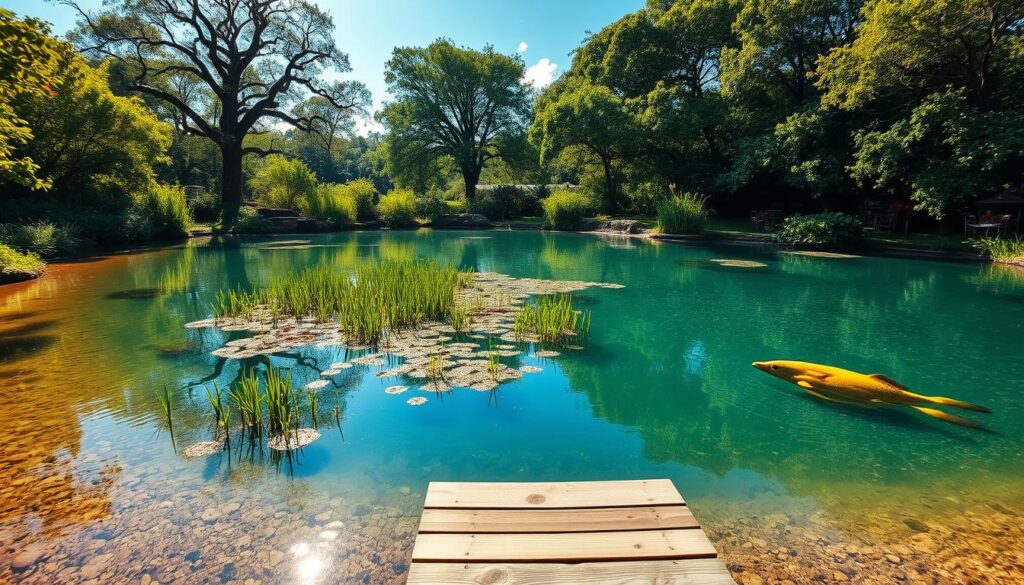
Designing shapes, depths, and regeneration zones
Map varied depths: reserve deep water for laps and deeper dives, and shallow shelves for planted filtration. Size the regeneration area to match total volume and expected daily swimmers to keep algae at bay.
Excavation, liners, edging, and entries
Excavate in lifts and form stable shelves. Lay a protective underlayment and install a durable rubber liner such as PondGuard to prevent punctures.
Pin liner edges with boulders and graded gravel. Add a mechanical skimmer on the windward side and plumb a wetland biological filter sized to the pool.
Aesthetic finishing touches: stonework, decking, and planting edges
Choose a beach entry or non-slip steps depending on use. Use flagstone, pebbles, and timber decking to blend the feature into the garden.
- Pre-plant regeneration shelves and allow initial cycling.
- Check for leaks, verify pump flow, and confirm skimmer draw.
- Keep electrical controls well away from the swim zone for safety.
“Correct circulation and accessible filter hatches make maintenance straightforward.”
Filtration system and water quality: pumps, skimmers, wetlands, and UV
Effective filtration combines visible debris removal with deeper biological cleaning to keep water inviting.
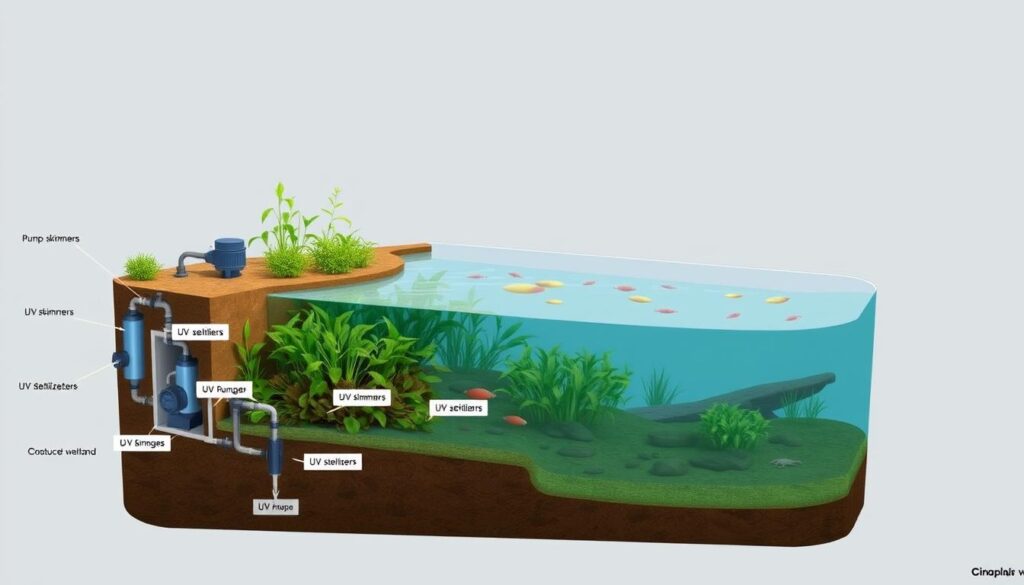
Two-stage filtration is the backbone of any well-designed setup. Start with a mechanical skimmer to strip leaves and floaters from the surface.
Circulation essentials
Submerged pumps move water quietly through hidden hydraulics. Proper flow prevents dead zones and boosts oxygen, helping plants and bacteria thrive.
Set turnover targets based on total volume so the system stays efficient without noisy, oversized gear.
Mechanical skimmers and biological filtration
Skimmers capture debris; wetland filters and bio-media host beneficial bacteria that convert dissolved nutrients into harmless forms.
This biological stage controls what would otherwise fuel algae and keeps the ecosystem stable.
Managing algae and testing for crystal clear results
- Use regular testing for clarity, temperature, and nutrient indicators.
- Reduce light and nutrients with competitive planting and seasonal pruning.
- Add a UV sterilizer as an auxiliary clarifier during heavy use or high nutrient loads.
“Easy access to skimmers and filter chambers makes maintenance fast and prevents deferred care.”
Routine inspection of pump intakes, leaf baskets, and wetland manifolds keeps water quality high. The result is clear, soft water for swimming without strong chemicals or chlorine odors, and lower long-term energy use once the ecosystem balances.
Aquatic plants and wildlife: creating a balanced ecosystem
Choosing the right plants and habitat features shapes how quickly wildlife arrives and how stable the water becomes.
Native aquatic plants such as floating lilies give shade and compete with algae. Submersed oxygenators remove nutrients, while marginal reeds and sedges polish the edge and host beneficial bacteria.
Diverse planting supports filtration by taking up nutrients and by providing surfaces for microbes that break down organics. Seasonal care matters: divide vigorous species, lift and remove decaying biomass, and re-establish cover after winter.
Supporting biodiversity and fish considerations
Dragonflies, diving beetles, and pond skaters often appear first. Birds, bats, and amphibians follow when shallow shelves, stone crevices, and emergent clusters are available.
“Early wildlife arrivals are a good sign the ecosystem is finding balance.”
- Consider small fish like minnows or mosquitofish for mosquito control, but check local rules and climate suitability.
- Balance stocking with filter capacity—too many fish raise nutrients and stress the system.
- Avoid invasive species; source plants from reputable nurseries and follow state guidelines.
The benefits extend beyond ecology: living water and active wildlife enrich the garden and improve the sensory experience of your pool.
Costs, materials, and upgrades: budgeting your swimming pond project
Understanding price ranges and common upgrades helps clients choose the right scale and finish.
Typical US ranges: small build budgets often start near $50,000, with many projects in the $50,000–$200,000 band in markets like Southern California. Larger, lake-scale installations can exceed $250,000.
Costs differ from a traditional swimming pool because there is less concrete formwork and rebar. Builders spend more on excavation, stonework, and integrated biological filtration. That trade-off often lowers per-square-foot labor but shifts spend to landscape finishes.
Common materials and finishes
Standard items include robust rubber liner (e.g., PondGuard), underlayment, boulders, and gravel or flagstone bottoms. Concealed plumbing and in-pond filtration avoid large external plant rooms.
Popular upgrades and allowances
- UV sterilizers for clearer water.
- Deeper swim zones or lap lanes for serious swimming.
- Beach entries, flagstone surfaces, and external pump access.
Budget tip: allow contingency for extra boulders, plant density, or upsized pumps. Get multiple bids that list liner thickness, pump models, and filter sizing so you compare apples to apples.
Operation, maintenance, and seasonal use
Regular care keeps a backyard water feature clear, safe, and ready for use all season. Small weekly tasks and seasonal checks protect water quality and reduce long-term costs.
Routine care: debris, pruning, and service access
Empty skimmer baskets, net leaves, and check pump intakes each week. Visually confirm circulation in all zones to avoid stagnation.
Monthly, prune and thin plants and remove decaying biomass. Inspect wetland flows and open deck hatches so filter chambers are easy to service.
Safety and health: electrics, rails, and hygiene
Position electrical panels away from splash zones and lock covers for safety. Add handrails or non-slip treads at entries to protect swimmers.
Hygiene depends on a well-sized system, steady circulation, and balanced planting. Add a UV unit only if clarity dips during heavy use.
Temperature, winter use, and optional heating
Expect comfortable swimming in late spring through early fall in many U.S. climates. Heating is possible but often costly compared with letting sun-warmed water do the work.
For winter use, follow safe access practices: clear ice, use a secure route, and warm up immediately after a cold plunge. Keep a simple log of maintenance, clarity, and any pump or UV adjustments to spot trends and protect long-term health.
Conclusion
A well-designed backyard water feature can be both a daily escape and a durable asset.
Whether you choose a natural swimming pond or a natural swimming pool, the reward is soft, low-chemical water and a richer pool garden that attracts insects, birds, and amphibians as it matures.
Crystal clear results come from pairing aquatic plants with correctly sized filtration systems and steady circulation. Add optional UV clarifiers, deeper swim lanes, or beach entries to boost usability without sacrificing ecology.
Plan for sun, safe entries, and easy service access. Get detailed bids that list liner, pump, and planting specs so clients compare like-for-like.
Start by sketching your concept, assess the site, and consult experienced builders to make the pool garden the centerpiece of your outdoor life.
You Might Also Like...