
Contemporary Pond and Water Feature Trends
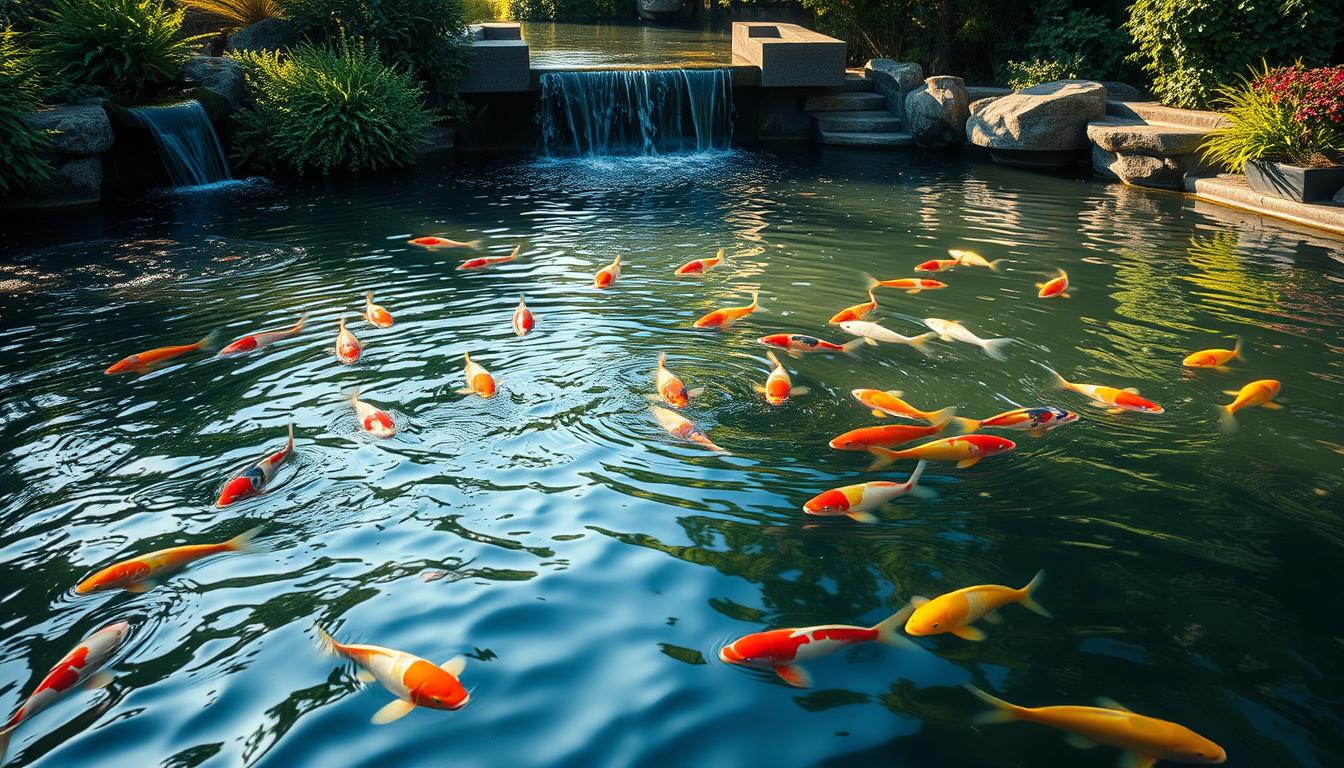
Healthy water starts with steady oxygen supply. Fish need dissolved gas to breathe, and beneficial bacteria rely on the same support to break down waste. Low oxygen shows up fast: fish hovering near returns, scum and bad smells, or sudden algae surges that cloud the surface.
Simple fixes often deliver the fastest relief. Increasing water movement, adding aeration like waterfalls, fountains, or air pumps, and removing decaying leaves all improve gas exchange. Cooler, shaded water also holds more dissolved air, helping keep fish calm and filtration stable.
Match aeration to your stocking levels and debris load. Routine partial water changes, good filtration, and regular debris removal help maintain healthy conditions year‑round. When you spot early warning signs, act quickly: a temporary bubbler or higher return flow can prevent a crisis while you address root causes.
Key Takeaways
- Keep water moving to support gas exchange and beneficial bacteria.
- Watch for fish at the surface or returns as early oxygen warnings.
- Use aeration devices and increased flow for quick, effective fixes.
- Remove decaying matter and provide shade to help keep water cooler.
- Match oxygen supply to fish biomass and maintain filtration.
Why Oxygen Matters for a Healthy Koi Pond Environment
Plenty of dissolved gas in the water is the backbone of a stable aquatic environment. Clear, well‑aerated water supports healthy fish and lets biological systems perform without strain.
Respiration and filtration rely on dissolved air. When levels fall, fish show stress, eat less, and resist disease. Beneficial bacteria in filters need that same supply to convert toxic ammonia and nitrite into nitrate.
Poor circulation lets organic waste use up available air and produce foul, “lake” smells. That process also shifts conditions toward nuisance algae and slimy biofilms, reducing clarity.
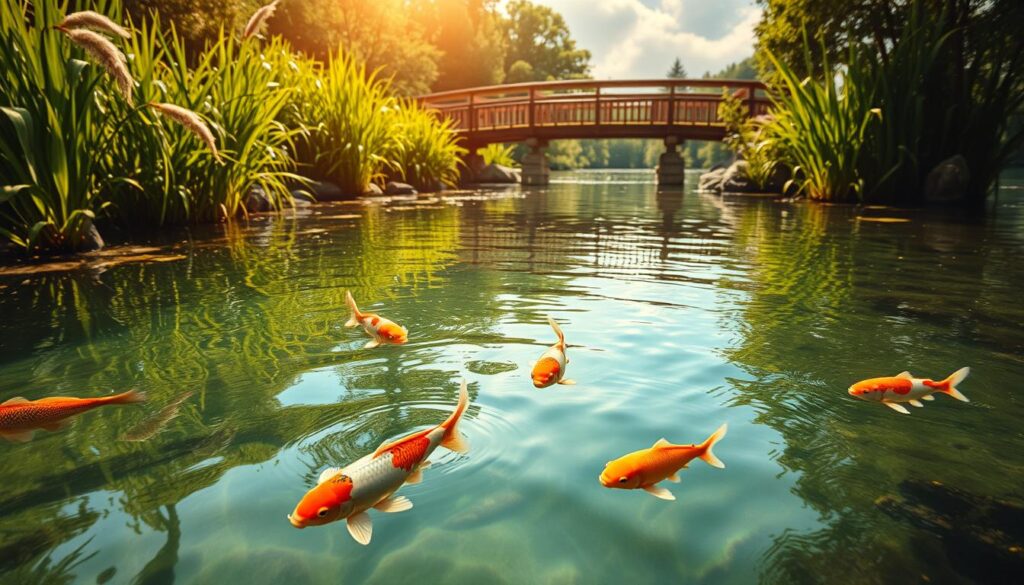
- Good circulation and surface turbulence boost gas exchange and remove harmful gases.
- Steady aeration helps beneficial bacteria outcompete algae for nutrients.
- Check oxygen levels periodically—clear water can still be low in dissolved air.
Koi Pond Oxygen: Understanding Dissolved Oxygen and Gas Exchange
“Gas exchange happens at the water’s skin, where tiny ripples and splashes let air dissolve into the surface.”
Surface exchange explained: Most dissolved oxygen enters at the interface where air and water meet. Create many small ripple or splash zones rather than relying on one strong jet. Wide, distributed agitation prevents cold, low-air pockets from forming in deeper areas.
Temperature and solubility: Warm water holds far less dissolved oxygen than cool water. For example, saturation drops from about 10.1 mg/L at 59°F to 7.6 mg/L at 86°F. Shade, depth, and circulation help manage these changes.
Day vs. night: Plants and algae produce oxygen by day but consume it at night. Do not shut down circulation after dark on warm evenings, especially when fish biomass is high. Use dissolved oxygen readings to guide overnight aeration choices.
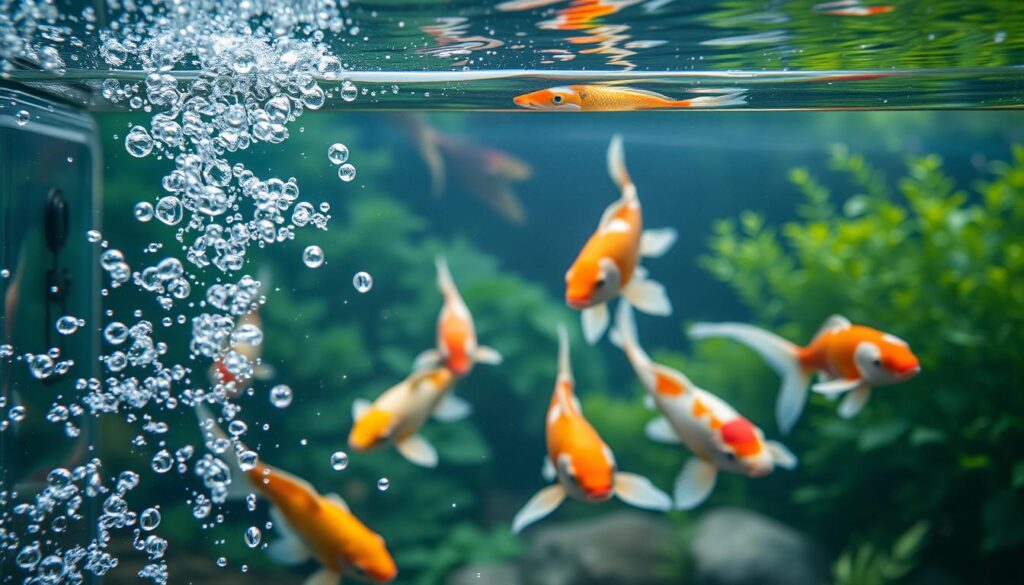
“Monitor surface movement and temperature together — they tell the real story.”
- Focus surface agitation for better gas exchange.
- Manage shading and depth to limit nighttime drops.
- Distribute returns to avoid dead spots and low levels.
Diagnose Low Oxygen Levels: Tests, Signs, and When to Act
Recognizing stress signals in fish and water quality gives you time to stop a small problem from becoming a crisis.
Behavioral cues: Watch for fish gasping at the surface or clustering under returns and waterfalls. These are immediate warnings that require action.
Water and smell indicators: Stagnant slicks, debris buildup, and a foul “lake” odor point to poor circulation and trapped gas pockets. Inspect inlets and bottom zones where low spots form.
“If fish crowd flows or hang near returns, boost circulation first and test water as you plan next steps.”
- Use a digital meter for precise oxygen levels if possible; otherwise rely on visual cues and surface agitation.
- Aim to keep oxygen levels above 7–8 ppm for fish wellness and allow extra margin in heat or at night.
- Increase flow immediately—clear blockages, open valves, or add a temporary diffuser while you diagnose.
- Audit water parameters like pH and temperature; high heat, heavy feeding, or dense stocking raise demand.
Step-by-Step: How to Increase Water Movement and Aeration Fast
Start by focusing on quick changes that boost surface agitation and flow within minutes. These moves raise dissolved air and calm stressed fish while you plan longer upgrades.
Keep water moving by opening and adjusting return valves to sweep the entire surface. Multiple smaller returns beat one strong jet for even circulation and fewer dead zones.
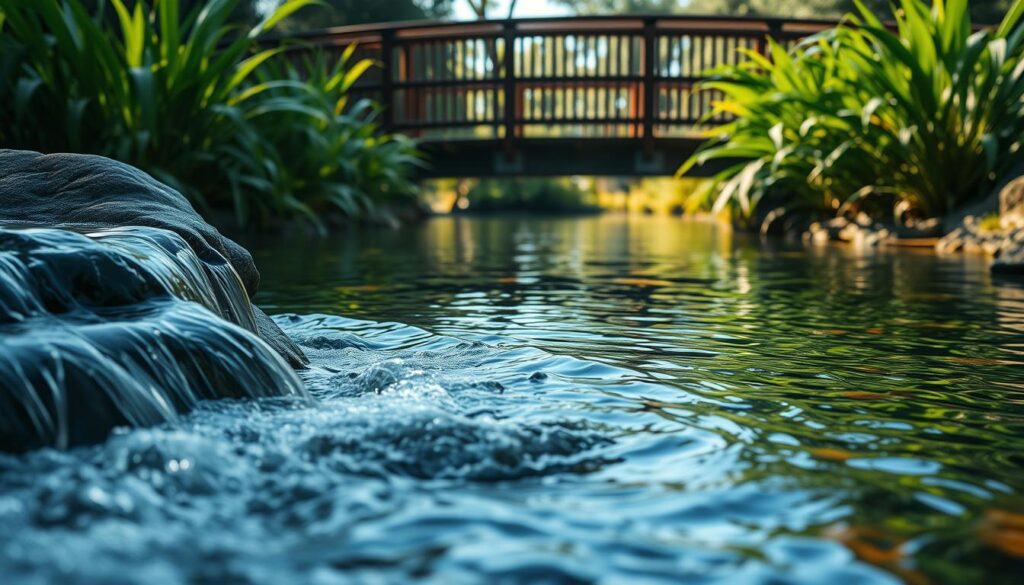
Waterfalls, fountains, and return flows
Add or raise a waterfall or fountain to increase splash area and gas exchange without rebuilding the system. Reposition weirs or fountain heads to broaden surface agitation and improve aeration per watt.
Use jets and air to lift bottom water
Install a temporary air pump with an airstone to add air quickly and lift low layers upward. Aim diffusers or directional jets at low points so deeper water cycles to the surface with less visual disruption.
“Boost flow immediately—open returns, run a temporary aerator, and clear surface debris.”
- Remove floating debris that blocks ripple and restricts gas exchange.
- During heat or treatment, run aeration 24/7 and cut feeding to lower demand.
- Verify success: fish should spread out and resume normal movement within minutes to hours.
Equipment Guide: Pond Pumps vs. Aerators and the Best Fit for Your Pond
Not all pumps and air systems perform the same; size, depth, and layout drive the best choice. A pump mainly circulates water through filters and can boost surface agitation when returns are well placed. An aerator injects air directly and gives faster increases in dissolved air where it’s needed most.
Types of aeration
Fountains suit small landscape ponds, adding charm and surface movement. Floating aerators cover medium to large areas with steady agitation. Sub-surface systems, like air stones or perforated discs, work best in deep water by lifting bottom layers to the surface.
Sizing and shape considerations
Irregular ponds need multiple diffusers or outlets to reach coves and dead zones. Match pump capacity to filtration and aim returns to sweep the surface. For deep basins, choose higher-pressure air units and robust diffusers to move low layers up.
Solar vs. electric air pump options
Solar accessories are convenient in sunny climates but can be intermittent. Electric air pump units give consistent performance year-round and are preferable for high-demand setups. Keep a small kit of impellers, diaphragms, and fittings on hand to reduce downtime.
“Pair a circulation pump with targeted aeration for the best results; plan redundancy so fish remain protected if one unit fails.”
- Use a pump to drive filtration and add an aerator to target oxygen gaps.
- Pick fountains for small, visible aeration; floating units for broader coverage.
- Install sub-surface diffusers in deep areas to prevent low-air layers.
- Prefer electric air pump setups for steady delivery; supplement with solar when suitable.
Smart Placement, Installation, and Maintenance Tips
Smart layout choices make the most of each aerator and return, spreading circulation where it’s needed most. Position returns to sweep the surface and push water along the perimeter. Angle jets so flow moves across bays and coves rather than into dead spots.
Set diffusers in deep points to lift bottom water, but avoid placing them under main viewing lines where bubbles block sight. Place air pumps outside and run airlines to submerged stones or discs for easy service.
Routine maintenance keeps levels steady. Service filtration pads, skimmer baskets, and pump impellers before peak season. Inspect air pump diaphragms and intake filters quarterly and keep a small kit of spares on hand.
Seasonal care matters. In winter, run a low off‑center diffuser to keep a vent open and prevent winter kill. During medication, increase aeration and cut feeding to reduce stress and help keep fish healthy.
“Regular checks and a simple parts kit cut downtime and keep water moving when systems are taxed.”
- Trim surface plants before hot nights to improve gas exchange.
- Clean solar panels and check impellers for debris.
- Use a calendar‑based maintenance plan to preserve flow and levels year‑round.
Balance the Ecosystem: Plants, Shade, Filtration, and Bio-Load
A balanced landscape combines plants, shade, and the right filtration to keep water stable as fish grow.
Provide shade to keep temperatures down. Add lilies, pergolas, or sail covers to lower surface heat and raise the water’s ability to hold dissolved air. Shade also slows algae growth on bright summer afternoons.
Choose a mixed planting scheme. Use submerged oxygenating species for nutrient uptake, marginals at the edges to filter runoff, and floating plants for light control. Thin dense growth regularly so plants do not block gas exchange at night.
Keep waste and filtration in check
Skim leaves and vacuum sludge before organic matter begins to decompose. Decaying material consumes oxygen and fuels algae if left in place.
Maintain filtration sized to your population. Clean mechanical media and monitor biofilters so waste is removed before it spikes nutrient loads. As fish biomass increases, raise aeration and circulation to match demand.
“Match filter capacity and aeration to growth—small upgrades now avoid big problems later.”
- Feed sparingly to limit waste and oxygen demand.
- Use circulation to send nutrients to filters and prevent dead zones.
- Watch fish after hot afternoons and boost evening aeration if they crowd the surface.
Water Changes and Parameters: Quick Wins to Improve Oxygen Levels
Small, scheduled water swaps can reset chemistry and improve surface clarity fast.
Partial changes refresh the system without shocking fish. Schedule swaps of 10–30% and avoid removing more than one‑third at once. Match refill temperature to the pond so solubility and comfort stay steady.
Partial water changes and dechlorination best practices
Always condition tap sources for chlorine or chloramine before adding pond water. Treat municipal tap supplies with a neutralizer so helpful bacteria and gill tissue remain safe.
Monitoring pH and related water parameters alongside oxygen
Pair checks of temperature, pH, ammonia, and water parameters with a spot test for dissolved oxygen after hot days or heavy feeding. Use a reliable test kit and log results to spot trends.
“Add temporary aeration during and after large swaps so levels stabilize while chemistry settles.”
- Clean mechanical filters before a change so loosened debris leaves with the outflow.
- Use conditioned tap water and match temperatures to avoid sudden shifts.
- Run a temporary air diffuser during swaps and after storms to support recovery.
- Keep a test kit on hand and record readings to fine‑tune your maintenance cadence.
Conclusion
, Consistent flow and well-placed aeration are the backbone of a healthy water environment.
Prioritize continuous circulation and targeted aeration so fish have steady levels day and night. Surface gas exchange, cooler temperatures, and open surfaces matter more than fancy gear.
Use waterfalls, fountains, returns, jets, and diffusers to lift low layers and prevent stratification. Pair a reliable pump with dedicated air delivery and keep a spare diaphragm and impeller kit for quick repairs.
Watch for fish gasping or crowding flows and test dissolved oxygen when possible. Small, steady steps—tuned returns, routine maintenance, and balanced plants and shade—help ponds stay resilient and clear.
You Might Also Like...