
The Psychology of Water: Why Ponds Calm the Mind
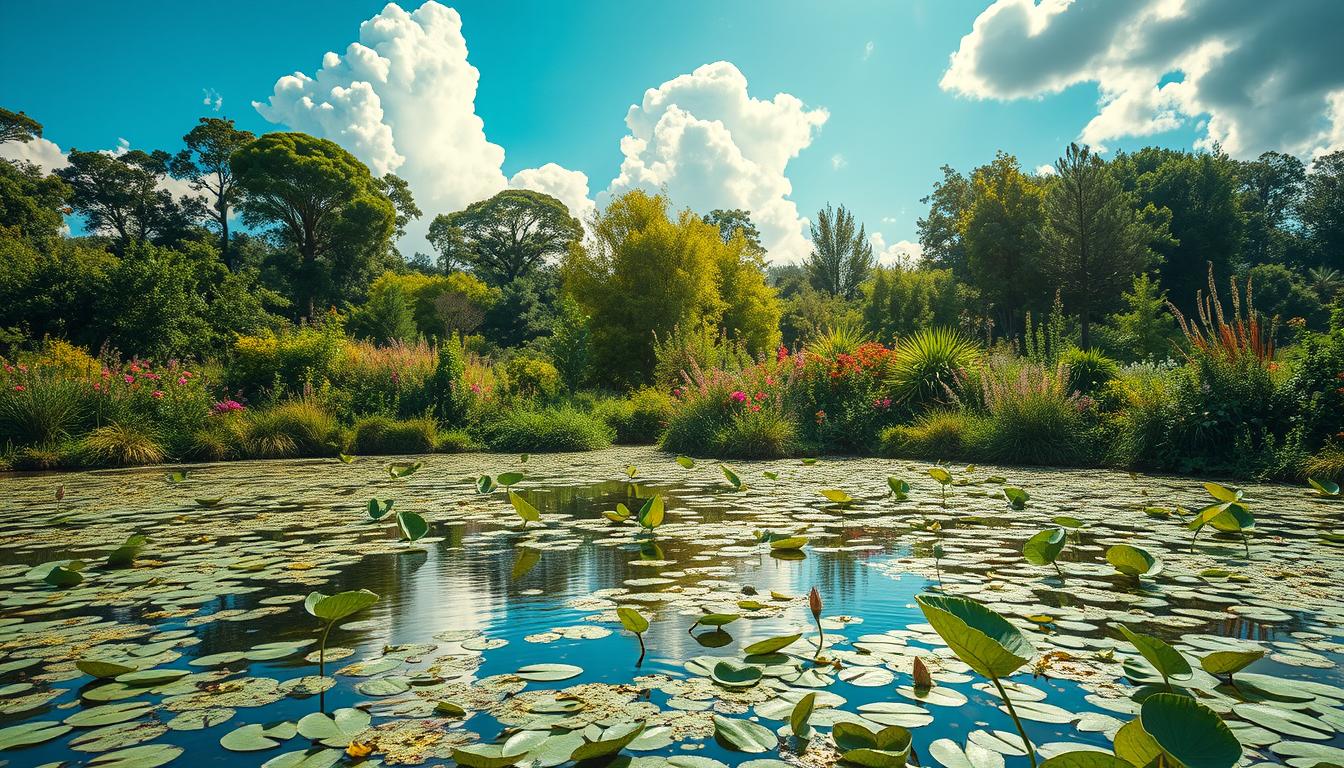
Build a backyard water feature that works with nature. An ecosystem pond mirrors natural cycles so it stays low-maintenance and largely chemical-free.
Beneficial bacteria colonize rocks, gravel, and filter media to process waste and keep nutrient levels in check. Expect clear water and a stable balance of plants, fish, and microbes to develop over time.
Patience matters. A new ecosystem often needs up to 12 months to stabilize. Early algae and water insects are normal; they help use excess nutrients and invite wildlife like dragonflies and frogs.
This article outlines practical design, step-by-step build guidance, and low-impact maintenance tips. The goal is a beautiful, resilient feature that supports the environment and fits everyday life.
Key Takeaways
- An ecosystem pond uses natural processes for low maintenance and few chemicals.
- Beneficial bacteria on gravel and rock help regulate nutrients and water quality.
- Early algae and water insects are normal and often helpful during start-up.
- Expect up to 12 months for ecology to stabilize—plan for gradual improvement.
- Design and care focus on balance, biodiversity, and practical, budget-aware choices.
Why Choose an Ecosystem Pond for Your Backyard Water Feature
Letting nature do the heavy lifting gives you a clear, healthy water feature with minimal intervention. An ecosystem pond relies on natural elements, not frequent chemicals, to keep water quality high.
Low upkeep is a key advantage. Beneficial bacteria colonize rocks, gravel, and filter media. Their role is to process waste and keep nutrients in check, which reduces manual maintenance and the need for products.
The difference from conventional ponds is simple: ecosystem ponds use plants, varied depths, and biological activity to maintain clarity. That means fewer treatments, less labor, and a more resilient feature over time.
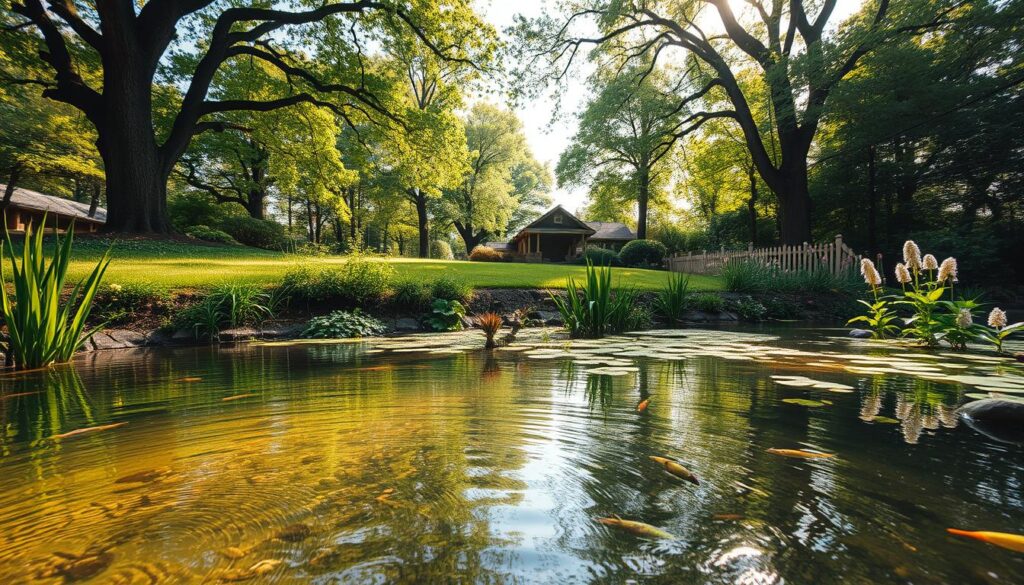
Expect early algae and water bugs as part of start-up. String algae often appears first and helps consume excess nutrients. Invertebrates like dragonflies, damselflies, and backswimmers help form a stable food web.
“Patience is part of the design—most installations need up to 12 months to find balance.”
- Supports local wildlife and improves the backyard environment.
- Plants and modest fish loads boost water quality and stability.
- Integrates with sun, shade, and runoff to maintain long-term balance.
In short: an ecosystem pond is a practical way to create a durable, beautiful feature that fits family life and supports nature without heavy upkeep.
Design Principles for a Balanced Ecosystem Pond
A thoughtful site and simple design create lasting water quality and habitat. Choose a spot after mapping sun and shade across the day. This prevents overheating and lowers algae pressure while giving plants enough light to thrive.
Site selection, sunlight, and shade for optimal water quality
Place the feature where morning sun and afternoon shade meet. That mix protects pond water from excess heat and supports diverse life.
Natural shapes, varied depths, and a healthy bottom pond profile
Use irregular outlines and multiple depths—shelves for marginals, mid zones, and deep refuges. A stable bottom pond profile with plant pockets resists slumping and creates temperature gradients that benefit fish and other life.
Rocks and gravel: surface area for beneficial bacteria and habitat
Scatter rocks and gravel along edges and the bottom. These elements increase surface area for bacteria, stabilize slopes, and offer hiding places for invertebrates that help process nutrients.
Native aquatic plants and their role in nutrient uptake and oxygen
Favor native marginals, floaters, and submerged plant choices. They oxygenate water, shade surfaces, and uptake nutrients to support a balanced ecosystem.
Creating a wildlife-friendly area without compromising balance
Include gentle shelves, varied plantings, and a modest waterfall or stream to improve circulation and filtration. This keeps pond water oxygenated, reduces stagnant pockets, and blends the feature into the surrounding nature.
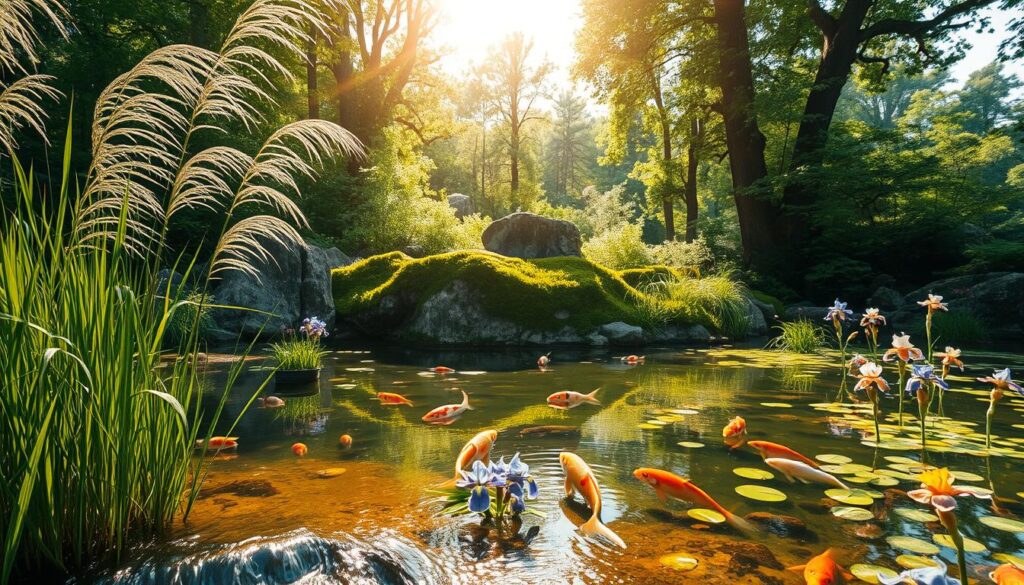
Step-by-Step: Build an eco pond system from the ground up
Mark the outline, then dig shelves and a deep area so plants, bacteria, and fish each get the space they need. Start with a clear footprint; shelves for marginals and a deep refuge help manage temperature and habitat.
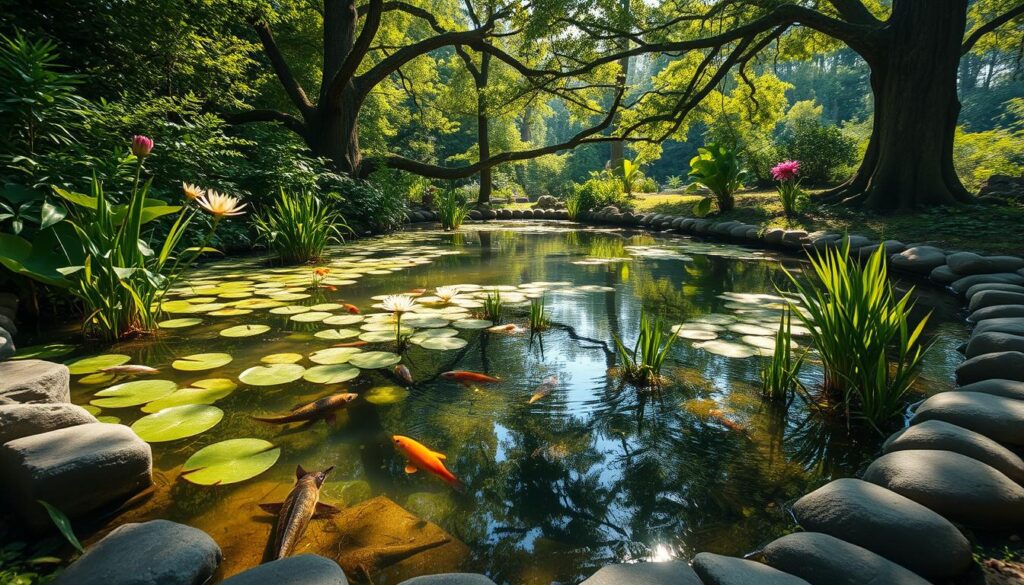
Excavation, underlayment, and liner installation for leak-free foundations
Lay out the footprint, excavate shelves and a deep zone, then add underlayment and a durable liner. Work carefully to avoid punctures and folds that trap debris and harm water quality.
Adding rocks, gravel, and pebbles to seed surfaces for bacteria
Lock stones on shelves and edges and scatter gravel across the bottom. These surfaces increase area for beneficial bacteria to colonize and create hiding places that stabilize the food web.
Natural filtration: waterfall or stream design to improve circulation
Design a compact waterfall or meandering stream to return water to the basin. Improved circulation boosts oxygen and helps plant- and rock-based filtration work more effectively.
Introducing beneficial bacteria and local microorganisms to jumpstart the pond ecosystem
Jumpstart biology with targeted doses of beneficial bacteria and, where allowed, small amounts of water or decaying material from nearby waterways. This helps speed nutrient processing and reduces early algae blooms.
Planting strategy and fish stocking the right way
Plant marginals on shelves, add floaters for shade and nutrient uptake, and include submerged species for oxygen. Start with a small number of fish; overstocking overwhelms nutrients and weakens the pond ecosystem.
- Consider a simple prefilter or DIY filter to complement natural filtration.
- Add wood and leaf litter in moderation to feed microbes without creating excess waste.
- Check flow rates, verify no leaks, and size the pump so circulation supports life without excess turbulence.
Document each step and give the feature time to settle—biological processes ramp up steadily over the first weeks and months.
Maintenance, Water Quality, and Keeping the Pond Ecosystem in Balance
A gentle maintenance plan prevents nutrient spikes and supports healthy life in the water. Regular, light-touch care helps biology mature over months and preserves water quality without heavy interventions.
Understanding the nitrogen cycle: bacteria, waste, and time to stabilize
The nitrogen cycle converts fish waste and organic debris into plant-available forms. Beneficial bacteria on rocks and gravel do most of the work.
Expect up to 12 months for this process to fully stabilize; ammonia and nitrite drops as bacteria colonies grow.
Algae in new ponds and measured responses
Early algae, especially string algae, is common. It helps remove excess nutrients while the ecosystem finds balance.
- Hand-remove mats of string algae when needed.
- Increase shade and plant cover rather than using harsh chemicals.
- Support bacteria and diatom-friendly supplements if balance is slow to come.
Avoid overstocking, overfeeding, and over-cleaning
Too many fish or too much food causes nutrient spikes and algae blooms. Feed sparingly and monitor fish behavior.
Don’t scrub biofilms from rocks and gravel. Mulm and detritus provide habitat and food for invertebrates and microbes.
Practical routine and seasonal tips for U.S. climates
Skim leaves, prune plants, and rinse mechanical filter pads only as needed. Check pump intakes and skimmer baskets weekly in high-leaf seasons.
- Autumn: remove heavy debris to avoid oxygen drops under ice.
- Winter: reduce feeding as water cools and shield pumps from freezing.
- Summer: watch flow and clean prefilters during heat waves to maintain oxygen levels.
“Patience and steady care protect clarity, fish health, and the long-term resilience of the pond ecosystem.”
Conclusion
Finish by focusing on balance: a clear layout, a stable liner with gravel and rock, good circulation, and a mix of native plants help an ecosystem pond mature well.
Work with biology, not against it. Support beneficial microbes and plants so water stays clear and quality improves without routine chemicals.
Be patient and keep fish loads modest. Small, steady steps let the ecosystem adapt and limit nutrient spikes.
Use light-touch maintenance, control debris, and adjust for seasons. Follow this article as a practical checklist from design through care.
Start small, scale slowly, and you’ll create a resilient feature that supports nature, invites wildlife, and adds daily calm to your yard. Begin planning today.
You Might Also Like...