
How to Prevent Mosquitoes in Your Pond
Understanding how shifts in water and air impact fish metabolism helps you feed and care with confidence. This short guide shows how changes across seasons alter digestion, immunity, and activity. You’ll get a clear plan to match feeding times and food type to actual pond readings rather than guessing by months.
Consistent monitoring of water and simple checks let you protect health and support filtration systems. Learn when to slow or stop feeding, how mid-day meals help in cool months, and how to respond to sudden cold snaps or heat waves.
By following a simple range-based routine and a few equipment choices, you can keep water quality steady, reduce stress, and help fish stay vibrant year round.
Key Takeaways
- Use a thermometer and time-based feeding to avoid guesswork.
- Match food type and portion to the current water range and season.
- Slow feeding in cooler periods to support digestion and filters.
- Check water quality and system function regularly to reduce stress.
- Adjust mid-day feeding in cooler months for better digestion.
- Have an emergency plan for sudden swings in weather.
Why water temperature drives koi health, digestion, and feeding behavior
The pond’s thermal range controls how fish eat, fight infection, and use oxygen. Water warmth affects enzyme activity in the body, so digestion speed matches the current water temperature rather than the calendar.
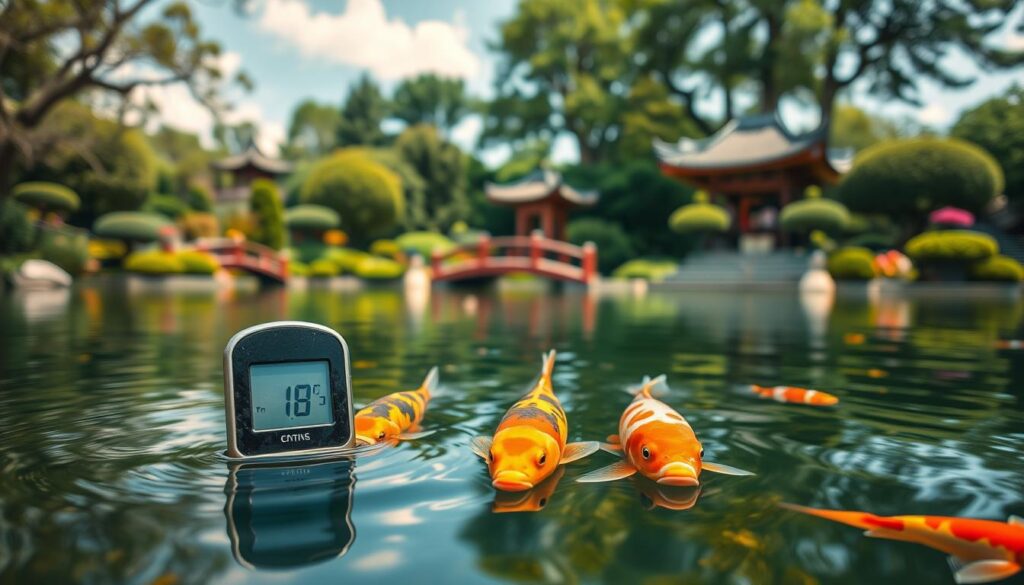
In cold months below about 40°F, metabolism and immune defenses slow dramatically while many pathogens stay dormant. As pond water warms in spring, a risk window from roughly 50–65°F can allow opportunistic bacteria and parasites to become active faster than the immune system recovers.
Feed conservatively until beneficial nitrifying bacteria fully activate. Filters work slower in cool conditions, so extra food raises ammonia and nitrite levels and harms water quality.
- Match portion size to current temperatures and fish appetite.
- Watch oxygen demand as activity increases with warming.
- Start feeding slowly after cold spells and test water levels first.
Understanding how fish metabolism, pathogen activity, and bacterial function intersect helps you set safe feeding frequency and protect long-term health.
Actionable feeding plan by koi pond temperature and season
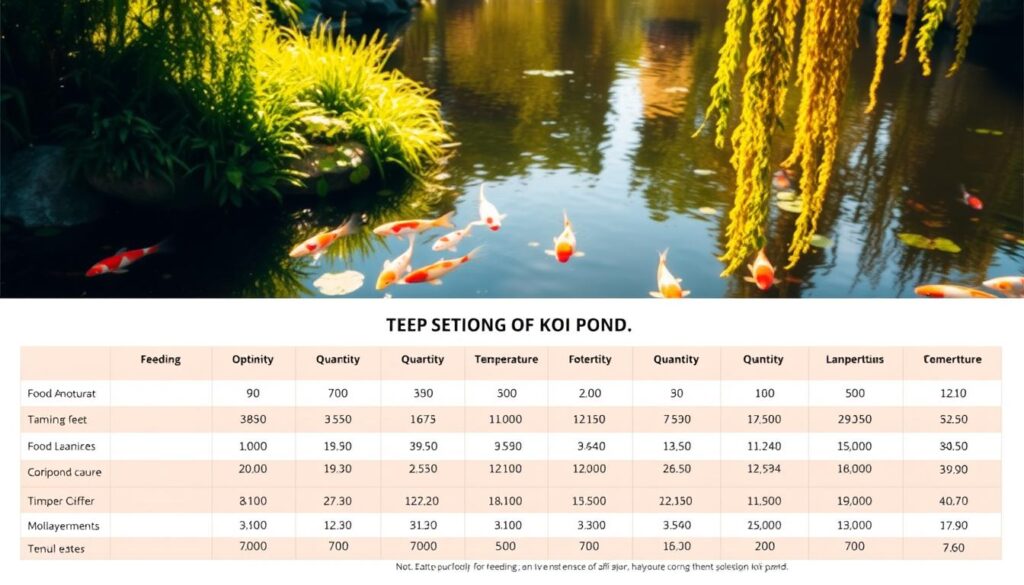
A practical feeding plan tied to measured ranges helps prevent overfeeding and protects water quality. Use this concise chart to set portion size, meal frequency, and best time to feed based on current readings.
Above 86°F
Reduce amount and offer easily digested food. Feed no more than twice daily for adults (up to four small meals for juveniles).
Add shade sails, floating plants, or covers to help drop temperature and protect fish during hot summer spells.
68–86°F
This is the growth range—feed 2–4 small meals daily. Keep portions small, monitor water quality, and avoid feeding within one hour of sunrise or sunset.
59–68°F
Feed 1–2 times per day during the warmest part of the day. Digestive capacity declines as water cools, so watch activity and adjust the amount accordingly.
50–59°F
Use wheat‑germ diets and offer food no more than twice daily between 10 a.m. and 2 p.m. Only feed if fish eat promptly to prevent waste build-up.
41–50°F
Limit feeding to 2–3 times weekly at mid‑day. It is acceptable to stop until spring if fish are inactive; this protects filtration and overall pond water quality.
Below 41°F
Stop feeding—fish enter dormancy and cannot process meals effectively. Remove any leftovers immediately and pause feeding if water temperature drops suddenly.
“If water readings fall or fish show stress, reduce amount or pause feeding until conditions stabilize.”
- Always adjust portions to actual appetite to maintain water quality.
- Remove uneaten food promptly, especially in new or limited filtration systems.
- When readings shift quickly, pause feeding and resume slowly as fish accept food.
Spring “Aeromonas Alley”: Protect immunity as water warms to 50-65°F
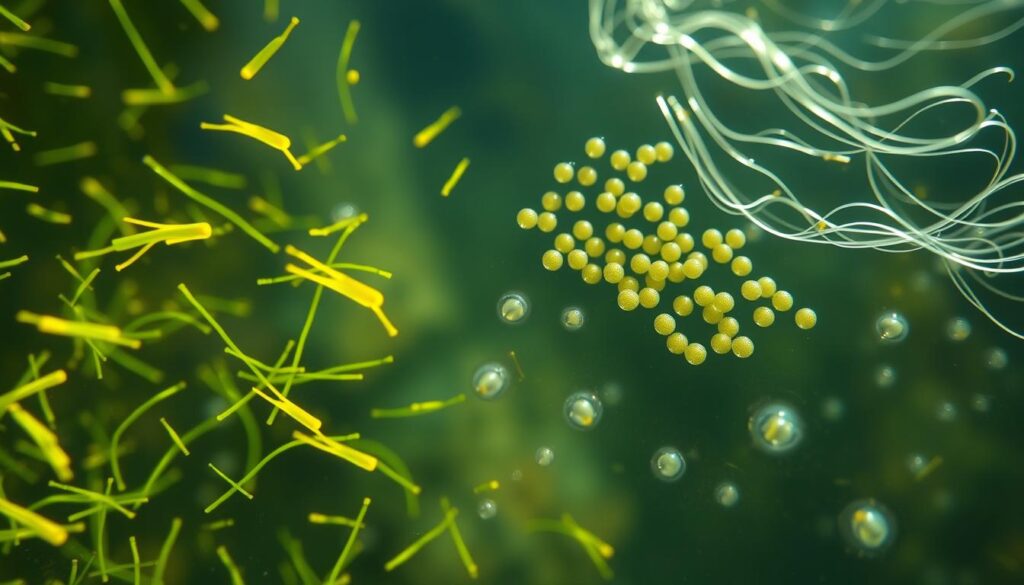
As spring warmth arrives, microbes and parasites often gain the upper hand before fish regain full defenses. This danger window—roughly 50–65°F—lets Aeromonas and similar bacteria multiply faster than the immune system recovers.
Understand the danger zone
At about 65°F, many fish still have only half their typical immune capacity. Pathogenic bacteria can cause ulcers and fin rot if water quality slips.
Parasites activate
Watch for Costia, Trichodina, Chilodonella, and flukes. Early signs include white spots, excess slime on the body, clamped fins, or red streaks.
Feeding restart
Begin with easily digested wheat‑germ food in tiny portions. Increase feedings slowly as fish show steady appetite and active swimming above 55–60°F.
Water quality first
Test ammonia, nitrite, and pH often. Seed filters with cold‑water bacteria during the 50–55°F window to help biofiltration rebuild.
Clean the bottom
Remove fall leaves and sludge from the bottom to cut pathogen load. Improved clarity and steady circulation reduce stress and help fish transition out of this risky spring period.
“Prioritize water quality and early detection—small actions now prevent big outbreaks later.”
- Monitor levels daily in early spring.
- Keep feed minimal until test kits show safe readings.
- Boost gentle aeration to support recovery.
Winter months: Equipment, pond depth, and safe practices for stable pond temperature
Good winter care begins with a few reliable steps that protect fish and keep pond water steady through cold spells.
Run an aerator year‑round. Continuous aeration keeps oxygen moving and helps maintain a breathing hole in the surface without over‑chilling the water.
For shallow systems under 3 feet, install a de‑icer or an appropriately sized heater to prevent a full freeze and preserve a vented opening. De‑icers are essential where depth can’t provide winter refuge.
Never smash or pry at the ice. Drill vent holes with an auger and let circulation move gas safely out. Sudden shock waves can harm fish and damage equipment.
- Remove nonessential ornaments before hard freezes to avoid cracking from ice expansion.
- Shield the surface from strong wind to reduce rapid swings in pond temperature and stress on fish.
- Check pond water regularly for clarity or odd odors; confirm aeration and a clear vent opening.
“Steady aeration, proper de‑icing, and careful ice handling go a long way toward safe winter care.”
Koi pond temperature monitoring and care toolkit for the United States
A concise monitoring kit helps you base feeding and maintenance on real readings, not guesswork. Use tools and a short schedule to match care to current conditions across different U.S. climates.
Feed between 10 a.m. and 2 p.m. during cool periods to aid digestion. Avoid feeding within one hour of sunrise or sunset to reduce oxygen competition and stress on fish.
Filtration and bacteria: allow systems to cycle
Keep portions small in new or cold setups until beneficial bacteria establish and the filtration system shows stable readings. Monitor ammonia, nitrite, and pH with reliable test kits and watch fish behavior before increasing food.
“If sudden swings or poor water readings occur, pause or cut feeding until both readings and behavior normalize.”
- Use a reliable pond thermometer and recheck readings during transitional months.
- Keep basic equipment on hand: accurate thermometer, test kits, nets, an aerator, and a contingency heater.
- In harsh winters, add insulating covers and place the aerator diffuser at mid‑depth for balanced gas exchange and warmth retention.
- Create a seasonal checklist tied to actual readings rather than fixed months to guide feeding and maintenance.
Quick tip: Maintain gentle aeration year‑round and ensure one open patch of surface to allow gas exchange and safe equilibration of pond water.
Conclusion
Measure, adjust, and prepare: three steps that keep your system balanced through sudden swings and long cold periods.
Measure water and match feeding to current readings. When temperature drops quickly, reduce the food amount or pause feeding to protect fish and filtration.
In spring stay alert for parasites. Clean leaves and sludge from the bottom and test water often so immune defenses recover as warmer days arrive.
During winter months keep a clear breathing part of the surface with aeration. Use a heater or de‑icer on shallow systems, but balance any heaters with proper gas exchange. In summer add shade and lower the amount during heat spikes. Keep a simple checklist by pond band that lists food type, timing, and equipment checks for each period.
You Might Also Like...