
How to Prevent Mosquitoes in Your Pond
This short summer pond care guide helps you protect pond health when Utah temperatures rise. Heat, strong sun, and low rainfall can speed evaporation and stress fish and filters.
Daily visual checks of skimmers and pumps stop clogs before they get worse. Weekly doses of beneficial bacteria and 24/7 circulation keep biological filters working under heat.
Aim for pH 7.0–8.0, stable KH, and phosphate under 0.2 ppm to cut algae risk. Use manual removal for string algae first; reserve algaecides as a last step.
Shade matters. Covering 30–40% of the surface with lilies or floating islands drops algae pressure and helps the ecosystem and fish stay comfortable.
Make sure you have nets, test strips, beneficial bacteria, and pruning tools on hand. Small, regular actions prevent big repairs later.
Key Takeaways
- Perform daily pump and skimmer checks to avoid clogs.
- Run circulation continuously to protect biofiltration.
- Dose beneficial bacteria weekly to support water clarity.
- Target pH 7.0–8.0, stable KH, and low phosphate.
- Use 30–40% surface shade to reduce algae pressure.
- Remove algae manually before using chemicals.
Why Utah’s Summer Stresses Ponds and How to Prepare
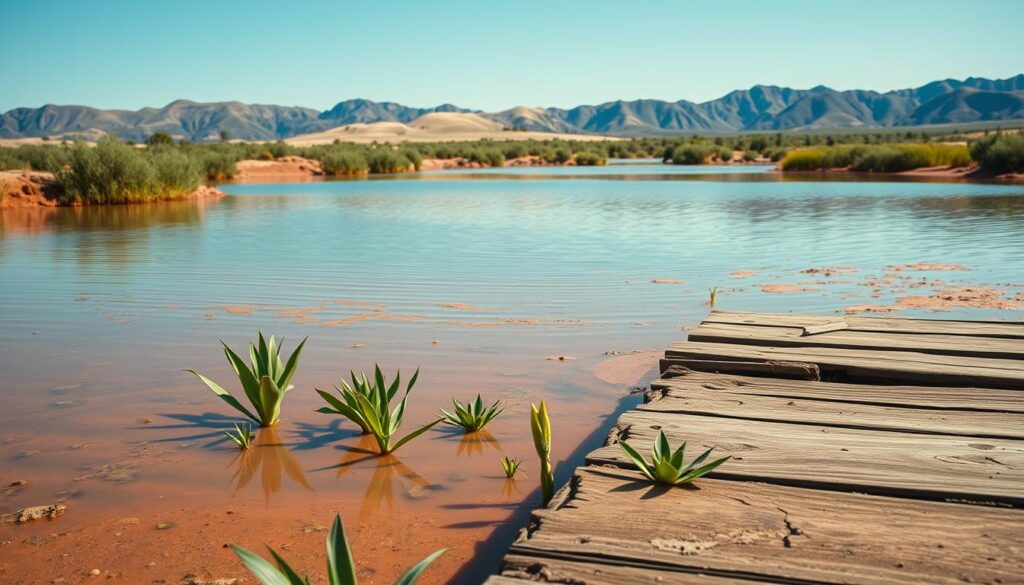
Utah’s high heat and dry winds can strip oxygen from shallow water fast. As temperatures rise, dissolved oxygen drops and evaporation can remove inches per week. This combo stresses fish, beneficial microbes, and filters.
Heat, evaporation, and lower oxygen: what to expect
Lower oxygen reduces fish activity and weakens biofiltration. High temperatures also encourage algae and cloudiness if levels shift quickly.
Evaporation lowers water levels, which can expose skimmers and pump intakes. That exposure risks air ingestion and equipment damage.
Pre-season check: pumps, aeration, and filtration readiness
Before peak heat, make time to verify 24/7 circulation, clean skimmer pads, and steady pump intake flow. Confirm auto-fill valves work so water levels stay stable.
- Inspect bottom-up diffusers and stage them for higher output during heat waves.
- Don’t over-clean BioFalls or filter media; keep biofilm intact to protect biological filtration.
- Run a baseline test to confirm pH, KH, and phosphate and schedule weekly strip checks and monthly liquid tests.
Also check electrical connections, timers, and auto-dosing gear now. Set reminders for weekly maintenance and monthly testing to protect pond health when temperatures peak.
Summer Pond Care Routine: Daily, Weekly, and Seasonal Tasks
A short daily routine keeps water moving and small problems from growing into big repairs. Follow a few simple steps to protect equipment and clarity. Work early morning or evening when temperatures and wildlife activity are lower.
Daily quick checks
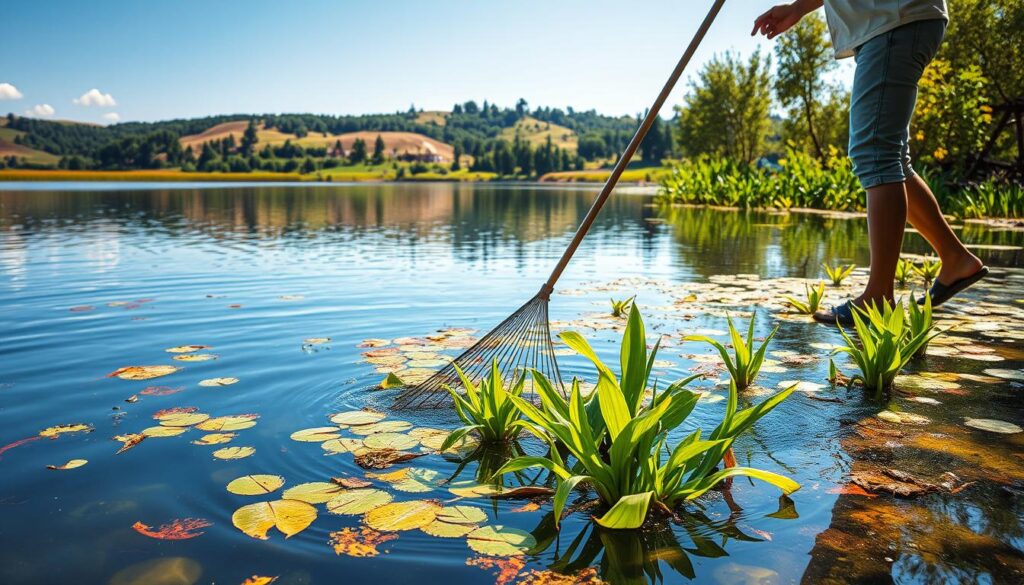
Empty the skimmer basket and net floating leaves or debris. Scan the surface and confirm strong, steady pump flow.
These minutes prevent clogs, protect features, and keep the system circulating efficiently.
Weekly actions
Dose beneficial bacteria to reduce excess nutrients and rinse skimmer filter pads gently. Trim overgrown plants to keep about 30–40% surface shade.
Inspect the auto-fill valve and review ion-system probes or auto-dosers. Do these tasks the same day and times each week to spot changes early.
Seasonal focus
During heat waves boost aeration output and monitor evaporation closely. Track water clarity trends and schedule a mid-season inspection if flow slows or cloudiness persists.
Make sure biological waterfall filters are cleaned no more than once per year to protect beneficial bacteria and long-term clarity.
- Quick daily maintenance takes just minutes.
- Weekly habits deliver the biggest results.
- Log doses, pad rinses, and flow checks to diagnose issues fast.
Water Quality Fundamentals to Keep Pond Clarity High
A steady testing routine is the backbone of clear, healthy pond water. Maintain a pH between 7.0 and 8.0 to protect fish and beneficial bacteria. Track carbonate hardness (KH) to keep that pH steady and avoid sudden swings.
Core parameters: pH, KH, and phosphate
Aim for phosphate below 0.2 ppm to limit algae fuel. Solid alkalinity stabilizes biological filtration and protects equipment from rapid chemistry shifts.
Testing cadence: quick weekly strips and monthly liquid tests
Use dip strips weekly for fast reads of pH and KH. Run a full liquid panel monthly to verify phosphate and overall quality.
Interpreting results: when to buffer KH or bind phosphate
“Trends matter more than single readings; act when KH drops or phosphate climbs.”
- If KH falls, add a buffer to prevent pH swings.
- If phosphate rises, apply a binder and boost beneficial bacteria dosing.
- Check more often during heat waves and log results for pattern tracking.
Oxygen Levels and Aeration: Keeping Fish and Bacteria Healthy
When water warms, oxygen falls fast; adding the right aeration keeps deeper zones healthy. Low oxygen affects fish activity and weakens beneficial bacteria in filters.
Bottom-up aeration versus surface aerators
Bottom-up diffusers push bubbles from the lowest point and lift cooler, oxygen-poor water into the mix. They can be 8–10 times more efficient at dissolving oxygen than surface aerators, so they support deeper zones better.
Surface aerators add gas exchange at the top, but they do not circulate the full depth as effectively. For deeper systems, bottom placement is the preferred choice.
Run circulation 24/7 to protect biology
Keep pumps and diffusers running continuously to avoid stagnation. If circulation stops for more than about three hours, beneficial bacteria can die back and clarity suffers.
- Place diffusers near the deepest point of the bottom pond area to lift cold water gently.
- Provide steady airflow so bottom waters mix without stressing fish.
- Small fountains or bubbling features add oxygen, mild cooling, and visual interest.
“Steady oxygen support speeds beneficial bacteria performance and helps prevent algae spikes.”
Watch fish behavior: gasping at the surface or gathering near inflows signals low oxygen. Increase aeration promptly to protect life and keep the system running smoothly.
Smart Plant Management: Shade, Competition, and Surface Balance
A mix of lilies, floating islands, and shoreline plantings forms a natural barrier to algae fuel. Aim to cover about 30–40% of the surface with broadleaf lilies or dense floaters to reduce direct sun and slow algae growth.
Target 30–40% surface shade with lilies and floaters
Covering the right amount of surface cuts sunlight and lowers water temperature in key zones. That competition helps plants outpace algae for available nutrients.
Trim marginal plants to prevent clogging
Trim reeds and edge plant growth weekly so skimmers and intakes stay clear. Regular pruning also prevents dead foliage from adding nutrients to the system.
- Establish a garden-style vegetated buffer to intercept runoff before it reaches the pond.
- Leave open lanes for circulation and gas exchange so fish and filters keep working.
- Inspect root containers often to prevent soil leakage and sudden nutrient spikes.
“Healthy plants compete with algae and form a long-term clarity strategy.”
Make sure you choose non-invasive species suited to your climate and consult local suppliers for varieties that thrive. Small, consistent plant management preserves balance and supports clear water through hot weather.
Algae Control Without Collateral Damage
Start with hands-on steps to limit blooms before turning to chemistry. Pull stringy mats and loose green growth by hand or with a rake to cut biomass quickly. Removing algae first keeps the water swimmable and stops dead mats from sinking and feeding future blooms.
Manual removal first; use algaecides only as a last resort
Always try physical removal before chemicals. Overusing algaecide can kill helpful microbes and strain fish. Follow label rates to avoid collateral damage.
Bacteria dosing, phosphate control, and shade to curb growth
Combine weekly dosing of beneficial bacteria with phosphate binders when tests show high nutrients. Maintain about 30–40% surface shade with lilies or floating islands to reduce sunlight and slow algae growth.
Equipment assists: Ion-based systems and auto-dosers
Consider ion-based systems like IonGen for low-dose control and auto-dosers to deliver steady bacteria doses. These tools help prevent recurring issues and reduce the need for emergency chemical treatments.
“Treat algae carefully—protect bacteria and fish by avoiding sudden die-offs.”
- Prioritize manual removal to lower biomass fast.
- Use algaecides only when necessary and at labeled rates.
- Pair beneficial bacteria with phosphate control and shade.
- Use ion systems and auto-dosers for steady, low-impact control.
- Monitor water clarity weekly and boost aeration during treatments.
Deep Cleaning, Debris, and Long-Term Maintenance
Deep clean-outs are disruptive and should be a measured choice. Consider a full overhaul only when heavy silt, choked plants, or persistent clarity problems make routine work ineffective. For most small systems this happens about every five years; larger systems may wait ten years.
When to act and why early autumn works best
Early autumn is ideal because many invertebrates and fish slow down. That timing reduces stress and gives the system winter to settle before the next active season.
Step-by-step: move life, remove muck, protect biology
- Set up a shaded holding tank with some existing water for koi and other fish.
- Pump down slowly; as water drops, net and transfer fish and big creatures gently.
- Remove and repot marginal and deep plants; stage decaying leaves and debris beside the edge so wildlife can use them.
- Scoop bottom muck but keep a portion of silt to re-seed beneficial microorganisms when refilling.
- Scrub liners with fresh water only; avoid soaps. Refill using rainwater when possible to limit nutrient spikes.
Manual weed removal and natural conditioners lower nutrient loads and reduce how often a full overhaul is needed. After a deep clean, perform a winter check to confirm stability and plan spring tune-ups.
“Retain some native silt and water to help microorganisms recover faster.”
Conclusion
Watch flow, oxygen, and chemistry closely; these three signals tell you when to act.
Keep circulation running, favor bottom-up aeration, and do quick weekly checks. These actions keep water moving, oxygen levels steady, and biological filters strong for fish health and clarity.
Test regularly to keep pH near 7.0–8.0, buffer KH, and hold phosphate low. Prioritize manual algae removal, bacteria dosing, and plant balance—use lilies and floaters for about 30–40% shade and prune edges for good flow.
If issues persist, plan a careful deep clean in early autumn to reset the ecosystem for the next year. Use this guide as a seasonal reference to protect pond water quality and enjoy clearer water through the season and into winter.
You Might Also Like...